
Summary:
Movies with plot twists engage audiences by challenging their perceptions and assumptions, offering a mix of surprise and deeper narrative insight. These twists can alter how viewers interpret the entire film, often revealing hidden truths about storytelling and human nature. They serve as both entertainment and a reflection on reality, encouraging viewers to reconsider their understanding of truth and deception.
Cinema has always been humanity's collective dream machine, but some films refuse to let us sleep peacefully. They wait until we're comfortable, until we think we understand the rules, and then they pull the rug out from under us with such force that we're left questioning everything we thought we knew. Not just about the movie, but about storytelling itself.
I remember the first time a film truly deceived me. It was a rainy Tuesday afternoon in 1999, and I'd skipped my college philosophy class to catch a matinee. Walking out of that theater, I felt like someone had rearranged the furniture in my brain while I wasn't looking. That sensation—that delicious vertigo of having your assumptions obliterated—is what separates a mere surprise from a genuine plot twist.
If you’re fascinated by films that challenge perception, bend reality, and play psychological chess with the audience, you’ll find even more narrative deep dives across our Character Psychology, Morally Gray Protagonists, and Movies That Make You Feel Something categories. For stories that explore how identity fractures under pressure, our guide to movies like The Social Network examines ambition, manipulation, and the narratives we build about ourselves. If you’re drawn to films where reality itself becomes unreliable, explore our breakdown of movies like The Truman Show, where truth and illusion collide. And if you gravitate toward emotionally charged stories that reveal hidden systems and buried truths, our guide to movies like Hidden Figures highlights narratives where intelligence, resilience, and perspective reshape everything. For more psychologically rich, twist‑driven recommendations, explore our full archive of streaming guides.
That’s the power of a great twist: it doesn’t just change the ending; it changes you. It alters how you watch movies, how you interpret stories, and how you understand the relationship between truth and deception. A twist is a narrative earthquake, and the aftershocks linger long after the credits roll.
The Architecture of Deception
Plot twists aren't just narrative tricks; they're psychological experiments performed on willing subjects. The best ones don't simply surprise us—they make us complicit in our deception. We become co-conspirators in our own bamboozlement, actively participating in building the very house of cards that will eventually collapse around us. A twist works because we want it to work; we fill in gaps, make assumptions, and cling to patterns that feel familiar.
Consider how memory functions in these films. Directors like Christopher Nolan understand that human memory isn't a recording device but a constantly rewritten story, a point echoed in David Bordwell’s work on narration in film (Bordwell, Narration in the Fiction Film). When a film reveals its twist, it doesn't just change the ending—it retroactively transforms every scene that came before. Suddenly, that innocent conversation in act one becomes loaded with double meaning. That seemingly throwaway line becomes the key to everything.
The 1995 film The Usual Suspects perfected this retroactive revelation. Bryan Singer and Christopher McQuarrie created a narrative that essentially tells two stories simultaneously—the one you think you're watching and the one you're actually watching. The brilliance lies not in the twist itself but in how it forces you to immediately replay the entire film in your mind, seeing it with new eyes. It’s a cinematic sleight of hand that exposes how easily we accept the authority of a narrator, even when that narrator has every reason to deceive us.
“A cheap twist invalidates the story. A great twist deepens it.”
This architecture of deception is what separates a gimmick from a masterpiece. A cheap twist feels like a betrayal; a great twist feels like a revelation. It shows us that the truth was always there, hiding in plain sight, waiting for us to notice.
Explore more films that bend perception, challenge identity, and reshape emotional truth:
When Reality Becomes Unreliable
Some filmmakers take the concept further, using plot twists to explore the nature of reality itself. These aren't just stories with surprises; they're philosophical inquiries disguised as entertainment. David Fincher's Fight Club doesn't just reveal that Tyler Durden is a projection—it questions the stability of identity itself. Who are we when we're alone? Who are we when we're asleep? The film suggests these might be different people entirely and that the boundaries between them are far more porous than we’d like to believe.
The most effective reality-bending twists often mirror actual psychological phenomena. Shutter Island draws from real theories about trauma and repression. The Machinist explores the extremes of guilt-induced insomnia. These films work because they tap into genuine fears we all harbor: What if I can't trust my mind? What if my memories are lying to me? What if the story I’m telling myself is the biggest deception of all?
The late 90s and early 2000s saw an explosion of these reality-questioning films. Perhaps it was millennial anxiety, or maybe the influence of emerging internet culture where identity became increasingly fluid. Films like The Matrix, Memento, and The Others all asked variations of the same question: How do we know what's real? And more importantly, what happens when reality itself becomes the twist?
The Spanish Masters of Misdirection
While Hollywood was playing with reality, Spanish filmmakers were perfecting the art of the emotional gut-punch twist. Alejandro Amenábar's The Others builds its entire atmosphere on gothic misdirection, creating a ghost story where the real haunting is denial itself. The twist doesn't just surprise; it recontextualizes grief, guilt, and the desperate lengths we go to protect ourselves from unbearable truths.
But nobody weaponizes plot twists quite like Guillermo del Toro. In Pan's Labyrinth, the ambiguity of whether Ofelia's fantasy world is real or imagined isn't just a narrative device—it's the entire point. The twist, if you can call it that, is that there might not be a twist at all. Occasionally the most profound revelations come from uncertainty rather than clarity. Del Toro understands that ambiguity can be more emotionally devastating than any single revelation.
Spanish cinema seems particularly adept at using twists to explore trauma and memory. Perhaps it's the country's complex relationship with its history, the lingering shadows of civil war and dictatorship. These films understand that sometimes the biggest twist is simply the truth finally being acknowledged. The twist becomes a form of emotional excavation, unearthing buried wounds that refuse to stay hidden.
The Prestige of Deception
Christopher Nolan's The Prestige might be the most meta exploration of plot twists ever filmed. It's a movie about magic tricks that is itself a magic trick, complete with pledge, turn, and prestige. The film literally explains its structure to you, tells you exactly how it's going to deceive you, and then does it anyway. That's either supreme confidence or supreme arrogance, and I'm still not sure which.
The film presents multiple twists, each one seemingly final, only to reveal another layer beneath. It's like peeling an onion made of lies. By the end, you're not even sure which revelation to believe, which is perhaps the greatest trick of all. Nolan weaponizes structure itself, turning the film into a puzzle box that refuses to stay solved, echoing what Thomas Elsaesser calls the “mind-game film” (Elsaesser, The Mind-Game Film).
The film also explores the cost of deception. Every great magic trick, it suggests, requires sacrifice. The same might be said of great plot twists. They sacrifice straightforward narrative satisfaction for something more complex and unsettling. Not everyone appreciates this trade-off, which is why twist endings can be so divisive. But for those who crave narrative complexity, The Prestige is a masterclass in controlled chaos.
The Korean Revolution
South Korean cinema has revolutionized the plot twist by refusing to play by Western rules. Films like Oldboy don’t just surprise; they devastate. Park Chan-wook understands that the most effective twists aren't intellectual exercises but emotional demolitions. When the truth is revealed in Oldboy, it doesn't make you want to rewatch the film; it makes you want to forget you ever saw it. The twist becomes a trauma, not a trick.
Parasite takes a different approach, layering its revelations throughout rather than saving them for a single climactic moment. Bong Joon-ho creates a film where every scene contains a small twist, a constant shifting of power dynamics and perspectives. By the time the major turns arrive, we're already off-balance, primed for anything. The twist becomes a structural rhythm rather than a one-time event.
Korean filmmakers seem less interested in “gotcha” moments and more invested in using twists to explore societal tensions. Class warfare, family dysfunction, and historical trauma—these aren't just themes but the very mechanisms that drive their narrative surprises. The twist becomes a form of social commentary, a way of revealing the fractures beneath the surface of everyday life.
The Shyamalan Phenomenon
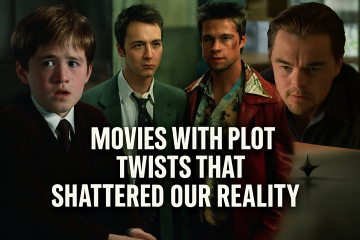
No discussion of plot twists can avoid M. Night Shyamalan, for better or worse. The Sixth Sense created a cultural moment, a collective gasp that rippled through theaters worldwide. But Shyamalan's relationship with twists became complicated, even problematic. When audiences expect a twist, does it cease to be surprising? When a director becomes known for twists, does every film become a guessing game?
There's something almost noble about his refusal to abandon the device that made him famous. Films like The Village and The Happening were critically savaged, partly because their twists felt forced or nonsensical. Yet Shyamalan keeps returning to the form, like a magician determined to rediscover that first moment of wonder.
Split and Glass showed a maturation in his approach. The twists became less about shocking the audience and more about reframing entire mythologies. Whether successful or not, these films demonstrate an evolution in thinking about what plot twists can accomplish beyond mere surprise.
The Psychology of the Twist
Why do we crave these narrative betrayals? There's something masochistic about willingly subjecting ourselves to films designed to deceive us. Perhaps it's the safe thrill of being fooled without real consequences. Or maybe we enjoy the humbling reminder that we're not as smart as we think we are. A twist punctures our narrative ego, and there’s something strangely satisfying about that.
Psychologists have even studied the “spoiler paradox”—the finding that knowing a twist in advance can sometimes enhance rather than diminish enjoyment. This suggests that plot twists serve a function beyond surprise. They create a different kind of viewing experience, one where we become active participants in the narrative construction rather than passive observers. We start watching not just for what happens, but for how it’s built.
The best plot twists work on multiple levels. They surprise us intellectually, affect us emotionally, and often comment on the nature of storytelling itself. They remind us that every narrative is a construction, every narrator potentially unreliable, and every truth provisional. In that sense, twist-heavy films sit comfortably alongside the kind of complex storytelling Jason Mittell describes in television (Mittell, Complex TV).
The Digital Age Dilemma
Modern filmmaking faces unique challenges with plot twists. In an era of frame-by-frame analysis, Reddit threads, and instant global communication, keeping surprises secret has become nearly impossible. Directors now must create twists that work even when anticipated and that reward multiple viewings rather than relying solely on shock value. The twist has to evolve to survive.
Films like Arrival and Annihilation represent a new evolution in twist storytelling. Their revelations are less about surprising plot mechanics and more about profound shifts in perspective. When Louise understands the alien language in Arrival, it doesn't just change the story—it changes how we understand time, choice, and sacrifice.
The streaming age has also changed how we experience twists. Binge-watching eliminates the communal experience of collective surprise. The water cooler moment of “Can you believe what happened?” has been replaced by asynchronous, spoiler-tagged online discussions. Something essential has been lost in this transition—the shared gasp, the synchronized shock that once defined twist-heavy cinema.
Beyond the Gimmick
The best plot twists transcend gimmickry to become profound statements about human nature. The Mist doesn't just shock with its ending; it interrogates our assumptions about heroism and survival. Primal Fear uses its twist to explore the nature of evil and manipulation. The Prestige asks whether any truth is worth the sacrifices required to achieve it.
These films understand that a great twist isn't just about surprising the audience—it's about revealing something true that was always there, hidden in plain sight. Like the best magic tricks, they show us not just that we can be fooled, but why we want to be fooled. The twist becomes a revelation not about the characters, but about ourselves.
I sometimes wonder if our love of plot twists reflects something deeper about modern life. In an era of information overload, fake news, and constantly shifting realities, perhaps these films provide a cathartic release. They give us controlled doses of uncertainty, manageable betrayals in a world full of unmanageable ones.
The Future of Deception
As filmmaking technology evolves, so too will the nature of plot twists. Virtual reality and interactive narratives promise new forms of deception, where the viewer's choices might determine not just the ending but the very nature of the twist itself. Imagine a film that adapts its revelations based on how you've been watching it—a story that studies your patterns and then uses them against you.
But technology aside, the fundamental appeal of plot twists remains constant. We want to be surprised. We want to have our assumptions challenged. We want to experience that moment of revelation when everything clicks into place, even as it falls apart. The twist is a reminder that certainty is an illusion and that the unknown still has the power to move us.
The greatest plot twists don't just change the story; they change us. They make us question our perceptions, reconsider our judgments, and acknowledge the limitations of our understanding. In a world that often feels predictable and predetermined, these films remind us that surprise is still possible, that our certainties can still be shattered, and that sometimes the most profound truths come disguised as lies.
Walking out of that theater in 1999, I thought I'd simply seen a clever film. I didn't realize I'd experienced something that would fundamentally alter how I watch movies, how I think about narrative, and how I understand the relationship between truth and deception. That's the real twist—not what these films reveal about their characters, but what they reveal about ourselves.
Related Reading & Internal Links
If you love narrative deception and reality-bending stories, you might also enjoy:
If this deep dive into narrative deception, unreliable realities, and the psychology of plot twists left you wanting more, you’ll find even richer explorations across our Character Psychology, Morally Gray Protagonists, and Movies That Make You Feel Something categories. For stories that examine how identity fractures under pressure, our guide to movies like The Social Network unpacks ambition, manipulation, and the narratives we build about ourselves. If you’re drawn to films where reality itself becomes the twist, explore our breakdown of movies like The Truman Show, where truth and illusion collide in ways that reshape everything. And if you gravitate toward emotionally charged stories that reveal hidden systems and buried truths, our guide to movies like Hidden Figures highlights narratives where intelligence, resilience, and perspective shift the entire frame. For more psychologically rich, twist‑driven recommendations, explore our full archive of streaming guides.
Related Video
For a visual deep dive into twist-heavy storytelling, start here:
FAQs About Plot Twists in Movies
Why are plot twists so satisfying?
Because they give us a controlled experience of being wrong. A great twist lets us feel shock, humility, and delight all at once. It exposes how our brains rush to complete patterns, then rewards us for revisiting the story with new eyes.
Do plot twists ruin rewatch value?
Not if they’re well-constructed. In fact, the best twists increase rewatch value. Once you know the truth, you start noticing the clues, misdirection, and structural choices that were invisible the first time.
Are twist endings overused?
They’re overused when they’re treated as gimmicks instead of organic extensions of character and theme. A twist that exists only to shock will age quickly. A twist that reveals something deeper about human nature will stick.
What makes a twist feel “cheap”?
When it contradicts the established logic of the story, ignores character motivation, or withholds information unfairly. A good twist should feel surprising but inevitable in hindsight.
Quiz: How Do You Handle a Plot Twist?
- When a twist hits, what’s your first instinct?
A) Rewind or rewatch immediately
B) Google “ending explained”
C) Sit in silence and stare at the credits
D) Text a friend: “You HAVE to watch this” - Which kind of twist do you prefer?
A) Identity reveals (like Fight Club)
B) Reality flips (like The Matrix)
C) Emotional gut-punches (like Oldboy)
D) Philosophical reframes (like Arrival) - How do you feel about spoilers?
A) They ruin everything
B) They sometimes help me appreciate the craft
C) I don’t care either way
D) I actively seek them out
Your answers say a lot about the kind of narrative experiences you crave—and the kind of twists that will stay with you.
Call to Action
If a movie has ever shattered your reality, made you question everything you just watched, or forced you to sit in the dark theater until the lights came up, I want you to remember that feeling. That vertigo is the point. It means the story got under your skin.
Next step: Build your own twist vocabulary. Rewatch one of the films mentioned here and map out the clues, misdirection, and structural turns. Then, when you’re ready, explore more cinematic psychology and narrative breakdowns over on BackStoryMovies.
Because the greatest twist of all might be this: once you learn how these stories work, you’ll never watch movies the same way again.
World’s Most Authoritative Sources
- Bordwell, David. Narration in the Fiction Film. University of Wisconsin Press, 1985.
- Carroll, Noël. The Philosophy of Horror: Or, Paradoxes of the Heart. Routledge, 1990.
- Elsaesser, Thomas. The Mind-Game Film: Distributed Agency, Time Travel, and Productive Pathology. Routledge, 2021.
- King, Geoff. American Independent Cinema. Indiana University Press, 2005.
- Mittell, Jason. Complex TV: The Poetics of Contemporary Television Storytelling. New York University Press, 2015.
- Thompson, Kristin. Storytelling in the New Hollywood: Understanding Classical Narrative Technique. Harvard University Press, 1999.
Grow through the stories that shape you!
If you’re exploring the backstories of movies, why not binge on these cinematic shorts! Plot twists that you never see coming, the “why” in what a story is teaching you, and the art of being seen—then join me on YouTube! I create thoughtful, cinematic lessons designed to help you see your life with more compassion, courage, and intention.
Subscribe to Back Story Movies on YouTube! →
Did I forget to mention, get more creativity in your life and shop the merch at Creativity Is Expression! Visit now @