


Summary:
Alexander Payne's film The Holdovers captures the quiet, introspective silence of a winter break in 1970, exploring themes of loneliness, unlikely friendships, and emotional honesty. It resonates deeply due to its nuanced character study and balance of melancholy and hope. The film invites viewers to reflect on similar cinematic experiences that emphasize human connection through circumstance rather than choice.
The Quiet Power of a Winter Film
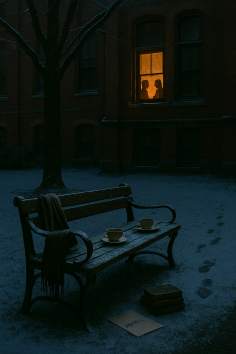
There’s a particular kind of silence that only exists in December. Not the festive kind filled with jingling bells and crowded malls, but the quieter, lonelier hush that settles over empty hallways, snow-covered campuses, and the strange in-between days when the world seems to pause. The Holdovers lives in that silence. It breathes in it. And for many of us, it feels like a film we’ve been waiting for without realizing it.
Set during Christmas break in 1970, Alexander Payne’s film captures a season that is supposed to be warm and joyful—yet often amplifies loneliness, regret, and the ache of unresolved memories. Watching Paul Hunham (Paul Giamatti) trudge through the deserted grounds of Barton Academy feels like stepping into a winter memory you’ve never lived but somehow recognize. The film’s emotional register—that delicate blend of melancholy and hope—is rare, and it’s why so many viewers walk away asking the same question:
What other movies feel like The Holdovers?
This article explores that question through the emotional DNA of Payne’s film: unlikely friendships, quiet revelations, wounded characters, and the small, human moments that thaw even the coldest winter.
If you’re drawn to films that feel like winter itself—quiet, reflective, a little bruised around the edges—you'll find even more emotionally rich, character‑driven guides across our Movies That Make You Feel Something, Movies With a Vibe, and Movies Like… collections. For stories that explore wounded characters, unlikely connections, and the small, human moments that thaw the cold, wander through our Character Psychology hub. And if you’re craving more films that carry that soft December hush—introspective, tender, and quietly transformative—our Seasonal Guides offer curated journeys through cinema’s most atmospheric moods.
Why The Holdovers Resonates So Deeply
Before diving into similar films, it’s worth understanding why The Holdovers hits so hard. It’s not just the setting or the performances—it's the emotional architecture.
1. It’s a character study disguised as a holiday film.
Paul Hunham is not a traditionally likable protagonist. He’s abrasive, stubborn, and emotionally barricaded. But Payne’s direction treats him with empathy rather than judgment. The film trusts us to sit with his flaws long enough to see the wounded humanity beneath them.
“The Holdovers doesn’t ask you to love its characters. It simply asks you to understand them — and that’s far more powerful.”
This slow-burn character work aligns with the kind of films explored in our storytelling and narrative craft section.
2. It’s About Unlikely, Imperfect Connection
The trio at the heart of the film—Hunham, Angus, and Mary—are not destined to become lifelong companions. Their bond is temporary, circumstantial, and fragile. And yet, it matters. It changes them. It softens them.
Films that echo this emotional blueprint often appear in our love, loss, and relationships category.
3. It Balances Sadness and Warmth Without Sentimentality
Payne avoids easy resolutions. The film ends with hope, not closure—a distinction that defines many of the movies below.

Movies Like “The Holdovers”: The Emotional and Cinematic DNA
Instead of listing films by genre or decade, this guide organizes them by the emotional qualities that make The Holdovers so special. These categories align with BackStoryMovies’ core clusters, including movies like…, emotionally intent movies, and movies with vibe.
Films About Unlikely Friendships and Quiet Transformation
Rushmore (1998)
Wes Anderson’s prep-school dramedy shares more than a setting with The Holdovers. Both films explore the emotional armor people build to survive disappointment. Max Fischer’s theatrical bravado mirrors Hunham’s intellectual pomposity—both are shields for deeper wounds.
Anderson’s film also captures the strange, liminal world of academic institutions, where identity is shaped in hallways and classrooms that feel both confining and liberating.
The Station Agent (2003)
Tom McCarthy’s debut is a masterclass in quiet storytelling. Like The Holdovers, it centers on a man who wants to be left alone—and the people who refuse to let him disappear into isolation.
Finbar McBride’s reluctant friendships echo the emotional arc of Hunham, Angus, and Mary: connection not as a cure, but as a reprieve from loneliness.
Lost in Translation (2003)
Sofia Coppola’s film captures the beauty of temporary connection—the kind that changes you precisely because it can’t last. Bob and Charlotte’s bond mirrors the fleeting intimacy of The Holdovers’ Christmas break.
“Some relationships matter not because they endure, but because they arrive at the exact moment you need them.”
Films Set in Academic Worlds
Boarding schools and universities create emotional pressure cookers—environments where expectations, identity, and loneliness collide. These films share that atmosphere.
Dead Poets Society (1989)
Though more dramatic than Payne’s film, Peter Weir’s classic explores the emotional stakes of adolescence within institutional walls. The long hallways, the echoing classrooms, and the weight of tradition all echo Barton Academy’s winter emptiness.
The History Boys (2006)
Alan Bennett’s British drama offers a different cultural lens but similar thematic concerns: aging teachers, shifting educational values, and the tension between intellectualism and emotional truth.
Films About Middle-Aged Disappointment and Second Chances
About Schmidt (2002)
Another Payne film, this one follows a newly retired man confronting the emptiness of a life lived by the rules. Like Hunham, Schmidt is prickly, wounded, and unexpectedly sympathetic.
Sideways (2004)
Miles Raymond and Paul Hunham could be cousins—both failed writers, both clinging to cultural knowledge as identity, and both self-sabotaging in ways that feel painfully human.
Films That Capture the Texture of the 1970s
The Ice Storm (1997)
Ang Lee’s portrait of suburban malaise shares The Holdovers’ fascination with a country in transition. Both films use period detail not as nostalgia but as emotional context.
Dazed and Confused (1993)
Though tonally lighter, Linklater’s film shares the sense of ritual, liminality, and generational tension that defines Payne’s 1970s setting.
Christmas Films That Aren’t Really Christmas Films
The Holdovers belongs to a rare subgenre: films set during Christmas that use the holiday as emotional contrast rather than theme.
The Apartment (1960)
Billy Wilder’s masterpiece understands that Christmas can be a season of profound loneliness. Its blend of melancholy and hope makes it a spiritual ancestor to Payne’s film.
Carol (2015)
Todd Haynes’ film uses Christmas as a backdrop for longing, repression, and quiet transformation—themes that resonate deeply with The Holdovers.
Films That Avoid Sentimentality While Embracing Emotion
Ordinary People (1980)
Redford’s debut refuses easy answers, exploring grief with honesty and restraint. Like The Holdovers, it understands that healing is not linear.
The Visitor (2007)
Tom McCarthy’s film about a lonely professor and an unexpected friendship shares Payne’s emotional honesty and resistance to cliché.
Films About Teachers as Flawed, Human Figures
Wonder Boys (2000)
Michael Douglas’ Grady Tripp is a mess—brilliant, lost, and painfully human. His journey mirrors Hunham’s in its blend of humor, regret, and reluctant growth.
The Squid and the Whale (2005)
Noah Baumbach’s caustic family drama explores how intellectual pretension can mask emotional fragility—a theme Payne handles with more warmth but similar insight.
Case Study: Why These Films Matter Now
We’re living in a moment defined by disconnection. Traditional community structures—schools, churches, and neighborhoods—feel fragmented. Digital life offers constant contact but little intimacy.
Films like The Holdovers remind us of something essential:
Human connection doesn’t always arrive through choice. Sometimes it arrives through circumstance — and that’s what makes it transformative.
These stories resonate because they honor the small, unglamorous moments that shape us: a shared meal, a reluctant conversation, a quiet act of kindness.
FAQ
Is The Holdovers a Christmas movie?
It’s set during Christmas, but it’s not about Christmas. The holiday amplifies the film’s themes of loneliness, connection, and emotional thawing.
Why does The Holdovers feel so emotionally powerful?
Because it blends melancholy and hope without sentimentality—a rare emotional balance explored in our emotionally intent movies category.
What makes a movie “feel like” The Holdovers?
Quiet storytelling, flawed characters, unlikely friendships, and emotional honesty.
Quiz: Which “Holdovers‑Style” Movie Should You Watch Next?
1. What mood are you craving?
A) Bittersweet nostalgia
B) Quiet loneliness
C) Warm, slow-burn connection
D) Academic melancholy.
2. What kind of character arc do you prefer?
A) Reluctant transformation
B) Temporary connection
C) Middle-aged reckoning
D) Coming-of-age introspection.
3. Pick a setting:
A) Boarding school
B) Snowy small town
C) 1970s suburbia
D) Urban isolation
Mostly A: Rushmore
Mostly B: The Station Agent
Mostly C: About Schmidt
Mostly D: Lost in Translation
World's Most Authoritative Sources:
- Biskind, Peter. Easy Riders, Raging Bulls: How the Sex-Drugs-and Rock 'N' Roll Generation Saved Hollywood. Simon & Schuster, 1998.
- Corrigan, Timothy. A Cinema Without Walls: Movies and Culture After Vietnam. Rutgers University Press, 1991.
- Doherty, Thomas. Hollywood's Censor: Joseph I. Breen and the Production Code Administration. Columbia University Press, 2007.
- Grant, Barry Keith, editor. American Cinema of the 1960s: Themes and Variations. Rutgers University Press, 2008.
- King, Geoff. New Hollywood Cinema: An Introduction. Columbia University Press, 2002.
- Kolker, Robert. A Cinema of Loneliness: Penn, Stone, Kubrick, Scorsese, Spielberg, Altman. Oxford University Press, 2011.
- Schatz, Thomas. Old Hollywood/New Hollywood: Ritual, Art, and Industry. UMI Research Press, 1983
Explore More Emotional Cinema
If you love films that blend melancholy, warmth, and human connection, explore these BackStoryMovies guides:
If The Holdovers left you sitting in the quiet afterward—feeling that soft winter ache, that mix of melancholy and warmth that lingers long after the credits fade—you'll find even more emotionally rich, character‑driven guides across our Movies That Make You Feel Something, Movies With a Vibe, and Movies Like… collections. For stories that explore wounded characters, unlikely connections, and the quiet transformations that happen in the in‑between spaces, wander through our Character Psychology hub. And if you’re craving more films that feel like winter—introspective, tender, and emotionally honest—our Seasonal Guides offer curated journeys through the moods and moments that shape us.
Grow through the stories that shape you!
If you’re exploring the backstories of movies, why not binge on these cinematic shorts! Plot twists that you never see coming, the “why” in what a story is teaching you, and the art of being seen—then join me on YouTube! I create thoughtful, cinematic lessons designed to help you see your life with more compassion, courage, and intention.
Subscribe to Back Story Movies on YouTube! →Did I forget to mention, get more creativity in your life and shop the merch at Creativity Is Expression! Visit now @