


Summary:
David Fincher's film "Se7en" is explored as a psychological study rather than just a crime thriller, focusing on the themes of loneliness, moral decay, and the human longing for connection. The unnamed city serves as a metaphor for emotional and moral erosion, affecting the characters Somerset, Mills, and John Doe in profound ways. The film examines their responses to this environment, highlighting Somerset's resignation, Mills' idealism, and Doe's fanaticism. Ultimately, "Se7en" is a meditation on the fragility of hope and the cost of caring in an indifferent world.
Key Takeaways—Se7en (1995)
- Se7en exposes how systemic apathy and urban decay shape human behavior, turning the city into a psychological antagonist.
- The film contrasts Somerset’s fatalism with Mills’s idealism, showing two opposing emotional responses to a world in moral freefall.
- John Doe’s murders function as a philosophical manifesto, forcing society to confront the violence, hypocrisy, and numbness it accepts as normal.
- The narrative structure builds a sense of inevitable moral collapse, illustrating how good intentions erode under relentless pressure.
- The ending remains iconic because it delivers a psychologically coherent tragedy, not a twist—a meditation on justice, rage, and the cost of caring.
- Se7en endures because its themes—burnout, desensitization, institutional failure, and moral exhaustion—feel even more relevant today
Introduction: A City That Devours Hope
Some films don’t simply begin—they descend. Se7en (1995) opens not with spectacle, but with a quiet, suffocating truth: this is a world where hope is a fragile thing, and goodness is a currency no one can afford. David Fincher doesn’t introduce us to a city; he introduces us to a condition. A diagnosis. A place where the rain feels less like weather and more like a symptom.
And yet, beneath the grime and the dread, Se7en is not a story about murder. It is a story about loneliness. About two men who walk into the same darkness for very different reasons. About a killer who believes he is the only one awake. And about a city that shapes them all—not through violence, but through indifference.
In this way, Se7en shares a quiet kinship with the emotional architecture of The Apartment (1960). Both films understand the weight of isolation. Both understand the ache of wanting to matter in a world that barely notices you. Both understand that the most devastating stories are not about what happens, but about what it means.
“Most people don’t even see the world around them.” — John Doe
This article explores Se7en through that lens—not as a crime thriller, but as a tragic duet between three souls: Somerset, Mills, and the city that holds them captive. It is a story about moral decay, yes, but also about the fragile human longing for connection, purpose, and redemption. A longing that flickers, briefly, between two detectives who never quite learn how to speak the same emotional language.
As always, this breakdown is part of our ongoing exploration of cinematic psychology. You can find more character‑driven analyses in our Character Psychology category.
So let’s step into the rain-soaked streets. Let’s walk beside Somerset as he prepares to leave a world that has already left him. Let’s follow Mills as he charges into the darkness, believing he can change it. And let’s listen closely to the silence between them—the silence where the real story lives.
In many ways, Se7en sits at the emotional crossroads of several films and themes we explore across our character psychology work. Its loneliness echoes the quiet ache at the center of The Apartment (1960), where Baxter’s emotional arc reveals how isolation reshapes a person’s moral compass. Mills, by contrast, carries the same fragile hope we see in Fran Kubelik’s emotional journey, a belief in goodness that the world doesn’t always reward. The film’s atmosphere also aligns with our broader study of emotional architecture, where cities become psychological mirrors rather than settings. And if the moral erosion of Se7en resonates with you, you may find deeper parallels in our breakdown of movies about moral decay, as well as stories that examine the quiet devastation of disconnection in movies about loneliness. For more films that explore this kind of psychological tension, our collection of psychological thrillers expands on the same emotional terrain that makes Fincher’s world so haunting.
The City as Emotional Architecture
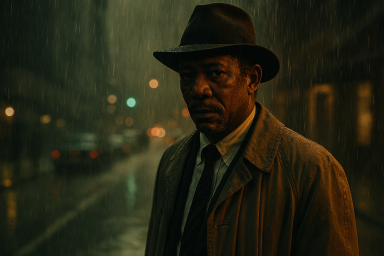
In Se7en, the city is never named—and that omission is the point. It is not a place but a condition, a slow erosion of the human spirit disguised as urban life. The rain is constant, not cleansing but corrosive. The sirens are endless, not urgent but routine. The darkness is not a backdrop but a verdict. This is a city that has forgotten how to care, and in that neglect, it has become something more dangerous than evil: it has become numb.
If you’re drawn to cities as emotional mirrors, explore:
Where The Apartment used New York as a quiet metaphor for loneliness and ambition, Se7en uses its unnamed metropolis as a psychological trap—a place where morality decays not through violence, but through exhaustion. The city is a character, yes, but more importantly, it is a mirror. It reflects Somerset’s resignation, Mills’ idealism, and John Doe’s fanaticism with equal clarity.
“This isn’t an environment for anyone who’s trying to do good.” — Detective Somerset
Somerset moves through the city like a man walking through the ruins of a life he once believed in. He notices the details others ignore—the frayed edges, the quiet cruelties, the small daily surrenders that accumulate into despair. He is not cynical for the sake of cynicism; he is observant. He sees the city for what it is: a machine that grinds down anyone who still believes in the possibility of change.
Mills, by contrast, charges into the city with the energy of someone who still believes he can outrun the darkness. He sees opportunity where Somerset sees inevitability. He sees a challenge where Somerset sees a warning. And the city responds to him the way it responds to all idealists—with indifference at first, then with cruelty.
John Doe, however, sees the city with a terrifying clarity. To him, it is not a place of decay but a stage. A canvas. A moral wasteland begging for a prophet. He does not blame the city for its sins; he blames the people who have learned to live with them. In his mind, the city is not dying—it is asleep. And he intends to wake it.
This is where Se7en becomes more than a thriller. It becomes a study in emotional architecture. The city shapes the characters not through plot, but through atmosphere. It is the pressure cooker that forces Somerset inward, Mills outward, and Doe upward into fanaticism. It is the silent force that binds them together long before they ever meet.
For more character-driven analyses like this, explore our Character Psychology category.
In the end, the city is not the setting of Se7en. It is the antagonist. A quiet, relentless presence that erodes hope, distorts morality, and shapes the fate of every soul who walks its streets.
Somerset & Mills: Two Ways of Surviving the Dark
If the city in Se7en is a moral pressure cooker, then Somerset and Mills are the two human responses to its heat. They are not simply partners; they are emotional opposites forced into the same room, the same case, the same nightmare. Their dynamic is not built on camaraderie or trust, but on something far more fragile: the hope that one of them might be right about the world.
Somerset is a man who has lived long enough to see the city’s patterns. He has watched hope erode, watched justice bend, and watched the system collapse under the weight of its apathy. He is not bitter—bitterness requires energy. He is tired. Quietly, deeply, spiritually tired. His resignation is not defeat; it is self-preservation.
“I don’t think I can continue to live in a place that embraces and nurtures apathy as if it was virtue.” — Detective Somerset
Mills, by contrast, is all forward motion. He believes in effort, in action, and in the possibility that one good man can make a difference. He transfers to the city not because he understands it, but because he wants to conquer it. He is idealism in a leather jacket, optimism with a badge. And the city responds to him the way it responds to all idealists—with a slow, merciless unraveling.
Their partnership is not a mentorship. It is a collision. Somerset sees in Mills the idealism he once had. Mills sees in Somerset the future he fears becoming. They are two men standing at opposite ends of the same emotional bridge, each convinced the other is walking toward disaster.
What makes their dynamic so devastating is that the film never mocks either worldview. Somerset’s resignation is understandable. Mills’ optimism is admirable. Both are human responses to a world that feels increasingly inhumane. But the city—and John Doe—aren't concerned about their philosophies. The case will break one of them. The case will validate the other. And neither outcome is a victory.
In the emotional language of The Apartment, Somerset is Baxter after a lifetime of disappointments—a man who has learned that caring too much is a liability. Mills is Fran before the heartbreak—someone who still believes in the possibility of goodness, even when the world gives her every reason not to. Their arcs are not parallel; they are intertwined, each man’s fate shaped by the other’s blind spots.
For more character-driven analyses like this, explore our Character Psychology category.
In the end, Somerset and Mills are not partners hunting a killer. There are two ways of surviving the dark—one through withdrawal, the other through defiance. And in the world of Se7en, both paths lead to heartbreak.
John Doe: The Romanticism of Moral Extremism
John Doe is not a villain in the traditional sense. He is not chaotic, impulsive, or driven by personal trauma. He is something far more unsettling: a man who believes he has been chosen. A man who sees himself not as a murderer, but as a messenger. A man who looks at a decaying world and decides that the only way to wake it up is through horror.
In the emotional language of The Apartment, Doe is the inverse of Baxter—a man who has taken loneliness and moral disappointment and twisted them into a doctrine. Where Baxter internalizes the world’s indifference, Doe weaponizes it. He believes the city is spiritually dead, and he sees himself as the shock that will jolt it back to life. His fanaticism is not born of rage, but of certainty.
“Wanting people to listen, you can’t just tap them on the shoulder anymore. You have to hit them with a sledgehammer.” — John Doe
What makes Doe terrifying is not the brutality of his crimes but the clarity of his philosophy. He is calm. He is articulate. He is patient. He has spent years preparing his masterpiece, and he never once doubts its purpose. In his mind, he is not committing atrocities—he is creating a moral argument. Each murder is a thesis statement. Each crime scene is a sermon. Each victim is a symbol.
And yet, beneath the meticulous planning and the cold logic, there is something heartbreakingly human about Doe’s worldview. He is a man who cannot tolerate the world as it is. A man who sees apathy everywhere and mistakes it for sin. A man who believes that suffering is the only language people still understand. His extremism is not born of hatred, but of a desperate, misguided longing for meaning.
In this way, Doe becomes the third point in the film’s emotional triangle. Somerset withdraws from the world because he sees its decay. Mills charges into the world because he believes he can fix it. Doe attacks the world because he believes it must be punished. They are three men responding to the same wound—loneliness, moral exhaustion, and the quiet terror that nothing will ever change.
What elevates Doe beyond the typical cinematic killer is his restraint. Fincher never gives him a tragic backstory. Never shows him committing the murders. Never offers a moment of vulnerability. Doe is defined by absence—by the spaces between his words, by the silence in his apartment, by the notebooks filled with thoughts no one was meant to read. He is a ghost haunting a city that no longer believes in ghosts.
For more character-driven analyses like this, explore our Character Psychology category.
In the end, John Doe is not the antagonist of Se7en. He is its thesis. A man who believes that the world is broken beyond repair—and who sets out to prove it, one sin at a time. His tragedy is not that he is evil, but that he is certain.
The Seven Sins as Character Mirrors
The murders in Se7en are not random acts of violence. They are arguments. Each sin is a carefully constructed metaphor, a symbolic indictment of a world that has grown comfortable with its decay. John Doe does not simply kill his victims—he stages them. He turns their lives, their flaws, and their surroundings into a moral tableau. In doing so, he forces the city, the detectives, and the audience to confront the uncomfortable truth that these sins are not anomalies. They are reflections.
In the emotional language of The Apartment, the sins function like the small cruelties and compromises that shape Baxter’s world—the things people tolerate because they are too tired, too lonely, or too afraid to demand better. But in Se7en, those compromises are magnified into grotesque extremes. The sins are not just punishments; they are portraits.
“We see a deadly sin on every street corner, in every home, and we tolerate it.” — John Doe
Gluttony: The Sin of Excess
The first murder is a warning shot—a man forced to eat until his body gives out. It is not about food. It is about indulgence. About the ways people consume to fill the emptiness inside them. In a city where loneliness is a constant hum, excess becomes a coping mechanism. Gluttony is the sin of trying to fill a void that cannot be filled.
Greed: The Sin of Moral Compromise
The wealthy attorney forced to carve a pound of flesh from his body is a direct reference to Shakespeare, but the symbolism is painfully modern. Greed is not about money—it is about the choices people make to protect their comfort at the expense of others. In The Apartment, this sin appears in the executives who use Baxter’s apartment without remorse. In Se7en, it becomes a blood-soaked indictment of a system built on self-preservation.
Sloth: The Sin of Apathy
Sloth is the moment the film shifts from disturbing to nightmarish. A man kept alive for a year, strapped to a bed, surrounded by air fresheners and decay. It is not a murder; it is a slow erasure. Apathy made literal. In a city where people look away from suffering, Doe forces them to look. Sloth is the sin of doing nothing while the world collapses around you.
Lust: The Sin of Exploitation
Lust is not about desire—it is about power. About the ways people use others to satisfy their needs. Doe weaponizes vulnerability, forcing an innocent man into an act of violence that will haunt him forever. It is one of the film’s most psychologically devastating moments because it exposes how easily people can be manipulated into harming others.
Pride: The Sin of Identity
Pride is elegant in its cruelty. A model is given a choice: live disfigured or die. She chooses death. Doe does not punish her vanity; he exposes the societal pressure that created it. Pride is the sin of believing that worth is tied to appearance—a belief reinforced by the world around her. In The Apartment, Fran struggles with this same pressure, though in a gentler, more human way. In Se7en, the consequences are fatal.
Envy & Wrath: The Final Movement
The final two scenes are not crime scenes. They are a performance. Doe envies Mills’ life—his wife, his hope, his belief in goodness. Mills becomes Wrath—the embodiment of righteous fury. These sins are not about the victims. They are about the detectives. About the emotional architecture of the story. About the tragic inevitability of two men walking toward each other from opposite ends of the moral spectrum.
In the end, the Seven Sins are not a puzzle to be solved. They are a mirror held up to a world that has forgotten how to feel. A world where loneliness breeds apathy, where apathy breeds cruelty, and where cruelty becomes so common that only a monster can make people notice it again.
For more character-driven analyses like this, explore our Character Psychology category.
The Ending: A Tragic Duet
The ending of Se7en is not a twist. It is an inevitability—the final movement of a tragedy that began long before Somerset and Mills ever met John Doe. The box in the desert is not a shock device; it is the emotional architecture of the entire film collapsing in on itself. It is the moment when the city’s moral decay becomes personal, when philosophy becomes flesh, when hope becomes a liability.
Somerset opens the box. Mills does not. That distinction matters. Somerset sees the truth and tries to contain it. Mills feels the truth and becomes it. In that instant, their worldviews collide with devastating clarity. Somerset’s resignation is validated. Mills’ optimism is destroyed. And John Doe’s masterpiece is complete.
The emotional collapse at the end of Se7en echoes themes we explore across our Character Psychology work — especially the way hope fractures under pressure. Mills’ transformation into Wrath mirrors the same emotional unraveling we examine in movies about grief, where loss becomes a catalyst rather than a conclusion. Somerset’s weary resolve, meanwhile, aligns with the quiet resilience found in movies about loneliness, stories where characters continue fighting even when the world refuses to meet them halfway. The film’s meditation on moral decay also connects to our broader exploration of movies about moral decay, where institutions fail, ideals erode, and characters are forced to confront the cost of caring. And if the psychological tension of Doe’s philosophy resonates with you, our collection of psychological thrillers expands on the same emotional terrain—stories where certainty becomes dangerous and morality becomes a battlefield. For more emotionally intelligent, character-driven analyses, explore our full archive of character psychology breakdowns.
“Become wrath.” — John Doe
Doe’s plan is not to escape. It is to win. And winning, for him, means proving that even the most hopeful man can be broken. That even the purest intentions can be corrupted. That even a good detective—a good husband—can be transformed into a weapon. Mills does not kill Doe out of justice. He kills him out of grief. Out of love. Out of the unbearable weight of a world that refuses to reward goodness.
In the emotional language of The Apartment, this moment mirrors the quiet heartbreak of Fran’s realization—the moment she understands that the world she believed in is not the world she lives in. But where Fran finds a sliver of hope, Mills finds only devastation. His story does not end with a romantic gesture. It ends with the shattering of his worldview.
Somerset watches Mills unravel, and in that unraveling, he sees the future he feared. The city has claimed another soul. Another idealist. Another man who believed he could make a difference. Somerset’s final decision—to stay on the force—is not an act of hope. It is an act of responsibility. Someone must remain. Someone must bear witness. Someone must fight, even when the fight feels impossible.
“The world is a fine place and worth fighting for.” — Detective Somerset
“I agree with the second part.”
That final line is the film’s quiet thesis. Somerset does not believe the world is fine. But he believes it is worth fighting for. Not because it is good, but because someone must try to keep it from getting worse. It is the same emotional truth that anchors The Apartment: the idea that even in a world built on indifference, small acts of humanity still matter.
For more emotionally intelligent, character-driven analyses, explore our Character Psychology category.
In the end, the tragedy of Se7en is not that evil triumphs. It is that hope breaks. And yet, in that breaking, Somerset finds a reason to stay. A reason to keep fighting. A reason to believe that even in the darkest city, someone must carry the light—however dim it may be.
Why Se7en Still Haunts Us
Some films fade when the credits roll. Se7en is not one of them. It lingers—in the mind, in the culture, in the quiet spaces where we store our private fears. What makes the film unforgettable is not the brutality of its murders, but the emotional honesty beneath them. Fincher does not sensationalize darkness; he observes it. He does not create a world of monsters; he reveals the monsters we tolerate.
In the emotional language of The Apartment, Se7en is a story about the small heartbreaks that accumulate over a lifetime. Somerset’s resignation. Mills’ optimism. Doe’s fanaticism. These are not reactions to the case—they are the emotional architecture of their lives. The murders simply expose what was already there.
“The world is a fine place and worth fighting for.” — Detective Somerset
“I agree with the second part.”
That final line is the film’s quiet thesis. Somerset does not believe the world is fine. But he believes it is worth fighting for. Not because it is good, but because someone must try. It is the same emotional truth that anchors The Apartment: the idea that even in a world built on indifference, small acts of humanity still matter.
Se7en haunts us because it refuses to lie. It refuses to pretend that justice always prevails, that good always triumphs, or that hope is always rewarded. Instead, it offers something far more honest—the idea that hope is fragile, that goodness is rare, and that the fight for both is what makes us human.
The film’s legacy is not its twist ending or its iconic box scene. Its legacy is the emotional residue it leaves behind—the sense that the world is darker than we want to admit, but that people like Somerset and Mills exist anyway. One weary, one hopeful, both necessary.
In the end, Se7en is not a story about a killer. It is a story about the cost of caring in a world that punishes those who try. It is a story about the fragility of hope, the weight of loneliness, and the quiet courage required to keep going when the world gives you every reason to stop.
For more emotionally intelligent, character-driven analyses, explore our Character Psychology category.
That is why Se7en endures. Not because it shocks us—but because it understands us.
Frequently Asked Questions About Se7en (1995)
What is Se7en about?
Se7en is a neo-noir psychological thriller following Detectives William Somerset and David Mills as they investigate a series of murders inspired by the seven deadly sins. Beneath the crime narrative lies a deeper story about moral decay, loneliness, and the fragile hope that survives in a world that feels increasingly indifferent.
Who directed Se7en?
The film was directed by David Fincher, known for his meticulous visual style, atmospheric tension, and psychologically driven storytelling.
Who stars in the film?
The main cast includes Morgan Freeman as Detective Somerset, Brad Pitt as Detective Mills, and Kevin Spacey as John Doe. Gwyneth Paltrow appears as Tracy Mills, whose emotional arc becomes central to the film’s devastating conclusion.
Why is the city unnamed?
The city is intentionally left unnamed to create a universal sense of decay and hopelessness. It represents every city—a place where apathy has become normal and moral erosion is part of daily life. The anonymity makes the story feel timeless and disturbingly familiar.
Is Se7en based on a true story?
No. The film is entirely fictional, though it draws on biblical symbolism, literary references, and real-world anxieties about violence, corruption, and societal numbness.
What makes John Doe such a disturbing villain?
John Doe is terrifying because he believes he is morally justified. He sees himself as a prophet exposing society’s sins through symbolic murders. His calm demeanor, meticulous planning, and unwavering certainty make him one of cinema’s most chilling antagonists.
What is the meaning of the ending?
The ending completes John Doe’s design: he becomes Envy by killing Tracy Mills, and he manipulates David Mills into becoming Wrath by killing him. The tragedy is not the twist itself, but the emotional collapse it triggers—Mills’ hope is destroyed, Somerset’s fears are validated, and Doe’s philosophy triumphs even in death.
Why does Somerset stay on the force at the end?
Somerset’s decision to stay is not optimism—it is responsibility. After witnessing Mills’ collapse, he understands that someone must remain to confront the darkness the city produces. His choice reflects a quiet, weary form of courage.
Why does Se7en still resonate today?
The film remains relevant because its themes—apathy, moral decay, extremism, and the fragility of hope—are timeless. Se7en speaks to the emotional exhaustion of modern life and the quiet heroism required to keep caring in a world that often feels beyond saving.
What genre is Se7en?
Se7en is a neo-noir psychological crime thriller, blending elements of mystery, horror, and moral philosophy. Its tone is bleak, atmospheric, and emotionally charged.
Where can I find more character psychology breakdowns?
You can explore more emotionally intelligent, character-driven analyses in our Character Psychology category.
Grow through the stories that shape you!
If you’re exploring the backstories of movies, why not binge on these cinematic shorts! Plot twists that you never see coming, the “why” in what a story is teaching you, and the art of being seen—then join me on YouTube! I create thoughtful, cinematic lessons designed to help you see your life with more compassion, courage, and intention.
Subscribe to Back Story Movies on YouTube! →
Did I forget to mention, get more creativity in your life and shop the merch at Creativity Is Expression! Visit now @