

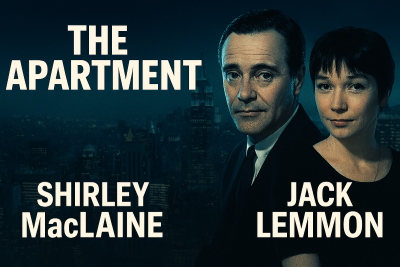
Summary:
Billy Wilder's "The Apartment" delves into the psychological complexities of loneliness and moral compromise through the characters C.C. Baxter and Fran Kubelik. Both characters navigate a world that values compliance over individuality, leading them to negotiate their self-worth. The film uses visual storytelling to highlight themes of invisibility and power dynamics, ultimately portraying a journey of self-reclamation and mutual recognition.
Key Takeaways
- The Apartment exposes the emotional cost of ambition in systems that reward performance over personhood.
- Baxter and Fran reveal how identity erodes when personal space—literal or metaphorical—becomes transactional.
- Corporate masculinity thrives on invisibility, silence, and the illusion that exploitation is “just how things work.”
- Reclaiming one’s “apartment” becomes an act of spiritual defiance in a culture that blurs the line between work and self.
- “Shut up and deal” isn’t romance—it's a philosophy of presence, honesty, and imperfect connection.
- The film’s moral inventory challenges us to examine our compromises and the systems that normalize them.
Sixty-three years after its release, Billy Wilder's masterpiece continues to haunt corporate hallways and lonely studio apartments across America. Not because it's a ghost story—though in many ways it is—but because The Apartment captured something essential about the human cost of success that feels more relevant now than ever. In our current era of quiet quitting, work-life balance debates, and what some call a collective “personal awakening,” this black-and-white film from 1960 serves as both a mirror and a warning.
I first watched The Apartment during a particularly soul-crushing period of my own corporate life. There I was, eating takeout at my desk at 9 PM, when Jack Lemmon's C.C. “Bud” Baxter appeared on my laptop screen, straining spaghetti through a tennis racket in his bachelor pad. The absurdity of that image—a man so disconnected from normal life that he's improvising basic kitchen tools—struck me like a slap. This wasn't just comedy; it was prophecy.
Explore more in the Character Psychology collection.
The Architecture of Compromise
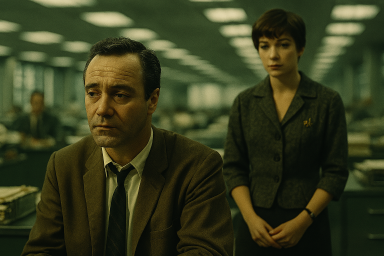
Wilder builds The Apartment on a premise so simple it almost feels harmless: Baxter, a low‑level insurance clerk, lends his apartment to company executives for their affairs in exchange for the promise of promotion. But beneath that transactional setup lies a brutal truth about the emotional economics of ambition. The film isn’t just asking what we’re willing to do for success—it's asking what parts of ourselves we’re willing to lease out along the way.
The apartment becomes the film’s quiet antagonist, a space that belongs to everyone and no one. What should be Baxter’s sanctuary turns into a corporate utility, complete with a scheduling system that would impress any modern project manager. He keeps logs, coordinates keys, negotiates time slots, and mediates conflicts when executives double‑book his bed. It’s capitalism colonizing the last private corner of a man’s life—decades before smartphones would make that invasion complete.
What hits hardest is how Wilder uses physical space to map psychological erosion. Baxter doesn’t simply lose access to his apartment; he loses access to himself. He becomes a ghost haunting his life, wandering the streets while strangers occupy the one place meant to hold his identity. The symbolism isn’t subtle, but it doesn’t need to be. Some truths don’t require nuance—they require recognition.
The emotional architecture of The Apartment connects deeply with many of the themes we explore across our character psychology work. Baxter’s erosion of identity mirrors the quiet unraveling we examine in movies about loneliness, where characters lose themselves in systems that demand silence and compliance. Fran’s fractured sense of self echoes the emotional terrain found in movies about grief, stories where people carry invisible burdens until something finally breaks.
The film’s indictment of corporate power aligns with our broader exploration of movies about moral decay, where institutions thrive on exploitation disguised as opportunity. And if the psychological tension between performance and authenticity resonates with you, our collection of psychological thrillers expands on the same emotional pressures that shape Baxter and Fran’s world. For more films that explore identity, boundaries, and emotional reclamation, explore our full archive of character psychology breakdowns.
If you’re drawn to stories with this emotional tone, explore Movies That Make You Feel Something .
Fran Kubelik and the Price of Being “A Good Sport”
Shirley MacLaine’s Fran Kubelik carries a different kind of burden than Baxter—one that’s quieter, more insidious, and far more familiar to women who’ve been asked to smile through discomfort. Baxter trades his apartment for promotions; Fran is expected to trade her emotional well‑being for… what, exactly? The illusion of being chosen? The scraps of affection from a married boss who keeps her waiting in the shadows. Fran embodies every woman who’s been told to “be a good sport” about harassment, to laugh off inappropriate remarks, and to stay patient while a man decides whether she’s worth the inconvenience of honesty.
The elevator she operates becomes her own emotional treadmill—up and down, up and down, endlessly moving but never arriving anywhere. I’ve known too many Frans: brilliant, intuitive women reduced to set dressing in male‑dominated power games. MacLaine plays her with a devastating blend of wisdom and vulnerability, a woman who understands the rules of the game but hasn’t yet found the strength to stop playing it.
One of the film’s most haunting images is Fran looking at herself in Baxter’s cracked compact mirror—a Christmas gift from her married lover, broken in a moment of emotional collapse. That fractured reflection becomes the film’s quiet thesis: these compromises don’t just bruise us; they splinter us. We begin to see ourselves broken, never fully whole, always slightly distorted by the expectations of others.
For a more in-depth look at this theme, read “Why You Miss Someone Who Wasn’t Meant for You.”
The Christmas Party Nobody Wants to Attend
The emotional center of The Apartment—Fran's suicide attempt in Baxter’s apartment on Christmas Eve—remains one of the most quietly devastating sequences in American cinema. Wilder drops the comedy mask entirely here. This isn’t a romantic farce; it’s an indictment of a system that grinds people down until they can no longer see a way out.
What makes the scene feel even sharper today is how clearly it anticipates our modern mental health crisis. Fran doesn’t break because of one heartbreak. She breaks under the cumulative weight of being treated as disposable—of being asked to smile through humiliation, to wait for a man who will never choose her, and to perform emotional labor for people who don’t see her as fully human. She’s exhausted. She’s lonely. She’s done pretending she’s okay.
Baxter’s frantic attempts to save her—slapping her awake, forcing coffee into her, pacing the apartment with her half-conscious body—feel painfully real. Jack Lemmon sheds the comic everyman persona and becomes something rawer, more vulnerable. This is what genuine care looks like: messy, terrified, imperfect, but rooted in real human connection. It’s the first moment in the film where someone chooses Fran not for what she offers, but for who she is.
Corporate Masculinity and Its Discontents
The executives in The Apartment embody a particular strain of mid‑century American masculinity—one that hasn’t disappeared so much as shapeshifted. These men—Sheldrake, Dobisch, Kirkeby, Vanderhoff, and Eichelberger—treat women, subordinates, and even Baxter’s apartment as interchangeable resources. They’ve collapsed the concepts of power and virility into a single, toxic equation: dominance equals desirability; exploitation equals success.
Fred MacMurray’s Sheldrake is the most chilling expression of this ethos. Audiences in 1960 knew him as the wholesome father from My Three Sons, which makes his performance here even more unsettling. Sheldrake isn’t a cartoon villain. He doesn’t leer or sneer or twirl a mustache. He simply assumes the world will rearrange itself for his convenience—and it usually does. His entitlement is so normalized that he barely recognizes it as entitlement at all.
I’ve worked for Sheldrakes. If I’m honest, I’ve probably slipped into Sheldrake‑like behavior in moments I’m not proud of. That’s the film’s quiet brilliance: it shows how these power structures feel perfectly reasonable from the inside. Nobody wakes up thinking they’re the villain of their story. Sheldrake likely sees himself as a good provider, a successful man, maybe even a romantic figure. The executives using Baxter’s apartment probably think of themselves as red‑blooded American men blowing off steam.
Wilder’s point is devastating in its simplicity: systems of power don’t require malicious intent to cause harm. They only require people who benefit from them to never question the arrangement.
The Metaphysics of “Shut Up and Deal”
The film’s final line—Fran's quiet, almost playful “Shut up and deal”—has been analyzed for decades, but most interpretations flatten its radical simplicity. It isn’t a romantic declaration. It isn’t a promise of forever. It’s something far more profound: an agreement to be present with another human being without demanding they perform a role.
Throughout the film, both Baxter and Fran have been cast in parts they never auditioned for—the accommodating subordinate, the good‑time girl, the company man, and the other woman. Their entire lives have been shaped by expectations imposed from above. In choosing each other, they’re not choosing romance so much as choosing authenticity. They’re saying, Let's stop performing. Let’s stop contorting ourselves into shapes that please other people. Let’s just be.
Even the choice of game matters. Gin rummy is the opposite of the power games that dominate their work lives. It has clear rules, honest scoring, and no hidden agendas. You can’t bluff your way through gin rummy; you either have the cards or you don’t. After a film full of deception, manipulation, and emotional sleight of hand, there’s something almost sacred about this simple, transparent game between two people who have finally stopped lying to others and to themselves.
“Shut up and deal” isn’t a punchline. It’s a philosophy. A tiny, revolutionary act of choosing presence over performance, truth over illusion, and connection over compromise.
Why This Film Matters Now More Than Ever
In our age of so‑called personal awakening—a phrase I use with skepticism but also with recognition—The Apartment feels less like a relic and more like a diagnostic tool. Wilder validates what so many people feel today: the systems we move through can be soul‑crushing. The game is often rigged. And no, you’re not imagining the emotional toll of a culture that asks you to sacrifice your humanity for productivity.
But the film doesn’t stop at validation. It asks harder, more uncomfortable questions. How complicit are we in our exploitation? When does survival become collaboration? At what point does adapting to a broken system become a form of self‑betrayal?
The movie resonates with uncanny force in our current moment of workplace reckoning. The #MeToo movement exposed countless Sheldrakes. The Great Resignation was millions of Baxters finally refusing to hand over their evenings, their boundaries, and their beds. Even the debates around remote work echo the film’s central tension: where does professional life end and personal life begin?
I often think about Baxter’s neighbors, who assume he’s a playboy because of all the “entertaining” he does. They have no idea he’s usually wandering the streets while strangers use his bed. That misunderstanding feels painfully contemporary. How many of us are performing successfully while privately unraveling? How many of us are mistaking transaction for connection, advancement for progress, and visibility for being seen?
Wilder understood something we’re only now learning to articulate: the cost of belonging to a system that was never designed to care about us.
The Apartment as Sacred Space
One of the most compelling readings of The Apartment treats Baxter’s home as a sacred space that’s been desecrated. In many spiritual traditions, the home is a stand‑in for the soul—the place where identity, safety, and selfhood reside. By allowing his apartment to be colonized by corporate interests, Baxter isn’t just giving up a room; he’s giving up pieces of himself. Not in one dramatic Faustian bargain, but in a thousand tiny compromises that feel harmless until they hollow you out.
Redemption arrives when Baxter finally reclaims that space. When Sheldrake demands the apartment key for New Year’s Eve, Baxter refuses. Instead, he hands over the executive washroom key—a symbolic return of the false privilege that cost him too much. In that moment, the apartment becomes his again, but more importantly, he becomes his. It’s the first time he chooses integrity over advancement and selfhood over survival.
This reclamation of sacred space feels urgently relevant in an always‑on culture where boundaries erode by the day. How many of us have handed out our own metaphorical keys—to our time, our attention, our emotional bandwidth—without realizing what we were giving away? How many of us need to say, with Baxter’s quiet resolve, “This space is mine, and you can’t have it”?
The Limits of Individual Awakening
Here’s where the film becomes uncomfortable in a way most modern “personal awakening” narratives avoid. The Apartment isn’t ultimately optimistic about individual enlightenment as a cure for systemic rot. Yes, Baxter and Fran choose authenticity over performance—but what about the other Baxters still lending out their apartments? What about the other Frans still running elevators, still fending off married men, still being told to smile through humiliation?
The ending, as emotionally satisfying as it is, functions as a retreat rather than a revolution. Baxter and Fran don’t expose the company. They don’t dismantle the hierarchy. They don’t confront the culture that exploited them. They simply opt out. It’s a personal victory that leaves the machinery of exploitation humming along untouched.
This tension—between individual liberation and collective transformation—defines our current moment. We celebrate people who quit toxic jobs, who set boundaries, and who choose authenticity. But what about those who can’t afford to quit? What about the systems that depend on people not having that choice? What about the structures that remain intact even as individuals escape them?
I keep thinking about Baxter’s neighbors, who misread his suffering as success. They assume he’s a playboy because of all the “entertaining” he does, never realizing he’s usually wandering the streets while strangers use his bed. That misinterpretation feels painfully contemporary. How many of us are performing stability while privately drowning? How many of us are mistaking escape for change or personal progress for collective progress?
Wilder understood something we’re still wrestling with: awakening is not the same as transformation. One frees the individual. The other frees the world.
Beyond the Binary
Perhaps the film’s deepest wisdom lies in its refusal to offer easy moral categories. Baxter isn’t purely a victim or purely complicit. Fran isn’t purely tragic or purely triumphant. Even Sheldrake—the film’s most obvious antagonist—gets moments of vulnerability, especially when his wife throws him out. Wilder understands that real life doesn’t divide neatly into heroes and villains. It divides into people making choices under pressure, often with incomplete information and compromised options.
This complexity matters because it mirrors our positions within the systems we critique. Most of us aren’t pure victims of capitalism or pure beneficiaries of it. We’re caught in the middle, making daily calculations about what we’re willing to trade for security, advancement, or simple survival. The film honors this ambiguity while still insisting that some trades—the ones that cost us our dignity, our boundaries, and our sense of self—are never worth making.
I keep returning to that image of Baxter straining spaghetti through a tennis racket. It’s absurd, yes, but also deeply human. He’s improvising. He’s adapting. He’s making do with what he has. Maybe that’s what we’re all doing—straining our lives through whatever makeshift tools we can find, hoping that something nourishing comes through on the other side.
The Ongoing Relevance of Moral Inventory
What The Apartment offers our era of personal awakening isn’t a roadmap but a mirror. It forces us to confront our compromises, our own borrowed spaces, and our own cracked compacts. It asks the questions we’d rather avoid: What are we trading? Why are we trading it? And who are we becoming in the process?
The film suggests that awakening isn’t a destination but a practice—often painful, usually incomplete, always necessary. Baxter doesn’t transform into a hero; he simply stops being a doormat. Fran doesn’t find perfect love; she finds someone willing to sit across from her and play cards honestly. These victories may seem small, but Wilder argues they’re the only victories that matter: the ones that restore dignity, presence, and selfhood.
As I write this, I’m thinking about all the apartments—literal and metaphorical—being borrowed, traded, and colonized right now. I’m thinking about the Baxters sleeping on park benches of their making, the Frans riding elevators to nowhere, and the Sheldrakes, who still assume the world will rearrange itself for their convenience. The film’s final message is deceptively simple: reclaiming your space is possible, but it requires saying no to false promises and yes to messy, imperfect connections.
“Shut up and deal,” Fran says—and maybe that’s the closest thing we have to a spiritual directive. Show up. Be present. Play the hand you’ve been given with as much honesty as you can muster. In a world built on power games and borrowed spaces, that might be the most radical act of all.
The final movement of The Apartment resonates with many of the themes we explore across our character psychology work—especially the quiet, interior revolutions that happen when people finally reclaim their boundaries. Baxter’s refusal to hand over his apartment key mirrors the emotional turning points we examine in movies about moral decay, where characters confront systems designed to consume them. Fran’s decision to walk away from Sheldrake echoes the emotional clarity found in movies about loneliness, stories where people rediscover their worth after long periods of invisibility.
The film’s critique of corporate power also aligns with the psychological tension explored in our collection of psychological thrillers, where identity is often shaped—and distorted—by the environments people inhabit. And if the film’s meditation on emotional exhaustion resonates with you, our breakdowns of movies about grief expand on the same fragile, human longing for connection that anchors Baxter and Fran’s final scene. For more emotionally intelligent, character-driven analyses, explore our full archive of character psychology breakdowns.
World's Most Authoritative Sources:
- Wilder, Billy, director. The Apartment. United Artists, 1960.
- Chandler, Charlotte. Nobody's Perfect: Billy Wilder, A Personal Biography. Simon & Schuster, 2002.
- Dick, Bernard F. Billy Wilder. Boston: Twayne Publishers, 1980.
- Gehring, Wes D. Romantic vs. Screwball Comedy: Charting the Difference. Scarecrow Press, 2002.
- Harvey, James. Romantic Comedy in Hollywood, from Lubitsch to Sturges. New York: Knopf, 1987.
- Lally, Kevin. Wilder Times: The Life of Billy Wilder. New York: Henry Holt, 1996.
- Phillips, Gene D. Some Like It Wilder: The Life and Controversial Films of Billy Wilder. University Press of Kentucky, 2010.
- Sikov, Ed. On Sunset Boulevard: The Life and Times of Billy Wilder. New York: Hyperion, 1998.
- Wood, Tom. The Bright Side of Billy Wilder, Primarily. Garden City, NY: Doubleday, 1970.
- Zolotow, Maurice. Billy Wilder in Hollywood. New York: Putnam, 1977.
“Shut Up and Deal”
“Shut up and deal” isn’t a punchline — it’s a promise of mutual recognition.
Final Takeaway: Why The Apartment Still Matters
“The Apartment isn’t a romance — it’s a reclamation.”
FAQ: The Apartment (1960)
This FAQ expands on the emotional insights we explore in our Character Psychology category.
Why is The Apartment considered one of the greatest American films?
Because it blends comedy, tragedy, and social critique with rare precision. Wilder exposes the emotional cost of ambition, the loneliness of corporate life, and the quiet heroism of reclaiming one’s identity—all without sacrificing character depth or narrative charm.
What makes Baxter such a compelling protagonist?
He represents the modern worker who trades pieces of himself for professional approval. His journey isn’t about becoming extraordinary; it’s about finally refusing to be exploited. That small act of self‑respect becomes the film’s emotional revolution.
Why is Fran Kubelik such an important character?
Fran embodies the emotional labor expected of women in male‑dominated systems. Her arc isn’t about being rescued—it's about recognizing her worth and choosing honesty over illusion.
Is the film’s ending meant to be romantic or realistic?
Both. “Shut up and deal” isn’t a fairy‑tale ending; it’s a commitment to presence, honesty, and imperfect connection. It's romance grounded in reality—two people choosing authenticity over performance.
What does Baxter’s apartment symbolize?
It represents the self. When Baxter allows executives to use his home, he’s surrendering his identity. When he reclaims it, he reclaims himself. The apartment is the film’s spiritual center.
How does the film connect to modern workplace culture?
Its themes—burnout, boundary erosion, and exploitation disguised as opportunity—feel eerily contemporary. The #MeToo movement, the Great Resignation, and remote‑work debates all echo the film’s core question: What is the cost of belonging to a system that doesn’t care about you?

Grow through the stories that shape you!
If you’re exploring the backstories of movies, why not binge on these cinematic shorts! Plot twists that you never see coming, the “why” in what a story is teaching you, and the art of being seen—then join me on YouTube! I create thoughtful, cinematic lessons designed to help you see your life with more compassion, courage, and intention.
Subscribe to Back Story Movies on YouTube! →Did I forget to mention, get more creativity in your life and shop the merch at Creativity Is Expression! Visit now @