

Summary:
This article uncovers the nuances behind "movies with strong female leads". Hollywood's portrayal of strong female leads has evolved from simplistic archetypes to complex characters defined by emotional intelligence, moral courage, and vulnerability. This shift, driven by changing audience expectations and groundbreaking performances, has expanded the cinematic landscape to include diverse narratives. International films also contribute to this evolution, showcasing culturally nuanced portrayals of strength. Despite progress, the journey continues to include more varied representations, aiming for a future where female leads are standard protagonists rather than exceptions.
Some revolutions arrive with a roar. Others unfold quietly, reshaping the world one character at a time. Cinema has always reflected our fears, our desires, and the stories we tell ourselves about who gets to be powerful. Strength on screen has never been one-size-fits-all—and the women who redefine it are rewriting cinema itself.
For decades, Hollywood has wrestled with the idea of what makes a woman “strong.” Early cinema often reduced female characters to archetypes—the damsel, the love interest, the caretaker—roles that revolved around male protagonists rather than their desires. But as audiences evolved, so did the stories. Today’s strong female leads are not defined by physical dominance alone. They are defined by emotional intelligence, moral complexity, vulnerability, and the courage to take up space in narratives that once excluded them.
The shift didn’t happen overnight. It emerged from decades of performances that challenged expectations, directors who pushed boundaries, and audiences who demanded more. What we now call “strength” is no longer limited to stoicism or physical power—it's the willingness to be flawed, to be human, to be real. And that evolution has reshaped the cinematic landscape.
If you’re drawn to stories where character, psychology, and cultural evolution intersect, you’ll find even more in‑depth cinematic breakdowns across our Character Psychology, Morally Gray Protagonists, and Movies That Make You Feel Something categories. For narratives that explore how identity, power, and perception collide, our guide to movies like The Social Network examines the psychology behind ambition and reinvention. If you’re fascinated by characters who challenge the surrounding systems, explore our breakdown of movies like The Truman Show, where self‑discovery becomes rebellion. And if you gravitate toward stories that blend emotional depth with resilience and truth, our guide to movies like Hidden Figures highlights narratives that redefine strength through courage, intelligence, and humanity. For more emotionally rich, culturally aware recommendations, explore our full archive of streaming guides.
The Evolution of Strong Female Leads in Cinema
In Hollywood’s Golden Age, women were often positioned as satellites orbiting male heroes. They were glamorous, witty, and charismatic—but rarely the architects of their destinies. Yet even within those constraints, certain performances hinted at a deeper, more complex strength.
“Women have always been strong. It’s just that the world has often been too afraid to see it.” — Adapted from themes discussed by Molly Haskell (1987)
Katherine Hepburn’s characters in The Philadelphia Story (1940) and Adam’s Rib (1949) were sharp, assertive, and unapologetically intelligent. They challenged the expectations of their time, even if the scripts ultimately nudged them back into traditional roles. These early performances planted the seeds for what would become a cinematic revolution.
Explore more character‑driven, psychologically rich film guides:
The Ripley Effect
The late 1970s and 80s marked a turning point. Ellen Ripley in Alien (1979) wasn’t just a survivor—she was a revelation. Sigourney Weaver’s portrayal expanded the definition of feminine strength without stripping away her humanity. Ripley wasn’t strong because she mimicked masculinity; she was strong because she embodied resourcefulness, intelligence, and emotional depth.
Her character proved that audiences were ready for women who led with competence, courage, and complexity. Ripley became a blueprint for future heroines—not because she was perfect, but because she was real.
Around the same time, Sally Field’s Norma Rae (1979) showcased a different kind of power: conviction. Her strength wasn’t physical—it was moral, communal, and deeply human. These performances broadened the cinematic vocabulary of strength.
Breaking the Mold: Modern Powerhouse Performances
Today’s cinematic landscape is filled with female leads who defy easy categorization. Charlize Theron’s Furiosa in Mad Max: Fury Road (2015) is a masterclass in physical and emotional storytelling. Her performance blends grit with vulnerability, creating a character who is both fierce and deeply empathetic.
Frances McDormand’s Mildred Hayes in Three Billboards Outside Ebbing, Missouri (2017) is fueled by grief, rage, and a relentless pursuit of justice. Her strength is messy, raw, and deeply human—a reminder that resilience often emerges from pain.
And then there’s Amy Dunne in Gone Girl (2014). Rosamund Pike’s chilling performance challenges the idea that female strength must be virtuous. Amy is manipulative, brilliant, and terrifying—a character who forces audiences to confront their biases about femininity and power.
Even the Marvel Cinematic Universe—often criticized for formulaic storytelling—has given us nuanced female characters. Black Widow’s arc explores trauma, guilt, and redemption, while Captain Marvel’s Carol Danvers embraces her power without apology.
International Perspectives on Female Strength
American cinema doesn’t hold a monopoly on powerful female leads. International films have long embraced complexity, agency, and emotional nuance.
- South Korea: The Handmaiden (2016) features two women navigating deception, desire, and liberation.
- Japan: Studio Ghibli heroines like Nausicaä and San embody environmental stewardship, courage, and spiritual strength.
- France: Characters like Amélie Poulain show that strength can be whimsical, gentle, and quietly transformative.
These global perspectives remind us that strength is culturally shaped—but universally resonant.
The Quiet Revolution: Subtle, Everyday Strength
Not every strong female lead needs to save the world. Some of the most powerful performances come from women navigating ordinary struggles with extraordinary grace.
Saoirse Ronan’s Lady Bird captures the fierce determination of adolescence. Lupita Nyong’o’s dual performance in Us (2019) explores identity, trauma, and generational pain with haunting precision.
“Strength is not always loud. Sometimes it’s the quiet decision to keep going.” — Inspired by bell hooks (1996)
These characters remind us that resilience often emerges from the quietest moments—the ones that rarely make headlines but shape lives.
The Economics of Female-Led Films
For decades, Hollywood executives insisted that female-led films didn’t sell. Then the numbers proved them wrong.
- Wonder Woman (2017): $800M+
- Captain Marvel (2019): $1B+
- Hidden Figures (2016): $236M worldwide
Audiences aren’t just willing to watch female-led stories—they're hungry for them. And the financial success of these films has opened doors for more diverse, complex narratives.
The Complexity Conundrum: Imperfect, Human Strength
One troubling trend is the pressure for female characters to be “perfectly strong.” Real strength includes vulnerability, mistakes, and growth.
Natalie Portman’s Nina in Black Swan (2010) is strong not because she’s stable, but because her unraveling is portrayed with such psychological depth. Tilda Swinton’s Eva in We Need to Talk About Kevin (2011) embodies a mother grappling with unthinkable circumstances.
These characters aren’t aspirational—they're human. And that’s what makes them unforgettable.
Genre-Bending Female Leaders
Female leads are increasingly refusing to stay in one lane.
- Horror: Toni Collette’s devastating performance in Hereditary (2018)
- Sci-Fi: Amy Adams’ linguist in Arrival (2016)
- Comedy: The chaotic brilliance of Bridesmaids (2011) and Girls Trip (2017)
These performances prove that women can anchor any genre—and elevate it.
The Young Guard: Rising Voices Redefining Strength
The next generation of female leads is perhaps the most exciting. Millicent Simmonds brings deaf representation to the forefront in A Quiet Place. Thomasin McKenzie’s roles in Jojo Rabbit and Leave No Trace showcase emotional intelligence far beyond her years.
These young actors aren’t just playing strong characters—they're redefining what strength looks like for their generation.
Sigourney Weaver’s reflections on Ripley offer invaluable insight into how one character reshaped the cinematic landscape. Her interview highlights the intentionality behind Ripley’s strength—a blend of vulnerability, competence, and humanity that continues to influence female leads today.
Looking Forward: The Unfinished Revolution
We’ve come far from the days when female characters existed solely to motivate male heroes. But the revolution isn’t finished. We need more stories about older women, disabled women, queer women, women of color, women with different body types, and women whose strength doesn’t fit into neat categories.
The real victory will come when a female lead is no longer a statement—just a protagonist.
FAQ
Why are strong female leads important?
Because representation shapes culture. When women see themselves reflected as complex, powerful, and human, it expands what feels possible.
Do strong female characters have to be physically tough?
Not at all. Emotional resilience, intelligence, vulnerability, and moral courage are equally powerful forms of strength.
What genres feature the strongest female leads?
All of them. From horror to sci-fi to comedy, women are redefining genre expectations.
Are female-led films financially successful?
Yes—consistently. Box office data disproves the myth that audiences won’t watch female-led stories.
Poll: What Defines a Strong Female Lead?
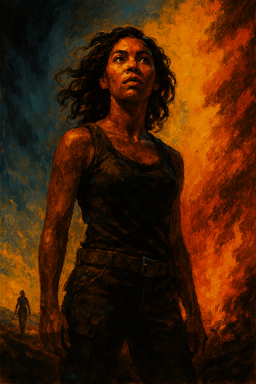
A cinematic collage-style illustration symbolizing the evolution of strong female leads, featuring four stylized silhouettes in dramatic lighting, layered textures, and warm–cool color contrasts representing resilience, transformation, and emotional depth.
A cinematic collage-style illustration symbolizing the evolution of strong female leads, featuring four stylized silhouettes in dramatic lighting, layered textures, and warm–cool color contrasts representing resilience, transformation, and emotional depth.
More to discover…
- Haskell, Molly. From Reverence to Rape (1987)
- hooks, bell. Reel to Real (1996)
- Mulvey, Laura. “Visual Pleasure and Narrative Cinema” (1975)
- USC Annenberg Inclusion Initiative (2018)
- Tasker, Yvonne. Spectacular Bodies (1993)
Before You Go…
If this exploration of strong female leads resonated with you—the evolution, the complexity, the quiet and loud revolutions—you'll find even more character‑driven analysis across our Character Psychology, Morally Gray Protagonists, and Movies That Make You Feel Something categories. For stories that examine how identity, power, and perception collide, explore our guide to movies like The Social Network, where ambition and reinvention reshape the narrative. If you’re drawn to characters who challenge the surrounding systems, our breakdown of movies like The Truman Show dives into the psychology of self‑discovery and resistance. And if you gravitate toward emotionally rich stories of resilience, intelligence, and courage, our guide to movies like Hidden Figures highlights narratives that redefine strength through humanity. For more culturally aware, emotionally intelligent film guides, explore our full archive of streaming recommendations.
And I’d love to hear from you: Which female lead shaped your idea of strength? Share your thoughts, your favorites, or your personal cinematic turning point in the comments. Your perspective might inspire the next article.
Grow through the stories that shape you!
If you’re exploring the backstories of movies, why not binge on these cinematic shorts! Plot twists that you never see coming, the “why” in what a story is teaching you, and the art of being seen—then join me on YouTube! I create thoughtful, cinematic lessons designed to help you see your life with more compassion, courage, and intention.
Subscribe to Back Story Movies on YouTube! →Did I forget to mention, get more creativity in your life and shop the merch at Creativity Is Expression! Visit now @