

Summary:
In a world dominated by intense, adrenaline-fueled films, cozy movies offer a gentle escape, providing comfort through their warmth and simplicity. These films, characterized by their slow pace, relatable characters, and inviting settings, serve as emotional refuges, allowing viewers to find solace in familiar narratives. Whether through the soothing act of rewatching favorites like "Julie & Julia" or exploring new cozy genres, these films offer a sense of safety and connection, proving that choosing gentleness in entertainment can be a radical act of self-care.
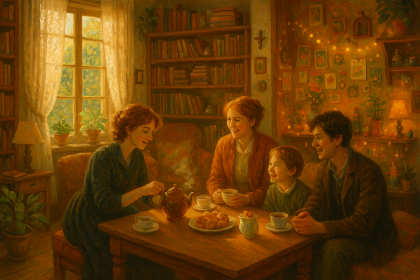
Somewhere between the explosion-filled blockbusters and the tear-jerking dramas lies a peculiar category of films that wrap around you like a well-worn cardigan. These aren't movies that demand your adrenaline or wring out your emotions—they're the ones that make you want to brew a pot of tea and sink deeper into your couch cushions. In an era where streaming algorithms push increasingly intense content, there's something almost rebellious about seeking films that feel like a warm hug from an old friend.
After a particularly rough week, I found myself rewatching Julie & Julia for what must have been the fifteenth time. There's something about watching Meryl Streep butter yet another piece of bread that soothes frazzled nerves in ways no thriller ever could. And I'm clearly not alone—the internet is full of people curating lists of “comfort movies” and “cozy films,” suggesting we're collectively craving gentler entertainment and cinematic safety blankets.
If you’re drawn to films that feel like a warm blanket—stories that soothe, soften, and slow the world down—you'll find even more emotionally rich guides across our Movies With Vibe, Movies That Make You Feel Something, and Character Psychology categories. For narratives that explore gentleness, connection, and emotional truth, our guide to movies like The Truman Show examines the stories we build to feel seen. If you’re craving character‑driven comfort, explore our breakdown of movies like The Social Network, where identity, longing, and self‑perception intertwine in quieter ways than you’d expect. And if you gravitate toward films that restore faith in kindness and possibility, our guide to movies like Hidden Figures highlights narratives that soothe through resilience and humanity. For more mood‑driven, heart‑centered recommendations, explore our full archive of streaming guides.
“In a world that profits from our anxiety, choosing coziness is almost revolutionary.”
The Anatomy of cinematic coziness
What exactly makes a movie feel cozy? It's not just about happy endings or beautiful scenery, though those certainly help. The most comforting films share certain DNA: they move at a contemplative pace, feature characters who feel like people you'd actually want to spend time with, and often center around simple pleasures—cooking, reading, gardening, or just existing in beautiful spaces.
Take The Grand Budapest Hotel, for instance. Yes, there's murder and intrigue, but Wes Anderson wraps it all in such meticulous, dollhouse-like production design that even the chase scenes feel strangely soothing. Or consider Paddington—a film ostensibly for children that has become a touchstone for adults seeking cinematic comfort food. There's something about that marmalade-loving bear's unwavering politeness that makes the world feel more manageable.
The settings matter enormously. Cozy movies transport us to places we'd like to inhabit: the sun-dappled Tuscan villa in Under the Tuscan Sun, the book-lined apartment in You've Got Mail, or the impossibly charming English countryside of practically any Richard Curtis film. These aren't just backdrops; they're aspirational spaces that make us believe in the possibility of a gentler life.
Beyond the cottagecore aesthetic
Not all cozy movies involve tweed and teacups. Some find comfort in unexpected places. Chef serves up food-truck entrepreneurship with a side of father–son bonding. The Secret Life of Walter Mitty discovers coziness in adventure itself, proving that comfort can come from stepping outside your comfort zone—as long as the film holds your hand while you do it.
Studio Ghibli has practically cornered the market on animated coziness. Films like My Neighbor Totoro and Kiki's Delivery Service create worlds where magic exists but never overwhelms the simple pleasure of watching clouds drift by or bread rise in an oven. Even when conflict arises, it's handled with a gentleness that American animation rarely attempts.
Many cozy films share a particular relationship with time. They're unhurried, almost luxurious in their pacing. Modern movies often feel like they're afraid we'll check our phones if they don't provide constant stimulation. But films like A Good Year or Julie & Julia trust us to find pleasure in watching someone slowly renovate a vineyard or master the art of French cooking. They understand that sometimes the journey is more comforting than any destination.
The seasonal comfort film calendar
Different seasons call for different kinds of coziness. Autumn practically demands viewings of When Harry Met Sally or Dead Poets Society—films that capture that back-to-school feeling even for those of us who graduated decades ago. Winter belongs to Little Women (any version, though the 1994 and 2019 adaptations are particularly warming) and The Holiday, despite its ridiculous house-swap premise.
Spring cozy films tend toward gentle renewal: The Secret Garden or Anne of Green Gables capture that sense of world-awakening. And summer? That's when we reach for The Parent Trap or Moonrise Kingdom—films that bottle the feeling of endless vacation days.
There's also what I call “rainy day cozy”—films perfect for when the weather forces you inside. The entire Harry Potter series fits here, as does Pride and Prejudice (the 2005 version for visual coziness, the 1995 BBC series for maximum immersion). These are films that make being stuck indoors feel like a gift rather than an imprisonment.
The psychology of comfort viewing
Why do we return to these films again and again? There's actual psychology behind it. Rewatching familiar movies activates similar neural pathways to spending time with old friends. We know what's coming, and that predictability is deeply soothing to our pattern-seeking brains. In uncertain times, these films become anchors.
Cozy films often present worlds where problems are solvable, where community exists, and where people generally mean well even when they mess up. They're not naive—characters in About Time still face loss, and The Best Exotic Marigold Hotel deals with aging and disappointment—but they approach life's difficulties with a fundamental optimism that feels increasingly radical.
It's no accident that many comfort watches revolve around making things: Julie & Julia with its cooking, The Great British Baking Show (yes, we’re counting this as a very long movie), or A Beautiful Day in the Neighborhood, where Mr. Rogers crafts emotional understanding with the same care he uses to feed his fish. There's something profoundly comforting about watching creation rather than destruction.
“Your cozy is not my cozy—and that's the point. Comfort cinema is personal, not prescriptive.”
If you’re craving films that soften the edges of the world—stories that soothe, slow you down, and remind you that gentleness is still possible—explore these companion guides:
- Movies With Vibe — mood‑driven, sensory‑rich films that prioritize feeling over plot, perfect for evenings when you want atmosphere more than intensity.
- Movies That Make You Feel Something — emotionally intelligent guides for nights when you want to be held, understood, or quietly restored.
- Character Psychology — deeper dives into the inner worlds of characters whose gentleness, longing, and emotional truth create the very essence of cinematic comfort.
These guides are designed to meet you in the soft spaces—the evenings when you want a film that feels like a warm blanket, a cup of tea, or a deep exhale. Let them help you build your own comfort‑cinema ritual, one cozy story at a time.
International comfort: cozy films from around the world
American and British films don't have a monopoly on coziness. Japanese films like Our Little Sister or Sweet Bean offer a particularly contemplative form of comfort, finding profound meaning in small gestures and seasonal changes. French films like Amélie or The Intouchables bring warmth through their celebration of life's peculiar pleasures.
Scandinavian coziness—think A Man Called Ove or The Hundred-Year-Old Man Who Climbed Out of the Window and Disappeared—tends toward the bittersweet, finding comfort in accepting life's absurdities. These films understand that coziness doesn't require avoiding difficult emotions; sometimes the most comforting thing is acknowledging that everyone struggles.
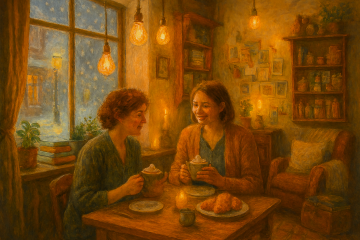
“A warmly lit living room where a family gathers around a wooden table for tea, surrounded by bookshelves, potted plants, lace curtains, and glowing string lights—evoking the nostalgic comfort and emotional intimacy of cozy cinematic storytelling.”
Creating your own cozy film experience
The environment matters almost as much as the film itself. Lighting should be warm and dim—harsh overhead lights murder the mood faster than a plot twist in a thriller. Blankets are non-negotiable, as are snacks that match the film's vibe. Watching Chocolat without chocolate is practically sacrilege.
Some people insist on watching cozy films alone, treating them as personal retreats. Others find the comfort multiplied when shared. Certain films like Sense and Sensibility might be guarded for solo viewing, while others like The Princess Bride demand company to quote lines with.
The time of day matters too. Sunday afternoon is peak cozy film time, when the weekend hasn't quite ended but Monday looms close enough to make escapism necessary. Late evening works for gentler films that can ease you toward sleep—though be warned, it's easy to stay up far too late because The Guernsey Literary and Potato Peel Pie Society is too soothing to turn off.
The evolution of cozy cinema
What counts as a cozy film has evolved over the decades. Classic Hollywood offered different comforts: the screwball comedies of the 1930s and '40s provided escapism during economic hardship and war. Films like The Philadelphia Story or His Girl Friday created coziness through rapid-fire wit and the promise that clever conversation could solve any problem.
The 1980s and '90s gave us John Hughes's suburban comfort zones and Nora Ephron's urban fairy tales. These films now carry an extra layer of coziness—nostalgia for a time when answering machines and bookstores were plot devices rather than museum pieces.
Today's cozy films must compete with the aggressive optimization of streaming algorithms that push “engagement” over comfort. Yet perhaps because of this, when filmmakers do create something genuinely cozy—like The Peanut Butter Falcon or Hunt for the Wilderpeople—audiences respond with fierce devotion.
The cozy film backlash (and why it's missing the point)
Not everyone appreciates the cozy film movement. Critics dismiss these movies as “escapist fluff” or “privilege porn,” arguing that finding comfort in beautiful homes and solved problems ignores real-world suffering. There's some truth here—it's easier to find Eat, Pray, Love soothing if you could actually afford to eat, pray, and love across multiple continents.
But seeking comfort in film isn't about ignoring reality—it's about surviving it. These movies serve as emotional regulation tools, offering temporary respite that can make facing actual problems more bearable. They're not solutions; they're intermissions.
Besides, many cozy films do engage with serious themes. The Best Exotic Marigold Hotel examines aging and colonialism alongside its comfort. Little Women explores women's limited choices in the 19th century. Even Paddington 2 manages to be a prison reform allegory. Cozy doesn't require stupidity.
Building a cozy film library
If you're looking to build your own collection of comfort films, start with what genuinely soothes you, not what should theoretically be cozy. For some people, The Sound of Music provides perfect comfort; for others, those singing children are anxiety-inducing. Your cozy is not my cozy, and that's perfectly fine.
That said, certain films appear on nearly every cozy list for good reason. The Princess Bride offers adventure without genuine peril. Singing in the Rain provides pure joy in musical form. The Secret Life of Walter Mitty reminds us that life can be an adventure without being terrifying. Any Jane Austen adaptation delivers romance with excellent manners.
Don't neglect documentaries in your cozy quest. The Great British Baking Show spawned countless imitators trying to capture its particular blend of competition without cruelty. Nature documentaries—especially those narrated by David Attenborough—offer visual beauty and soothing narration, though perhaps skip the ones where baby animals don't make it.
The future of cozy cinema
As our world grows increasingly chaotic, the appetite for cozy films seems to be expanding rather than contracting. Streaming services have noticed, creating “comfort viewing” categories and commissioning films specifically designed to soothe. The danger lies in manufacturing coziness—true comfort can't be algorithm-generated.
The best cozy films will continue to be those that stumble into comfort accidentally, created by filmmakers who genuinely believe in kindness, beauty, and the possibility of happy endings. They're films that trust audiences to find pleasure in small moments and quiet revelations.
We’ll likely see more international cozy films finding global audiences as streaming breaks down distribution barriers. The Danish concept of “hygge” has already influenced Western culture; perhaps we'll discover the Korean approach to cinematic comfort or what makes a film cozy in Mumbai versus Manchester.
Finding your cozy
Ultimately, the perfect cozy film is deeply personal. What comforts one viewer might bore another. The beauty lies in the search itself—in giving yourself permission to seek comfort rather than constant stimulation.
So brew that tea, unfold that blanket, and cue up something gentle. Whether it's your first viewing of The Grand Budapest Hotel or your fiftieth rewatch of You've Got Mail, allow yourself the radical act of seeking comfort. In a world that profits from our anxiety, choosing coziness is almost revolutionary.
The next time someone dismisses your comfort film as “fluff,” remind them that humans have always sought stories that soothe as well as challenge. From fairy tales told around fires to streaming categories labeled “Feel-Good Films,” we've always understood that sometimes the bravest thing you can do is decide on gentleness.
After all, in the immortal words of Paddington Bear, “If we're kind and polite, the world will be right.” And if it takes a talking bear to remind us of that truth, well, pass the marmalade and press play.
Related BackStoryMovies reads
- When you’re stressed, you reach for:
- A) Something with baking, cooking, or food
- B) A nostalgic childhood favorite
- C) A gentle romance with witty dialogue
- D) A quiet, contemplative film with beautiful scenery
- Your ideal cozy setting looks like:
- A) A warm kitchen with something in the oven
- B) A magical or whimsical world
- C) A book-lined city apartment or café
- D) A countryside cottage or seaside village
- How much plot do you want?
- A) Just enough to keep me engaged
- B) Light and episodic vibes over story
- C) Character-driven with emotional arcs
- D) Minimal, let me just exist with these people
- David Bordwell & Kristin Thompson, Film Art: An Introduction (12th ed., McGraw-Hill Education, 2019)
- Timothy Corrigan & Patricia White, The Film Experience: An Introduction (5th ed., Bedford/St. Martin's, 2018)
- Richard Dyer, Only Entertainment (2nd ed., Routledge, 2002)
- Barry Keith Grant (ed.), Film Genre Reader IV (University of Texas Press, 2012)
- Laura Mulvey, “Visual Pleasure and Narrative Cinema,” Screen, vol. 16, no. 3, 1975, pp. 6–18
- Carl Plantinga, Moving Viewers: American Film and the Spectator's Experience (University of California Press, 2009)
- Murray Smith, Engaging Characters: Fiction, Emotion, and the Cinema (Oxford University Press, 1995)
If this exploration of cozy cinema made you exhale a little deeper—or reminded you that gentleness is its rebellion—you'll find even more mood‑driven, emotionally rich guides across our Movies With Vibe, Movies That Make You Feel Something, and Character Psychology categories. For stories that explore how identity, longing, and emotional truth shape our inner worlds, our guide to movies like The Truman Show examines the narratives we build to feel seen. If you’re drawn to character‑driven emotional honesty, explore our breakdown of movies like The Social Network, where connection, ambition, and self‑perception intertwine in quieter, more human ways. And if you gravitate toward films that restore faith in kindness, resilience, and possibility, our guide to movies like Hidden Figures highlights narratives that soothe through courage and humanity. For more gentle, heart‑centered recommendations, explore our full archive of streaming guides.
Frequently asked questions about cozy movies
What makes a movie “cozy” instead of just “feel-good”?
A feel-good movie might leave you happy, but a cozy movie makes you feel safe. Cozy films usually feature gentle stakes, kind-hearted characters, warm or inviting settings, and a slower, more contemplative pace. They’re less about adrenaline and more about emotional exhale.
Can a movie still be cozy if it deals with serious themes?
Absolutely. Many of the most comforting films—like Little Women or The Best Exotic Marigold Hotel—engage with grief, aging, or disappointment. What keeps them cozy is their fundamental belief in connection, kindness, and the possibility of healing.
Are cozy movies the same as “comfort shows” or “comfort viewing”?
They’re closely related. “Comfort viewing” is the broader habit of returning to familiar media for emotional regulation. Cozy movies are a specific flavor of that habit: films that feel like a soft blanket, a warm drink, and a deep breath.
Do I have to watch cozy movies alone to get the full effect?
Not at all. Some people treat cozy films as solo retreats, while others find comfort amplified when shared with friends or family. The “right” way is whatever makes you feel most at ease.
Where should I start if I’m new to cozy cinema?
Begin with what already soothes you: baking shows, gentle romances, whimsical adventures, or nostalgic favorites. Then branch out to widely loved cozy staples like The Princess Bride, Julie & Julia, Paddington, or a Studio Ghibli classic like Kiki’s Delivery Service.
Quick quiz: What’s your cozy movie vibe?
Answer a few questions to discover your next comfort watch.
See your cozy movie recommendations
Mostly A’s: Try Julie & Julia, Chef, or Chocolat.
Mostly B’s: Try Paddington, My Neighbor Totoro, or The Parent Trap.
Mostly C’s: Try When Harry Met Sally, About Time, or You’ve Got Mail.
Mostly D’s: Try Under the Tuscan Sun, A Good Year, or Our Little Sister.
Further reading & film theory sources
For a more in-depth look at how and how frequently specific films calm us, these foundational works of film studies and audience relations offer rich context:
Grow through the stories that shape you!
If you’re exploring the backstories of movies, why not binge on these cinematic shorts! Plot twists that you never see coming, the “why” in what a story is teaching you, and the art of being seen—then join me on YouTube! I create thoughtful, cinematic lessons designed to help you see your life with more compassion, courage, and intention.
Subscribe to Back Story Movies on YouTube! →Did I forget to mention, get more creativity in your life and shop the merch at Creativity Is Expression! Visit now @