
Summary:
Movies that feel like therapy can serve as a form of healing by reflecting our emotions and experiences, offering a sense of companionship and understanding. Unlike traditional feel-good films, therapeutic cinema often embraces emotional complexity, resisting easy resolutions and instead providing a mirror to our inner lives. Through their honest portrayal of human experiences, these films help viewers feel seen and understood, offering a safe space to explore emotions. This therapeutic effect is supported by the brain's response to cinematic storytelling, allowing audiences to engage with emotions in a guided, vicarious way.
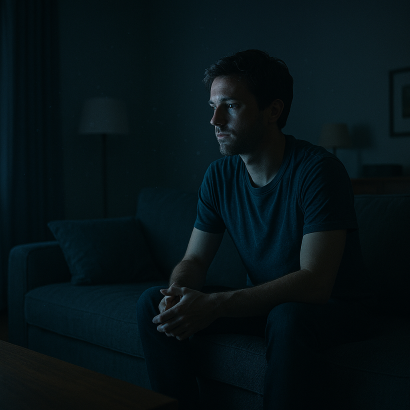
The room is dark except for the soft flicker of a screen. You’re not expecting anything profound—maybe just a distraction, something to fill the quiet. But then a line of dialogue lands with uncanny precision. A character’s expression mirrors something you’ve been carrying. A moment unfolds that feels like it was written for you, about you, without ever knowing your name.
And suddenly, you’re not just watching a movie. You’re being witnessed.
Cinema has this strange, almost mystical ability to find us exactly where we are. Not where we pretend to be. Not where we wish we were. But where we actually are—raw, unguarded, and human. In those moments, film becomes more than entertainment. It becomes a companion. A mirror. A quiet kind of therapy. This isn’t accidental. It’s not even rare. It’s one of cinema’s oldest, most underestimated powers: its ability to heal.
If you’re drawn to how characters embody grief, longing, and resilience, dive into Character Psychology and our deeper explorations of Original Stories & Emotional Worlds. For films that feel like quiet emotional companions on the couch, browse our Streaming Guides and Movies With Vibe collections. If you’re fascinated by how specific narratives echo your inner life, explore our Movies Like… series and our in-depth Movie Explanations.
The Unexpected Therapist in Your Living Room
Some films don’t try to fix you. They don’t offer five-step solutions or moral lessons tied up with a bow. They simply sit beside you—the way a good friend might—and say, “I see you, exactly where you are.”
Why Certain Films Feel Therapeutic
The movies that feel like therapy often share three subtle qualities:
- They acknowledge emotional complexity instead of flattening it into a simple message.
- They resist easy answers and let discomfort exist without rushing to resolve it.
- They mirror inner experiences with uncanny accuracy, making our private feelings feel less isolating.
Think of a film like Lost in Translation. Watching Bob Harris wander through Tokyo’s neon loneliness doesn’t magically cure your sense of displacement—but it can make that displacement feel less shameful. The film doesn’t promise transformation. It offers companionship.
Cinema doesn’t heal you by fixing you. It heals you by witnessing you.
Explore more films that steady, soothe, and emotionally recalibrate:
Beyond the Feel-Good Formula
Hollywood has long sold feel-good movies as emotional medicine. Resolution, redemption, a triumphant swell of music over the end credits. But the films that truly function like therapy often operate on a very different wavelength.
Therapeutic cinema isn’t about feeling good. It’s about feeling seen.
The Films That Refuse to Lie to You
Take Manchester by the Sea. It doesn’t offer a neat arc where grief is conquered and life is “fixed.” Instead, it shows a man living with an unbearable loss that never fully disappears. There’s no grand transformation, only the quiet, difficult work of existing alongside pain.
For many viewers, that honesty is more healing than any inspirational monologue. It says, “If you’re not okay, that doesn’t mean you’re failing at healing. It just means you’re human.”
When Cinema Understands You Better Than People Do
After a breakup, watching Her can feel like someone cracked open your chest and took notes. Theodore’s loneliness isn’t exaggerated for drama—it’s observed with tenderness. The film doesn’t mock him for falling in love with an AI. It doesn’t mock you for the unconventional places you’ve gone looking for comfort, attention, or validation.
That non-judgment is a kind of emotional shelter. It’s why films like these often live in the overlap between Comfort Films and Film Psychology.
The Mechanics of Cinematic Healing
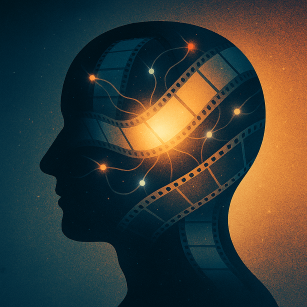
The therapeutic impact of cinema isn’t just poetic language; it’s grounded in how our brains respond to stories on screen. Mirror Neurons and Emotional Simulation.
When we watch a character cry, our brain doesn’t file it under “fiction” and move on. Thanks to systems like mirror neurons and embodied simulation, we experience a kind of emotional echo—a softened rehearsal of what we’re seeing.
This is part of what scholars like Carl Plantinga, Torben Grodal, and Arthur P. Shimamura explore: film doesn’t just present emotion; it invites us to live through it in a guided, vicarious way.
Movies as Safe Emotional Containers
A film’s runtime creates a psychological boundary—a safe emotional perimeter. Inside that space, you can feel things you’ve been avoiding, knowing that the story will eventually end and the lights will come up.
- You can cry for fictional characters when you can’t yet cry for yourself.
- You can rage at injustice on screen when your anger feels too dangerous or unfamiliar.
- You can grieve losses by proxy when your real grief still feels too large to touch directly.
This is where film quietly joins the conversation of film psychology: it becomes a rehearsal space for emotional experience.
The Quiet Revolution of Slow Cinema
In a culture obsessed with constant stimulation, slow cinema feels almost rebellious. Films like Paterson or Columbus don’t demand your attention with twists and explosion-level stakes. They invite it with stillness.
Cinematic Mindfulness
These films often feature:
- Long, unhurried takes
- Everyday routines repeated with gentle variation
- Silences full of unspoken feeling
- Space for your thoughts to wander in between cuts
Watch a character slowly write poems on a bus or walk through modernist architecture in muted sunlight long enough, and something inside you begins to match their tempo. Your breathing slows. Your mind stops sprinting for the next notification. You remember that life doesn’t have to be extraordinary to be meaningful.
I think of these films as “ambient therapy.” They don’t crack you open with dramatic catharsis. They soften you. Likewise, they reintroduce you to your capacity for stillness, which is its kind of healing.
Cultural Mirrors and Personal Revelations
Some films are therapeutic because they finally put words, images, and texture to experiences that rarely make it onscreen—or, when they do, are flattened into stereotype.
When a film says, “Your Story Is Not Invisible.”
Moonlight didn’t just tell Chiron’s story; it created space for viewers whose intersections of race, sexuality, masculinity, and vulnerability had rarely been portrayed with such tenderness. For many, it wasn’t just a movie—it was a mirror.
Similarly, Lady Bird became a cultural touchstone not simply because of its coming-of-age elements, but because it captured the specific, complicated texture of a mother-daughter relationship that oscillates between deep love and sharp conflict.
These are the films that belong in your Character Studies and Cinematic Emotions categories.
The Unexpected Healers
Therapeutic cinema doesn’t belong to a single genre. Some of the most emotionally accurate explorations of pain, grief, and resilience hide in places you might not expect.
Horror as a Language for Unspoken Pain
The Babadook uses the grammar of horror—shadows, sounds, a monster in the house—to explore grief and depression with startling psychological accuracy. The “monster” isn’t just a creature to defeat; it’s a manifestation of unprocessed trauma that must be acknowledged, integrated, and lived with.
Comedy as Permission to Feel
In The Royal Tenenbaums, Wes Anderson wraps family dysfunction in pastel symmetry and deadpan line delivery. But beneath the controlled aesthetic lies raw material about failure, disappointment, and the fragile ways we try to repair what we’ve broken.
Personal Prescriptions: Your Own Cinematic Pharmacy
Over time, many of us build a private catalog—films we return to not because they’re “the best,” but because they do something specific to us emotionally.
- Feeling disconnected from purpose? Ikiru offers a quiet meditation on meaning.
- Struggling with perfectionism? Black Swan follows that impulse to its terrifying extremes.
- Need permission to feel angry? Three Billboards Outside Ebbing, Missouri gives you a template for righteous, complicated rage.
- Feeling blurred at the edges? Her understands the ache of wanting to be known.
- Longing for softness? Paterson reminds you that small routines can be a form of care.
None of these are universally therapeutic. The film that cracks you open might leave someone else cold. That’s part of the mystery and beauty of cinematic therapy: it’s deeply personal, shaped by where you are in your life when you encounter a particular story.
FAQs: Movies That Feel Like Therapy
Do movies really have therapeutic effects?
Films can’t replace therapy, but they can have real emotional impact. Research in areas sometimes called “neurocinematics” suggests that movies can synchronize viewers’ brain activity and evoke strong emotional responses. See: Uri Hasson.
Are therapeutic films always sad?
No. Some are cathartic, others are gentle, funny, or quietly reassuring.
Can any movie be therapeutic?
Potentially depending on your history, emotional state, and what the film reflects back to you.
Should I use movies instead of therapy?
No. Films can complement emotional work, but they are not a substitute for professional support.
Sources & Further Reading
- Plantinga, Carl. Moving Viewers: American Film and the Spectator's Experience. University of California Press, 2009.
- Grodal, Torben. Embodied Visions: Evolution, Emotion, Culture, and Film. Oxford University Press, 2009.
- Hasson, Uri, et al. “Neurocinematics: The Neuroscience of Film.” Projections, vol. 2, no. 1, 2008, pp. 1–26.
- Tan, Ed S. Emotion and the Structure of Narrative Film: Film as an Emotion Machine. Routledge, 1996.
- Shimamura, Arthur P., editor. Psychocinematics: Exploring Cognition at the Movies. Oxford University Press, 2013.

Grow through the stories that shape you!
If you’re exploring the backstories of movies, why not binge on these cinematic shorts! Plot twists that you never see coming, the “why” in what a story is teaching you, and the art of being seen—then join me on YouTube! I create thoughtful, cinematic lessons designed to help you see your life with more compassion, courage, and intention.
Subscribe to Back Story Movies on YouTube! →Did I forget to mention, get more creativity in your life and shop the merch at Creativity Is Expression! Visit now @