
Summary:
Movies with morally gray characters in cinema challenge traditional notions of good and evil by presenting complex, realistic portrayals that resonate with audiences. These characters blur the lines between hero and villain through relatable choices and internal conflicts, reflecting the nuanced moral landscapes of real life. By engaging with these characters, viewers are prompted to examine their own values and the complexities of human nature. This exploration of moral ambiguity is increasingly relevant in a world where clear-cut narratives often fail to capture the intricacies of human experience.
Cinema keeps trying to tell us who the “good guys” and “bad guys” are. But the characters we remember most rarely stay in their assigned roles.
When the line quietly blurs
There’s a moment in certain films when a character stops being who we thought they were. Not with a big twist or a dramatic reveal, but with something smaller: a hesitation, a compromise, a choice that feels understandable and wrong at the same time. It’s the moment when the hero’s halo slips or the villain’s mask cracks, and suddenly the story stops being about what’s right and starts being about what’s real.
We’ve all been there in our lives—standing at a crossroads where there is no purely “good” option, only trade‑offs. That’s why morally gray characters hit so hard. They don’t just entertain us; they expose us. They show us the parts of ourselves we usually keep off the record.
Morally gray characters don’t just blur the line between good and evil—they remind us that the line was never as clear as we pretended.
If you’re drawn to stories where morality bends, characters contradict themselves, and the truth lives in the tension between right and wrong. You’ll find even more psychologically rich guides across our Character Psychology, Morally Gray Protagonists, and Movies That Make You Feel Something categories. For narratives that explore how identity fractures under pressure, our guide to movies like The Social Network examines ambition, self‑mythology, and the stories we tell to justify our choices. If you’re fascinated by films where perception and truth collide, explore our breakdown of movies like The Truman Show, where morality becomes a matter of perspective. And if you gravitate toward emotionally charged stories that reveal hidden systems and ethical gray zones, our guide to movies like Hidden Figures highlights narratives where courage, intelligence, and humanity reshape the frame. For more complex, character‑driven film analysis, explore our full archive of storytelling and narrative craft guides.
Why morally gray characters matter more than ever
Classic Hollywood loved clear moral lines. The white hat and the black hat. The sheriff and the outlaw. The righteous hero and the irredeemable villain. Those stories offered comfort and clarity, especially in eras when audiences needed reassurance that the world still made sense.
But as cinema evolved—and as the world revealed itself to be more complex—those clean divisions started to feel dishonest. Enter the morally gray character: not a hero with a few flaws, not a villain with a tragic backstory, but someone whose choices force us to question our own moral reflexes.
Think of Michael Corleone in The Godfather trilogy. We watch a war hero become a ruthless crime boss, and every step of that descent feels tragically logical. Each decision is justified—at least to him. By the time he orders the murder of his brother, we’re horrified, but we understand how he got there. That understanding is what makes him so haunting.
Film scholars like David Bordwell and Kristin Thompson have long argued that character engagement is built on alignment and allegiance—who we follow and who we emotionally side with (Murray Smith, Engaging Characters). Morally gray characters weaponize that engagement. They make us complicit.
From flawed heroes to fractured souls: the evolution of the antihero
When “flawed” was enough
The antihero isn’t new. Film noir in the 1940s and ’50s gave us cynical detectives and world‑weary loners who bent the rules but ultimately did the right thing. Humphrey Bogart’s characters might have been jaded, but they still had a line they wouldn’t cross.
These were flawed heroes, not truly morally ambiguous figures. Their darkness was aesthetic; their morality, in the end, was intact.
Taxi Driver and the birth of the modern gray zone
In 1976, Taxi Driver changed the game. Travis Bickle isn’t a hero in disguise—he’s a deeply disturbed man whose violent impulses are framed through his own warped sense of purpose. The film refuses to tell us how to feel about him. Is he a vigilante cleaning up the streets or a ticking time bomb who happens to be pointed in the “right” direction for once?
That refusal to resolve our feelings is the hallmark of modern moral ambiguity. As Martin Scorsese himself has said, cinema can teach us to read images and emotions critically, not just passively consume them (Scorsese, “Teaching Visual Literacy”).
The new era: characters who write their morality
Today’s morally gray characters don’t just break rules—they invent their own. Anton Chigurh in No Country for Old Men operates by a chillingly consistent internal code. Daniel Plainview in There Will Be Blood is driven by ambition and resentment so pure it becomes almost mythic. Lou Bloom in Nightcrawler treats human suffering as raw material for his career. These characters aren’t confused about what they’re doing. They’re frighteningly clear. And that clarity forces us to confront a harder question: what happens when someone’s morality is coherent but completely incompatible with our own?
Explore more stories where morality bends, characters contradict themselves, and truth lives in the tension between right and wrong:
- Morally Gray Protagonists — deep dives into characters who challenge our instincts, unsettle our certainty, and expose the limits of “good vs. evil.”
- Character Psychology — guides that unpack identity, self‑mythology, trauma, and the internal logic behind impossible choices.
- Movies That Make You Feel Something — emotionally intelligent films that sit in the gray, where empathy and discomfort coexist.
The psychology of our fascination: why we root for the wrong people
So why do we find ourselves rooting for characters who lie, manipulate, betray, and destroy? Why do we cheer for Walter White as he builds a meth empire, only to recoil when we realize how far he’s gone?
1. They feel more truthful than perfect heroes
Real life rarely gives us clean choices. We’re constantly navigating trade‑offs, competing values, and incomplete information. Morally gray characters reflect that reality. They make mistakes, rationalize, backslide, and contradict themselves—just like we do.
2. They let us explore darkness safely
Watching someone else cross lines we’d never cross in real life can be strangely cathartic. We get to flirt with danger, cruelty, or selfishness without consequences. As Roger Ebert once wrote, movies are “empathy machines”—they let us inhabit lives and choices far from our own (Ebert, The Great Movies).
3. They force us to interrogate our values.
When we find ourselves sympathizing with someone doing terrible things, it creates a productive discomfort. We start asking, why do I understand this? Why do I feel for this person? What does that say about me? That internal friction is where morally gray storytelling becomes transformative instead of just provocative.
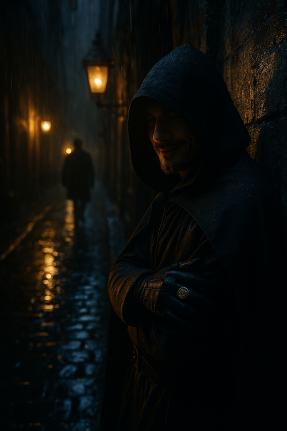
A cinematic case study: the quiet collapse of Ryu in Sympathy for Mr. Vengeance
Some morally gray characters announce themselves with swagger, violence, or theatrical villainy. Others unravel so quietly that we barely notice the shift until it’s too late. Park Chan‑wook’s Sympathy for Mr. Vengeance gives us one of the most devastating examples: Ryu, a young man whose moral descent is built on love, desperation, and a world that refuses to give him a fair choice.
The first step: a desperate act that feels understandable
Ryu isn’t a monster. He’s a brother trying to save his sister’s life. When he turns to organ traffickers after being denied a legitimate transplant, the film doesn’t frame it as a cartoonish crime. It frames it as a system failure. We understand his fear. We understand his urgency. Not only that, but we understand why he does something he would never consider under normal circumstances.
This is the first hallmark of a great morally gray character: the story makes us complicit by making us understand. We don’t approve, but we empathize—and that empathy is dangerous.
The spiral: when one wrong choice demands another
When the organ traffickers betray him and his sister’s condition worsens, Ryu’s options narrow. The kidnapping that follows—the moment he truly crosses into moral ambiguity—doesn’t feel like a villain’s scheme. It feels like a tragic inevitability. The film has guided us so gently into the gray that we barely register we’ve arrived.
Park Chan‑wook doesn’t excuse Ryu’s actions. He contextualizes them. And context is one of the most powerful tools in morally gray storytelling.
The breaking point: when sympathy turns to horror
The accidental death of the kidnapped child is one of the most gut‑wrenching moments in Korean cinema. Not because it’s shocking, but because it feels like the final, irreversible consequence of a thousand small compromises. Ryu’s grief is real. His guilt is real. His love for his sister is real. And yet, the harm he has caused is undeniable.
This is the emotional paradox at the heart of morally gray characters: we can feel empathy and condemnation at the same time.
Why Ryu belongs in the canon of moral ambiguity
Ryu’s story is a masterclass in how to build a morally gray character without glamorizing violence or nihilism. His arc reminds us that:
- moral collapse is often slow, not sudden
- good intentions don’t prevent devastating outcomes
- empathy doesn’t erase accountability
- systems shape morality as much as individual choices
- tragedy is often the sum of understandable decisions
Sympathy for Mr. Vengeance doesn’t offer redemption or moral clarity. It offers something more honest: a portrait of a human being caught in a world that gives him no clean choices. That’s the core of morally gray storytelling—not shock, not spectacle, but the quiet realization that even gentle people can be pushed into darkness when the world refuses to give them light.
The rise of morally gray women
For a long time, women in film were written as moral anchors—the voice of reason, the emotional center, the person trying to pull the male protagonist back from the brink. Recent decades have shattered that limitation.
Amy Dunne in Gone Girl is brilliant, wronged, manipulative, and terrifying. Furiosa in Mad Max: Fury Road has done terrible things in the name of survival and rebellion. Nina Sayers in Black Swan is consumed by ambition and self‑destruction. These characters aren’t there to reassure us. They’re there to unsettle us.
They matter because they acknowledge something obvious and long denied: women, like men, contain multitudes. Furthermore, they can be victims and perpetrators, empathetic and ruthless, understandable and unforgivable—all at once.
The cultural moment: why moral ambiguity feels so real now
We live in an era of broken narratives. Establishments fail. Information contradicts itself. Heroes are exposed. Villains are rebranded. The old stories about good and evil feel too simple for the world we’re actually living in.
Films like Zodiac, Parasite, Oldboy, and No Country for Old Men reflect this uncertainty. They don’t offer neat resolutions or triumphant justice. Instead, they leave us with ambiguity, obsession, and the unsettling sense that some questions don’t have answers.
As Robert Kolker notes in his work on American cinema and alienation, modern films often center on characters navigating systems that are indifferent or hostile to them (Kolker, A Cinema of Loneliness). Morally gray characters are a natural response to that landscape.
The danger: when “complex” becomes “romanticized”
There is a real risk in this territory. Not every morally gray character is written with care. Sometimes “complex” becomes code for “charismatic sociopath we’re supposed to find cool.” When that happens, the story stops interrogating morality and starts glamorizing harm.
The Wolf of Wall Street walks this tightrope with intention. It shows us the seductive appeal of Jordan Belfort’s lifestyle while never letting us forget the damage he causes. The film is fun, but it’s not an endorsement. Not all stories manage that balance.
The best morally gray narratives don’t ask us to abandon our values. They ask us to examine them. They remind us that understanding someone doesn’t mean excusing them and that explanation is not the same as justification.
The international lens: moral ambiguity across cultures
American cinema doesn’t own moral ambiguity. Some of the most powerful morally gray storytelling comes from international films that bring different cultural, political, and historical contexts to questions of right and wrong.
- South Korea: Oldboy, Memories of Murder, Parasite—films where revenge, justice, and class are so entangled that “hero” and “villain” become meaningless labels.
- Europe: The Lives of Others, A Prophet, The Double Life of Véronique—stories about surveillance, loyalty, identity, and the cost of survival.
- Latin America: City of God, Amores perros—films where systemic violence and inequality shape every moral choice.
These films remind us that morality is not universal; it’s shaped by culture, history, and power. What counts as “necessary” or “unthinkable” depends on where—and how—you live.
What these characters teach us about real life
Morally gray characters aren’t just compelling—they’re useful. They prepare us for a world where we’re constantly asked to make ethical decisions with incomplete information, where every choice has a cost, and where good people sometimes do bad things for reasons that make sense to them.
They teach us that:
- empathy and judgment can coexist
- understanding someone doesn’t mean agreeing with them
- most people aren’t purely good or evil—they’re conflicted
- our own moral boundaries are more flexible than we like to admit
In a polarized world, the ability to hold complexity—to see the gray—isn’t just an intellectual skill. It’s an emotional one.
Where to go next on BackStoryMovies
Ready to go deeper? Explore more BackStoryMovies articles connected to this theme:
If this deep dive into moral ambiguity, fractured loyalties, and the psychology of conflicted characters resonated with you, you’ll find even more complex, emotionally intelligent analysis across our Morally Gray Protagonists. Character Psychology and Movies That Make You Feel Something categories. For stories that explore how identity, ambition, and self‑mythology collide, our guide to movies like The Social Network examines the narratives we build to justify our choices. If you’re fascinated by films where morality depends on perspective, explore our breakdown of movies like The Truman Show, where truth and illusion blur in unsettling ways. And if you gravitate toward emotionally charged stories that reveal hidden systems, ethical gray zones, and the cost of survival, our guide to movies like Hidden Figures highlights narratives where courage and intelligence reshape the frame. For more character‑driven, morally complex storytelling insights, explore our full archive of storytelling and narrative craft guides.
Pair that with reading Film Art: An Introduction by Bordwell & Thompson to connect cinematic technique with character engagement.
FAQs about morally gray characters in movies
Are morally gray characters the same as antiheroes?
Not always. Antiheroes are often protagonists who lack traditional heroic qualities but still occupy the “hero” role. Morally gray characters can be protagonists, antagonists, or supporting characters whose choices and values resist simple labels. All antiheroes are morally complex, but not all morally gray characters are framed as antiheroes.
Do morally gray characters make stories darker?
They can, but they don’t have to. What they really do is make stories more honest. A film can be emotionally warm and still feature characters who make questionable choices. The “darkness” typically comes from how willing the story is to follow those choices to their consequences.
Is it dangerous to empathize with morally gray characters?
Empathy itself isn’t dangerous—it’s how we process it that matters. The goal isn’t to excuse harmful behavior but to understand how and why it happens. When stories are responsible, they help us think more critically about power, systems, and personal accountability.
Why are so many modern films and shows full of morally gray characters?
Because our world feels morally complicated. We’re constantly confronted with conflicting narratives, institutional failures, and ethical gray zones. Stories have shifted to reflect that reality. Morally gray characters feel more truthful than spotless heroes or cartoon villains.
Can a story work without any morally gray characters?
Absolutely. Fairy tales, fables, and certain genres thrive on clear moral lines. But if a story wants to feel psychologically rich and emotionally grounded in contemporary life, morally gray characters are often the key.
Quick quiz: how do you respond to moral ambiguity?
Answer these in your head—no wrong answers, just patterns.
- When a character does something terrible for a “good reason,” your first instinct is to:
- A: Judge them
- B: Justify them
- C: Try to understand them
- What character type do you find most compelling?
- A: The unwavering hero
- B: The charming villain
- C: The conflicted, morally gray protagonist
- After a morally ambiguous ending, you are usually:
- A: Feel frustrated
- B: Feel intrigued
- C: Keep thinking about it for days
If you leaned heavily toward C, you’re precisely who the Morally Gray Characters category was built for.
CTA: Keep exploring the gray
If these characters stay with you—if you find yourself arguing with yourself about them days later—don’t stop here.
Dive into the full Morally Gray Characters category for cinematic deep dives, character breakdowns, and emotionally intelligent analysis of the films that refuse to give easy answers. Original Stories & Personal Journeys – fiction and reflections that echo the same emotional complexity.
Grow through the stories that shape you!
If you’re exploring the backstories of movies, why not binge on these cinematic shorts! Plot twists that you never see coming, the “why” in what a story is teaching you, and the art of being seen—then join me on YouTube! I create thoughtful, cinematic lessons designed to help you see your life with more compassion, courage, and intention.
Subscribe to Back Story Movies on YouTube! →Did I forget to mention, get more creativity in your life and shop the merch at Creativity Is Expression! Visit now @