
Summary:
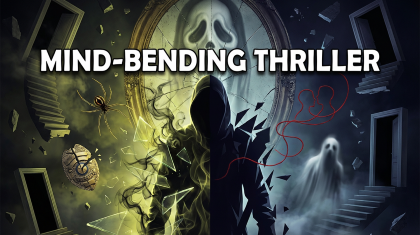
Psychological thrillers captivate by delving into the mind's complexities, turning internal conflicts into the real antagonists. These films explore themes like identity, memory, and guilt, often leaving a lasting impact by posing unsettling questions about self-perception and reality. They don't rely on external monsters but instead reveal the terrifying potential of the human psyche.
Why These Stories Get Inside Your Head and Refuse to Leave
There’s a moment—always a quiet one—when a psychological thriller stops being a movie and becomes something else entirely.
It’s never during the chase.
It’s never during the scream.
Furthermore, it’s always during the silence.
That breath before the truth hits.
That flicker of doubt in a character’s eyes.
A moment when you recognize that the story is taking place inside of them rather than just on top of them.
I’ve always been drawn to that moment.
The moment when the mind becomes the battleground.
Psychological thrillers don’t terrify you with monsters.
They terrify you with your thoughts.
They ask questions you would rather not answer.
- What if your memories are lying to you?
- What if you’re not who you think you are?
- What if the danger isn’t outside—but inside your head?
And the best psychological thrillers don’t just explore the mind.
They expose it.
Today, I want to take you into six films that do exactly that—six stories that unravel identity, memory, guilt, obsession, and the terrifying fragility of perception.
These aren’t just thrillers. They’re psychological autopsies.
Let’s go inside.
If you’re drawn to films that unravel the mind, explore these next:
- Character Psychology — deep dives into the emotional architecture behind unreliable narrators, fractured identities, and characters on the edge.
- Emotionally Intent Movies — films built with precision and purpose, designed to hit you in the mind and the gut at the same time.
- Movies That Make You Feel Something — atmospheric, lingering stories that stay with you long after the credits fade.
- Movies With Vibe — moody, slow‑burn, emotionally charged films that shape your inner weather.
- Storytelling & Narrative Craft — breakdowns of how filmmakers build tension, identity fractures, and psychological unease.
If you’re drawn to stories that unravel the mind—films where identity fractures, memory twists, and perception become the real threat—explore these psychologically rich guides next:
These guides are perfect if you crave thrillers that don’t just scare you—they study you. Stories that slip under your skin, rearrange your assumptions, and refuse to leave your mind quiet.
The Films That Rewrite Your Reality
Here’s how we’re going to move through this world—fewer films, but deeper, richer, more psychologically layered analysis.
| Film | Psychological Core | Character Focus |
|---|---|---|
| The Wailing | Fear, faith, paranoia | Jong-goo |
| Memories of Murder | Obsession, failure, moral erosion | Detectives Park & Seo |
| A Tale of Two Sisters | Trauma, repression, grief | Su-mi & Su-yeon |
| Prisoners | Desperation, morality, vengeance | Keller Dover & Detective Loki |
| Enemy | Identity fragmentation, repression | Adam & Anthony |
| The Machinist | Guilt, insomnia, self-punishment | Trevor Reznik |
Each one is a case study in the mind under pressure—and the stories we tell ourselves to survive.
The Wailing—Fear as a Virus, Paranoia as a Language
I remember the first time I watched The Wailing.
It felt like stepping into a nightmare that didn’t want to clarify itself—because the explanation was the point.
This isn’t a film about demons or folklore.
It’s a film about fear—and how fear rewrites reality.
Jong-goo: The Everyman Who Breaks
Jong-goo isn’t a hero.
He’s not even particularly competent.
He’s a father who wants to protect his daughter—and that’s what makes him dangerous.
Because fear + love = chaos.
The Psychology
Jong-goo’s unraveling is a perfect example of cognitive overload:
- conflicting information
- unreliable witnesses
- spiritual ambiguity
- emotional panic
- escalating stakes
His mind becomes a battlefield of:
- superstition
- logic
- grief
- rage
- helplessness
“Fear doesn’t need to be real to destroy you. It only needs to feel real.”
Why It Works
The Wailing never tells you what’s true.
It lets you drown in uncertainty—the same way Jong-goo does.
And that’s what makes it one of the most psychologically devastating thrillers ever made.
Memories of Murder—The Psychology of Failure
Some thrillers are about catching the killer.
This one is about not catching him.
And that’s what makes it unforgettable.
Detectives Park & Seo: Two Minds, One Spiral
Park believes in instinct.
Seo believes in evidence.
Both believe they’re right.
Both are wrong.
The Psychology
This film is a masterclass in obsession and moral erosion.
As the case drags on:
- Park becomes desperate
- Seo becomes violent
- Both lose their moral compass
- Both lose themselves
The killer isn’t the antagonist.
Failure is.
The Final Shot
That last moment—Park staring into the camera—is one of the greatest psychological endings in cinema.
He’s not asking the audience for help.
He’s asking himself:
“What if he was here all along?”
A Tale of Two Sisters—Trauma as a Haunting
This is one of the most emotionally devastating psychological thrillers ever made—because the ghost isn’t supernatural.
The ghost is grief.
Su-mi & Su-yeon: The Mind Splitting to Survive
Su-mi is not unreliable.
She’s traumatized.
Her mind fractures because the truth is too painful to hold.
The Psychology
This film is a portrait of dissociation:
- memories repressed
- identities split
- guilt displaced
- trauma externalized
The “haunting” is Su-mi’s mind trying to process what happened.
Why It Hurts
Because the film doesn’t treat trauma as a twist.
It treats it as a wound.
And wounds don’t scare you.
They ache.
Prisoners—The Mind Under Moral Extremes
This is the film that asks what no one wants to answer:
“What would you do if it were your child?”
Keller Dover: The Man Who Breaks Himself
Keller isn’t a villain.
He’s a father.
But desperation turns him into something else—something feral, something unrecognizable.
Detective Loki: The Man Who Can’t Look Away
Loki is the opposite of Keller:
- controlled
- methodical
- emotionally restrained
But he’s just as obsessed.
The Psychology
This film is about moral collapse:
- Keller tortures a man
- Loki breaks rules
- Everyone compromises
- No one stays clean
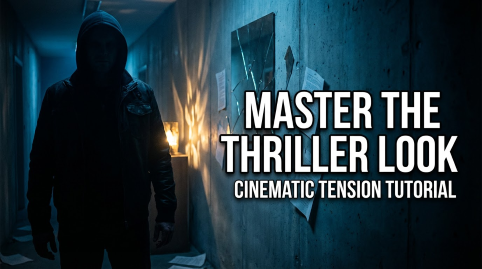
“In psychological thrillers, the line between hero and villain is always drawn in pencil.”
Why It Works
Because the film never tells you who’s right.
It only shows you what desperation does to the mind.
Enemy—The Self You Refuse to Face
Enemy is the kind of film that doesn’t clarify itself—because the explanation is the point.
Adam & Anthony: Two Men, One Mind
Adam is passive.
Anthony is aggressive.
They’re not opposites.
They’re halves.
The Psychology
This is a story about repression:
- desires split
- impulses denied
- identity fractured
- guilt externalized
The spider imagery isn’t just symbolism.
It’s psychology.
It represents:
- fear of entrapment
- fear of intimacy
- fear of responsibility
Why It Works
Because the film doesn’t ask you to understand it.
It asks you to feel it.
And what you feel is dread.
The Machinist—Guilt as Self-Destruction
Trevor Reznik is one of the most tragic characters in psychological thriller history.
He’s not being haunted.
He’s punishing himself.
Trevor Reznik: The Man Who Can’t Sleep
Trevor’s insomnia isn’t a symptom.
It’s a sentence.
His body is disappearing because he’s disappearing from himself.
The Psychology
This is a portrait of self-inflicted psychological torture:
- guilt
- denial
- hallucination
- self-punishment
Trevor isn’t running from the truth.
He’s starving himself of it.
Why It Works
Because the film doesn’t treat guilt as a twist.
It treats it as a slow death.
Case Study: When the Mind Becomes the Monster
Across all six films, one pattern emerges:
The most terrifying antagonist is always the protagonist’s own mind.
Whether it’s:
- Jong-goo’s fear
- Park & Seo’s obsession
- Su-mi’s trauma
- Keller’s desperation
- Adam’s repression
- Trevor’s guilt
The mind becomes the monster.
And that’s why psychological thrillers linger long after the credits roll.
Quiz—What Kind of Psychological Thriller Person Are You?
1. Which scares you more?
- A. Not knowing
- B. Knowing too much
- C. Knowing the truth too late
2. Which character do you relate to?
- A. The protector
- B. The investigator
- C. The survivor
- D. The self-saboteur
3. What unsettles you most?
- A. Identity
- B. Memory
- C. Guilt
- D. Obsession
Your answers reveal the psychological thriller subgenre you gravitate toward—and the emotional terrain you’re most drawn to on screen.
FAQs
What defines a psychological thriller?
A psychological thriller is defined by internal conflict—perception, memory, and identity trauma—rather than purely external danger. The tension comes from the mind, not just the plot.
Why do these films feel more intense than horror?
Because they attack the mind, not the senses. You’re not just startled—you're unsettled. The fear lingers because it’s tied to questions about who you are and what you’re capable of.
Do psychological thrillers always have twists?
No. The best ones don’t rely on cheap twists. They build toward revelations—emotional, psychological, and character-driven—that reframe what you’ve been watching.
Are psychological thrillers always dark and depressing?
They’re often heavy, but not always hopeless. Many of them are about survival, reckoning, and the possibility of facing the truth—even when it hurts.
- Screen Rant — *10 Great Psychological Thriller Movies Nobody Remembers*
- Good Housekeeping — *40 of the Best Psychological Thriller Movies of All Time*
- Collider — *The 75 Best Psychological Thrillers of All Time, Ranked*
- American Film Institute — *AFI’s 100 Years…100 Thrills* (Print)
- Britannica — *Thriller: Narrative Genre*
- Wikipedia — *Psychological Thriller*
- IMDb — *The 100 Best Psychological Thriller Movies*
- Paramount+ — *Best Psychological Thriller Movies*
- Rotten Tomatoes — *Movies at Home: Mystery and Thriller*
Ready to Go Deeper?
If psychological thrillers stay with you long after the final frame, you’re not alone—you're precisely the kind of person this space is built for.
From character psychology to emotionally intense cinema, from global thrillers to movies that make you feel something, there’s an entire emotional universe waiting to be mapped.
Next step? Pick one of the films above, rewatch it with this lens in mind, and then follow that feeling into the next story that calls you.
Why These Films Stay with Us
Psychological thrillers don’t end when the movie ends.
They end when you end them—when you finally stop thinking about them.
And some films never let you stop.
Because they don’t just show you a story.
They show you a truth you weren’t ready to face.
A truth about fear.
A truth about identity.
A truth about the mind.
And maybe—a truth about yourself.
Grow through the stories that shape you!
If you’re exploring the back story of movies, why not binge on these cinematic shorts! Plot twists that you never see coming, the “why” in what a story is teaching you, and the art of being seen—then join me on YouTube! I create thoughtful, cinematic lessons designed to help you see your life with more compassion, courage, and intention.
Subscribe to Back Story Movies on YouTube! →Did I forget to mention, get more creativity in your life and shop the merch at Creativity Is Expression! Visit now @