


Summary:
Paul Atreides, a complex character from the universe of Dune, is not a traditional hero but a reluctant messiah shaped by prophecy, power, and the harsh realities of Arrakis. His journey is marked by the tension between his noble upbringing, Bene Gesserit conditioning, and the traumatic experiences on Arrakis. As he navigates these forces, Paul becomes a symbol and a myth, burdened by prescient visions of a future he dreads yet feels compelled to fulfill. His story is one of profound psychological depth, exploring themes of destiny, identity, and the cost of becoming more than human.
The Making of a Messiah Who Never Wanted to Be One
The desert doesn’t just swallow men—it remakes them. Paul Atreides isn’t a hero in the traditional sense. He’s a consequence of prophecy, of power, and of a universe desperate for someone to carry its myths.
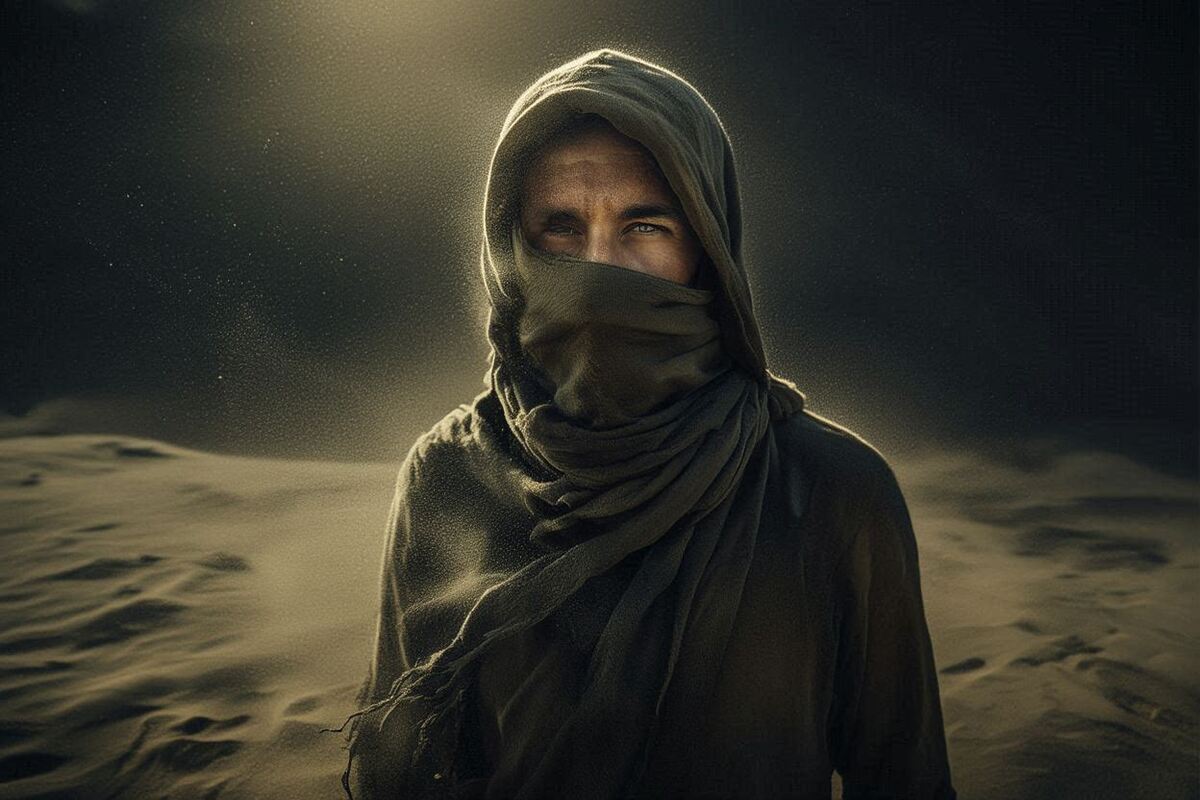
Under the burning skies of Arrakis, where sandstorms erase footprints and history in the same breath, a young man stands on the edge of a future he never asked for. Paul Atreides is not yet Muad’Dib. He is not yet the figure whose name will echo across galaxies, carried by fanatics and whispered in fear by emperors. He is simply a boy raised to be a duke—suddenly asked to become a god.
The desert isn't concerned about his bloodline. It doesn’t care that he comes from a noble house or that his mother is part of a secretive order that has been quietly shaping human evolution for centuries. The desert only cares about what survives. And Paul, standing between the legacy of House Atreides and the prophecy of the Fremen, is forced to decide what part of himself he’s willing to let die.
This is not the psychology of a chosen one who embraces destiny with open arms. This is the psychology of a reluctant messiah—a boy who sees too much, understands too early, and realizes that every path forward leads to blood in his name.
The Psychological Blueprint of Paul Atreides
Paul’s mind is a crossroads where three powerful forces collide:
- House Atreides duty is a legacy of honor, restraint, and responsibility.
- Bene Gesserit conditioning—a mind engineered for perception, control, and survival.
- Arrakis trauma—a crucible that burns away anything that isn’t essential.
He is not shaped by a single identity but by the tension between all of them. To understand Paul’s psychology is to understand how these forces fracture him, rebuild him, and ultimately turn him into something more—and less—than human.
If you’re drawn to characters whose inner lives are as complex as the surrounding worlds, you’ll find more deep dives like this in our Character Psychology hub.
The Atreides Identity: Raised for Leadership, Not Worship
A Legacy of Duty and Restraint
Duke Leto Atreides doesn’t raise Paul to be feared. He raises him to be worthy. From the beginning, Paul is taught that leadership is not about domination but stewardship. He learns strategy, diplomacy, and the weight of responsibility—not as abstract concepts, but as expectations he will one day inherit.
Leto’s philosophy is simple: power without conscience is corruption. This moral framework becomes the foundation of Paul’s early psychology. He is not a boy dreaming of conquest. He is a boy trying to live up to a father who leads with compassion in a universe that rewards cruelty.
“A great man doesn’t seek to lead. He’s called to it.”
This line is more than a quote—it's the thesis of Paul’s arc. He is called to lead in a way no human should be, and long before he is ready. The tragedy is that he understands the cost of that calling more clearly than anyone around him.
The Atreides Moral Code
Paul’s moral compass is shaped by:
- Justice—a belief that power should protect, not exploit.
- Loyalty—to his house, his people, and later, the Fremen.
- Empathy—he feels the weight of others’ suffering deeply.
- Restraint—he is wary of becoming what he fears.
This is what makes his eventual transformation so devastating. The boy raised to avoid unnecessary violence becomes the man whose name will be attached to a galaxy‑spanning holy war. The psychological tension between his Atreides ethics and the brutal demands of prophecy is what gives his character such haunting depth.
For more explorations of how filmmakers build moral tension into their characters, visit Storytelling & Narrative Craft.
The Bene Gesserit Conditioning: A Mind Engineered for Power
Jessica’s Influence
Lady Jessica is not just Paul’s mother—she is his first and most formative teacher. As a Bene Gesserit, she trains him in disciplines that most humans will never even know exist: control of breath, control of emotion, control of voice, and control of perception. She gives him tools that make him extraordinarily capable but also fundamentally different.
Through Jessica, Paul learns:
- Hyper-awareness—reading micro-expressions, body language, and tone.
- Emotional regulation—mastering fear instead of being mastered by it.
- The Voice—the ability to command through calibrated speech.
- Pattern recognition—seeing the hidden structures beneath events.
These skills make Paul uniquely suited to survive the political and physical dangers of Arrakis. But they also isolate him. He is a teenager who sees more than the surrounding adults, who understand subtext they don’t even realize they’re communicating. That kind of perception is power—and loneliness.
The Burden of Prescience
When Paul’s exposure to spice amplifies his latent prescient abilities, his psychology shifts from heightened awareness to unbearable foresight. His visions are not abstract dreams. They are branching timelines, each one filled with consequences he cannot unsee.
He sees:
- Fremen armies screaming his name in religious ecstasy.
- Worlds are burning in a jihad carried out in his honor.
- Empires collapsing under the weight of his legend.
- Chani, Stilgar, and others were caught following his choices.
This is the core of his psychological torment: he is not simply reacting to events—he is reacting to futures. Every decision is haunted by the knowledge of what it might unleash. He doesn’t just fear what others might do with his power. He fears what his existence will do to the universe.
If you’re drawn to stories where prophecy, fate, and free will collide, you’ll find more breakdowns in our Movie Explanations section.
Trauma as Transformation: The Arrakis Crucible
The Death of Duke Leto
The assassination of Duke Leto is the moment Paul’s internal world fractures. Up to that point, his life had been defined by preparation—training, education, and expectation. After Leto’s death, there is no more preparation. There is only survival.
Grief doesn’t simply harden Paul; it clarifies him. He understands that the universe will not give him the luxury of growing into his destiny. He must become something new immediately—or be erased.
The Desert as Psychological Catalyst
Arrakis is not just a setting. It is a psychological trial by environment. The desert strips away comfort, illusion, and entitlement. It teaches:
- Silence—listening to the land, the wind, and the sand.
- Patience—waiting for the right moment to move, to strike, to speak.
- Endurance—accepting pain as part of existence.
- Insignificance—realizing that the desert will outlast everyone.
- Inevitability—understanding that some forces cannot be resisted, only redirected.
The Fremen don’t conquer the desert; they become part of it. For Paul, learning to walk their path is not just about survival—it's about identity. The boy raised in a palace must learn to think like someone who has never had the luxury of safety.
For more stories where environment shapes character as much as plot, explore World Cinema and how different cultures use landscape as emotional architecture.
The Fremen Influence: Identity Reforged
Paul and Chani: Love vs. Destiny
Chani is the one person who consistently sees Paul as a human being, not a symbol. She doesn’t fall in love with Muad’Dib. She falls in love with the boy who is trying to carry a future that terrifies him.
She represents:
- Intimacy—a space where he can be vulnerable.
- Choice—the possibility of a life not defined by prophecy.
- Freedom—a version of himself that belongs to no one.
- Loss—the emotional cost of choosing destiny over love.
Paul’s tragedy is that he loves Chani deeply and still selects the path that will break her. He knows that stepping fully into the role of messiah means sacrificing not just his peace but hers. That awareness doesn’t stop him. It just makes his decision more painful—and more human.
If you’re drawn to stories where love and fate collide, you’ll find more emotionally charged breakdowns in Movies About Love, Loss & Relationships.
Stilgar and the Fremen Faith
Stilgar initially sees Paul as a potential leader—a tactician, a unifier, a bridge between worlds. But as the Fremen begin to map their prophecies onto Paul, Stilgar’s perception shifts. He stops seeing Paul as a man and starts seeing him as a fulfillment.
Paul, however, sees himself as something else entirely: a weapon. Not just against the Harkonnens or the Emperor, but against the future he fears most. If he can control the myth, maybe he can control the damage. But myth is not meant to be controlled. It is meant to spread.
The Messiah Complex: Chosen or Cornered?
The Myth of Free Will
One of the most haunting aspects of Paul’s psychology is the way prescience erodes his sense of agency. When you can see multiple futures and every path leads to violence, what does “choice” even mean?
Paul doesn’t choose to become Muad’Dib in the way heroes choose their call to adventure. He decides on the version of the future that seems least catastrophic—and even that version is drenched in blood.
He is not a man chasing power. Furthermore, he is a man trying to minimize the damage of his existence.
The Burden of Being Believed
Belief is one of the most dangerous forces in the Dune universe. Once the Fremen believe Paul is their messiah, there is no going back. Their faith amplifies his every action, turning strategy into scripture.
Paul doesn’t just carry the weight of his own decisions. He carries the weight of what others will do because they believe in him. That is a uniquely terrifying psychological burden—one that separates him from more straightforward “chosen one” narratives.
If you’re interested in how belief, fandom, and myth shape modern storytelling, you’ll find resonant parallels in our Trending Movies and Movies Like guides.
Paul Atreides Psychological Profile
| Psychological Trait | Source | Impact on Arc |
|---|---|---|
| Hyper‑awareness | Bene Gesserit training | Allows him to anticipate threats but isolates him emotionally. |
| Moral idealism | House Atreides upbringing | Creates internal conflict when prophecy demands violence. |
| Prescient burden | Spice exposure on Arrakis | Forces him into a destiny he doesn’t want but cannot escape. |
| Trauma resilience | Loss of Leto, desert survival | Hardens him into a reluctant but effective leader. |
| Messiah projection | Fremen prophecy and faith | Transforms him from leader into symbol, then into myth. |
Narrative Breakdown: Paul’s Arc Across Dune
Act I: The Boy Who Listens
At the beginning, Paul is defined by observation. He listens more than he speaks. He absorbs the lessons of his father, the training of his mother, and the political undercurrents around him. Furthermore, he is not passive, but he is still in a receptive phase—a character being shaped.
Act II: The Boy Who Sees
Once his visions intensify, Paul shifts from listening to seeing. He is no longer just processing the present; possible futures haunt him. This is where his psychology becomes unstable—not because he is weak, but because no human mind is meant to hold that much inevitability.
Act III: The Boy Who Becomes
When Paul finally steps fully into the role of Muad’Dib, it is not a triumphant coronation. It is a surrender. He accepts that the only way to steer the storm is to stand at its center. He becomes decisive, ruthless, and mythic—not because he wants to, but because the alternative is worse.
For more character arcs that move from human to mythic, explore Original Stories & Emotional Worlds and Movies That Make You Feel Something.
Backstory of the Main Characters Around Paul
Duke Leto Atreides
Leto is a rare figure in the Dune universe: a leader who values honor over fear. His refusal to rule through terror shapes Paul’s understanding of what leadership should be. Leto’s death doesn’t just remove a father—it removes the living example of a different way to wield power.
Lady Jessica
Jessica is torn between her loyalty to the Bene Gesserit and her love for her son. By choosing to bear a son instead of the daughter the Sisterhood demanded, she breaks a centuries-long plan and sets Paul on a path no one fully understands. Her training gives him the tools to survive but also the capacity to become something the Bene Gesserit cannot control.
Chani
Chani is both a guide and a mirror. She introduces Paul to the Fremen way of life and, in doing so, forces him to confront who he is without titles or privilege. She loves the man, not the myth—which makes her one of the few people who can see the cost of his transformation in real time.
Stilgar
Stilgar begins as a pragmatic leader, wary but open to Paul’s potential. Over time, his respect turns into reverence. That shift is subtle but crucial: once Stilgar starts to see Paul as a fulfillment of prophecy, he stops challenging him as a man. The psychological feedback loop of faith and power accelerates.
Director’s Vision: Denis Villeneuve’s Interpretation
Denis Villeneuve’s adaptation leans hard into the idea that Paul is not a traditional hero. The camera often frames him as small against vast landscapes, swallowed by architecture, and dwarfed by crowds. Even as his power grows, the visual language reminds us: this is a human being being consumed by something larger than himself.
Villeneuve emphasizes:
- The loneliness of leadership—Paul is surrounded by people but increasingly isolated.
- The horror of prophecy—visions are shot like nightmares, not fantasies.
- The seduction of power—the more effective Paul becomes, the more dangerous he is.
- The inevitability of myth—once the Fremen see him as Lisan al‑Gaib, reality bends.
When Paul says, “This is only the beginning,” it doesn’t land like a promise. It lands like a warning.
For more behind‑the‑scenes looks at how directors shape character psychology through visual choices, visit Behind the Scenes.
The Essence of Paul’s Psychology
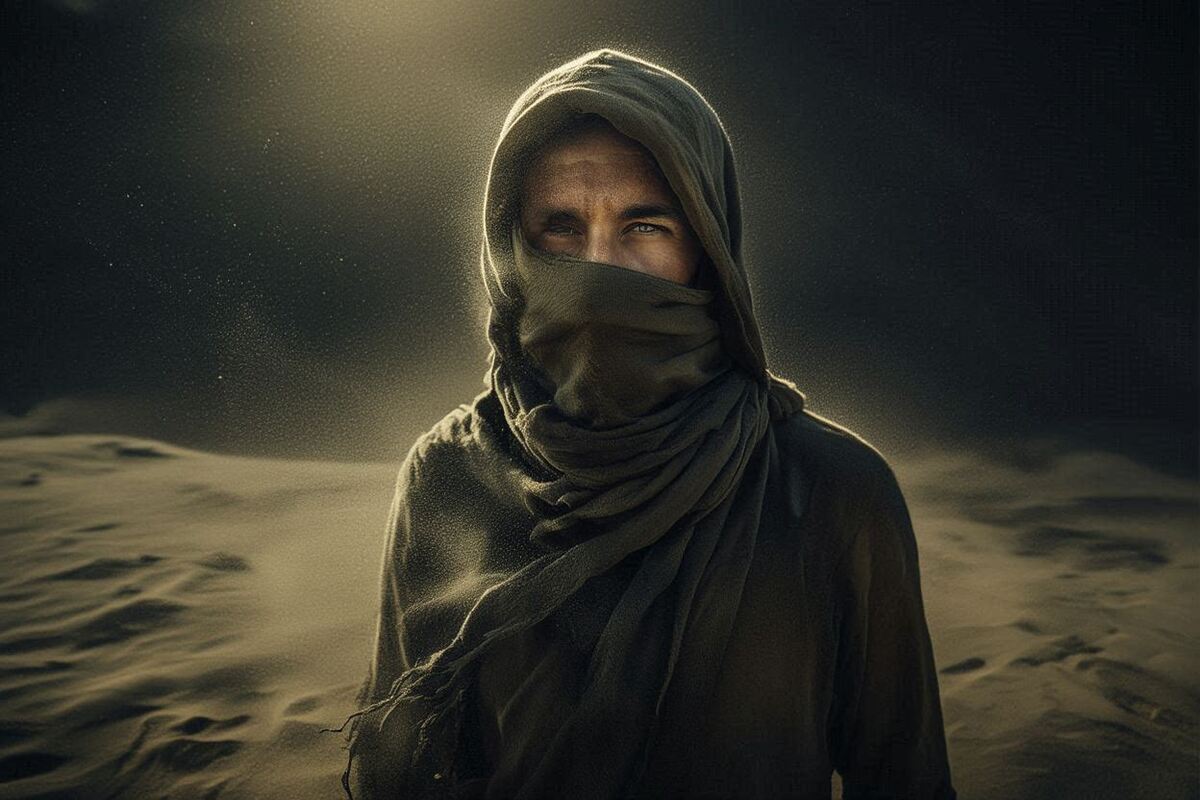
“Paul Atreides is not the hero of Dune. He is the consequence — of breeding programs, of imperial politics, of prophecy, and of a universe that needed a messiah so badly it didn’t care what that would cost.”
The Cost of Becoming More Than Human
Paul Atreides is one of the rare characters whose psychology becomes more unsettling the more you understand it. He is not a simple savior narrative. He is not a clean villain. Furthermore, he is a young man who sees too much of the future and realizes that his very existence is a catalyst for catastrophe.
His tragedy is not just that he becomes Muad’Dib. His tragedy is that he knows exactly what Muad’Dib will do to the universe—and he steps into that role anyway. Not because he wants to, but because every other path he sees is worse.
That’s what makes Paul so haunting: he is both victim and architect, both warning and fulfillment. He is what happens when a world builds its myths too well—and then hands them to a boy who understands the price of believing in them.
If characters like Paul stay with you long after the credits roll, you’ll feel at home exploring:
- Emotionally Intent Movies
- Movies With Vibe
- Seasonal Guides
- Books That Make You Feel Something
- Streaming and Movies Coming Soon
FAQs: Paul Atreides & Cinematic Psychology
Was Paul Atreides intended to become a Kwisatz Haderach convert?
Not in the mystical sense—but he was engineered for it. The Bene Gesserit breeding program, Jessica’s choice to bear a son, and the political circumstances around Arrakis all converge to make Paul the most likely candidate. His prescience, however, makes “destiny” feel less like fate and more like a trap.
Why does Paul fear his visions?
Because they show him futures where billions die in his name. He doesn’t just see victory; he sees holy war, fanaticism, and the loss of his humanity. His fear is not of failure but of success—of becoming exactly what the universe wants him to be.
Is Paul a hero or a villain?
He doesn’t fit neatly into either category. Paul is a tragic figure—someone who tries to minimize harm in a system designed to weaponize him. His actions save some and doom others. That moral ambiguity is what makes him such a compelling subject for psychological analysis.
Why does Paul accept the Fremen prophecy instead of rejecting it?
Because every future he sees where he rejects it leads to even greater chaos or destruction. Accepting the prophecy gives him some control over the direction of events, even if it means embracing a role he dreads.
What makes Paul’s psychology different from other “chosen one” characters?
Most chosen one narratives frame destiny as a gift. In Paul’s case, it’s a burden. He doesn’t just carry the weight of expectation—he carries the knowledge of what fulfilling those expectations will cost the universe. That awareness makes his arc less about triumph and more about sacrifice.
Stay With the Story
If Paul Atreides lingers in your mind—if you feel the weight of his choices, the ache of his sacrifices, the horror of his inevitability—you're precisely the kind of person BackStoryMovies is built for.
Keep going. Dive into more Character Psychology, explore Movies Like your favorites, or wander through movies based on books, true stories, and emotional worlds that feel uncomfortably real.
Cinema isn’t just something you watch. It’s something you feel, decode, and carry with you. Stay with the characters who won’t let you go.
- Paul Atreides – Britannica
- Bene Gesserit – Britannica
- Paul Atreides – Dune Wiki
- Kwisatz Haderach – Dune Wiki
- Fremen – Dune Wiki
- Denis Villeneuve on the Psychology of Dune – The New York Times
- Inside the Making of Dune – Vanity Fair
- The Science and Mythology Behind Dune – WIRED
- Why Paul Atreides Is the Most Terrifying Chosen One – Polygon
- Paul Atreides Explained – ScreenRant
- The Tragedy of Paul Atreides – Looper
- Dune and the Horror of Destiny – Vox
Grow through the stories that shape you!
If you’re exploring the backstories of movies, why not binge on these cinematic shorts! Plot twists that you never see coming, the “why” in what a story is teaching you, and the art of being seen—then join me on YouTube! I create thoughtful, cinematic lessons designed to help you see your life with more compassion, courage, and intention.
Subscribe to Back Story Movies on YouTube! →Did I forget to mention, get more creativity in your life and shop the merch at Creativity Is Expression! Visit now @