
Summary:
Christopher Nolan's film Oppenheimer explores the psychological and moral complexities faced by J. Robert Oppenheimer, the man behind the atomic bomb. The movie delves into the internal and external conflicts arising from his creation, portraying it as a psychological horror rather than a simple historical biopic. Through dual timelines, Nolan contrasts Oppenheimer's personal guilt and emotional turmoil with the political machinations and institutional power struggles surrounding him. The film ultimately suggests that the true impact of the bomb is not just physical destruction but the enduring moral and political consequences that follow.
Cinematic cold open
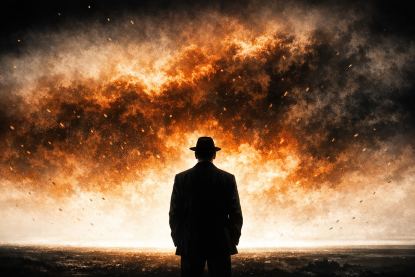
The world doesn’t end with a bang in Oppenheimer.
It ends in his eyes.
Christopher Nolan gives us the flash, the fire, and the history. But the real detonation happens later—inside a man who realizes he has created something he can never take back.
This is not just a biopic. It’s a psychological horror story about genius, guilt, and what happens when your life’s work becomes the world’s greatest threat.
Quick answer: What is the meaning of Oppenheimer?
Short version: Oppenheimer is about the moment a brilliant mind understands that knowledge doesn’t equal control. The bomb is not the end of the story—it’s the beginning of a lifetime of moral fallout.
- The bomb: The birth of irreversible power.
- The hearings: The punishment for creating what the state can’t fully control.
- The ending: The realization that the “chain reaction” never really stopped.
It’s the story of a man who becomes a warning.
Two timelines, two truths: how structure reveals meaning
Nolan splits the film into two narrative “tracks” that mirror nuclear physics and human psychology.
| Timeline | Visual style | Whose truth? | Thematic meaning |
|---|---|---|---|
| Fission | Color | Oppenheimer’s subjective experience | Emotion, memory, guilt, myth-making |
| Fusion | Black & white | Strauss’s political perspective | Power, reputation, revenge, institutional control |
Fission splits Oppenheimer as a person—scientist, celebrity, moral philosopher, and political target. Fusion combines the forces that close in on him: fear, ego, national security, and personal vendetta.
Oppenheimer splits. Strauss fuses. The world burns in the space between them.
Trinity isn’t the climax: why the test is only the beginning
The Trinity test feels like the obvious climax—but in story terms, it’s the turning point.
- Before Trinity: Theory, ambition, intellectual thrill.
- At Trinity: Awe, terror, silence.
- After Trinity: Guilt, politics, punishment.
The silence after the explosion is the key. That silence is the moment Oppenheimer understands that he has crossed a line that can never be uncrossed.
If you love this kind of behind-the-scenes emotional framing, it fits right into a larger universe of behind-the-scenes storytelling and narrative craft breakdowns.
The hearing as punishment: the real fallout
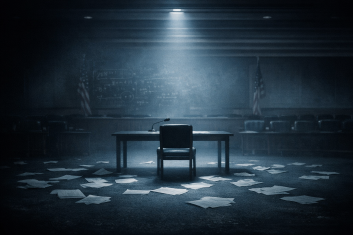
The bomb doesn’t destroy Oppenheimer. The hearing does.
Those closed-door sessions are not just political theater—they’re the system reclaiming control from the man who helped unleash uncontrollable power.
- Humiliation: Reducing a world-changing mind to a security risk.
- Erasure: Rewriting his legacy as “dangerous” instead of “essential.”
- Control: Sending a message to every future genius: you are useful, not untouchable.
The state uses his genius, then dismantles him to protect itself.
This is where the film shifts from a war story to character psychology and institutional power drama.
The final scene explained, “I believe we did.”
When Einstein asks whether Oppenheimer really thought they might destroy the world, Oppenheimer’s answer— “I believe we did”—is the emotional thesis of the film.
He doesn’t mean the world is literally gone. He means:
- The illusion of safety is gone.
- The boundary between war and annihilation is gone.
- The idea that humans can fully control their inventions is gone.
The chain reaction isn’t just nuclear—it’s moral, political, and psychological. That’s the kind of “movies that make you feel something” energy you’ll also find broken, like movies that make you feel something and movies with vibe.
Backstory of the main characters and what it reveals
J. Robert Oppenheimer: the man who split himself
Oppenheimer is written as a man divided:
- Intellectual: Drawn to theory, abstraction, and big ideas.
- Emotional: Restless, conflicted, often detached from the people closest to him.
- Moral: Haunted by the consequences of his brilliance.
His arc is a perfect case study in character psychology and how genius becomes a burden.
Lewis Strauss: the system in human form
Strauss isn’t just a rival; he’s the embodiment of institutional ego.
- Self-made, deeply status conscious.
- Threatened by intellectuals who don’t play his game.
- Willing to reshape history to protect his reputation.
He represents the “fusion” of politics, insecurity, and power—exactly the forces that crush Oppenheimer.
Kitty Oppenheimer and Jean Tatlock: emotional fallout
Kitty is the sharpest mirror in his life—brilliant, bitter, and unwilling to let him hide behind martyrdom. Jean Tatlock is the wound he never fully processes: desire, vulnerability, and the part of himself he can’t control.
Together, they anchor the film in love, loss, and relationships, turning a historical epic into an intimate emotional story.
Director’s vision: Nolan’s psychological bomb
Christopher Nolan doesn’t treat Oppenheimer as a history lesson. He treats it as a psychological event.
- Not just “what happened,” but “what it felt like.”
- Not just the bomb, but the emotional chain reaction.
- Not just genius, but the cost of being unable to look away from what you’ve done.
That’s the same emotional-intent lens you’ll find broken, like emotionally intent movies and original stories & emotional worlds.
Symbolism and narrative patterns
- Fire: Knowledge, destruction, enlightenment, consequence.
- Water: Fear, purification, the future dissolving.
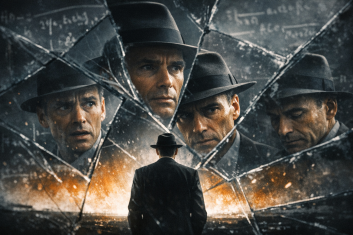
- Mirrors: Fragmented identity and self-deception.
- Chain reactions: scientific, political, emotional.
The film itself is structured like a bomb: assembly (early years), compression (Los Alamos), detonation (Trinity), fallout (hearings), and global spread (final montage).
Where Oppenheimer fits in your watchlist
If Oppenheimer hit you hard, it probably sits in the same emotional universe as:
- movies based on true stories that bend history into emotional truth,
- world cinema that explores power and consequence,
- movies like your favorite psychological dramas,
- and books that make you feel something long after you close them.
For what to watch next, you can dive into trending movies, explore what’s streaming, or check upcoming films that carry similar emotional weight.
FAQs: Oppenheimer meaning & ending
What is the main message of Oppenheimer?
The main message is that once you create a world-changing technology, you lose the ability to fully control how it’s used. Genius doesn’t cancel responsibility—it multiplies it.
What does the ending of Oppenheimer mean?
The ending suggests that the “chain reaction” Oppenheimer feared wasn’t just physical. It was political and moral. He believes they destroyed the world by making it permanently fragile.
Why is so much of the movie about hearings and politics?
Because the real story isn’t just the bomb—it’s the fallout. The hearings show how institutions treat the people who give them power: useful, then disposable.
Is Oppenheimer a hero, a villain, or something in between?
The film frames him as a tragic figure: neither pure hero nor simple villain, but a man whose brilliance outpaced his ability to live with what he created. That ambiguity is precisely what makes the movie so emotionally resonant.
Where can I find more movie explanations like this?
You can explore more breakdowns in the movie explanations hub, plus seasonal and mood-based guides like seasonal guides and movies with vibe.
Call to action: Keep following the emotional chain reaction
If Oppenheimer left you sitting in that same stunned silence as the Trinity test, you’re undoubtedly the kind of viewer who lives at the intersection of story and feeling.
Explore more:
- Movie explanations for complex, layered films.
- Character psychology for emotionally dense protagonists.
- Storytelling & narrative craft if you love how these stories are built.
Emotional closing
In the end, Oppenheimer isn’t just about the man who built the bomb. It’s about the moment he realizes the bomb will outlive him, outgrow him, and outpace any attempt to control it. Some explosions happen in the desert. Others happen in the quiet of a mind replaying the same decision for the rest of its life. That’s the real meaning of Oppenheimer: not the fire we see, but the guilt we can’t unfeel.
Sources & Further Reading
- Behind the Scenes – BackStoryMovies
- Character Psychology – BackStoryMovies
- Emotionally Intent Movies – BackStoryMovies
- Movie Explanations – BackStoryMovies
- Movies Based On True Stories – BackStoryMovies
- Movies Like… — BackStoryMovies
- Movies That Make You Feel Something – BackStoryMovies
- Movies With Vibe – BackStoryMovies
- Original Stories & Emotional Worlds – BackStoryMovies
- Seasonal Guides – BackStoryMovies
- Storytelling & Narrative Craft – BackStoryMovies
- Streaming Guides – BackStoryMovies
- Trending Movies – What Everyone’s Watching Right Now – BackStoryMovies
- Movies Coming Soon – Upcoming Films to Watch For – BackStoryMovies
- Movies About Love, Loss & Relationships – BackStoryMovies
- Books That Make You Feel Something – BackStoryMovies
- World Cinema – BackStoryMovies
Grow through the stories that shape you!
If you’re exploring the backstories of movies, why not binge on these cinematic shorts! Plot twists that you never see coming, the “why” in what a story is teaching you, and the art of being seen—then join me on YouTube! I create thoughtful, cinematic lessons designed to help you see your life with more compassion, courage, and intention.
Subscribe to Back Story Movies on YouTube! →Did I forget to mention, get more creativity in your life and shop the merch at Creativity Is Expression! Visit now @