
Summary:
"Dune: Part Two" concludes with Paul Atreides embracing his destiny as a messianic figure, not out of triumph but as a reluctant acceptance of inevitability. His journey highlights the tension between personal desires and the burdens of prophecy, as he sacrifices personal relationships and autonomy for the greater good. The film portrays his transformation into a myth, emphasizing the emotional and psychological costs of power and leadership.
Some endings don’t feel like endings at all. They feel like the moment the universe quietly closes a door behind you, and you realize you can’t go back to who you were before. The final act of Dune: Part Two lives in that space—where destiny stops being a choice and becomes a gravitational pull you can’t escape.
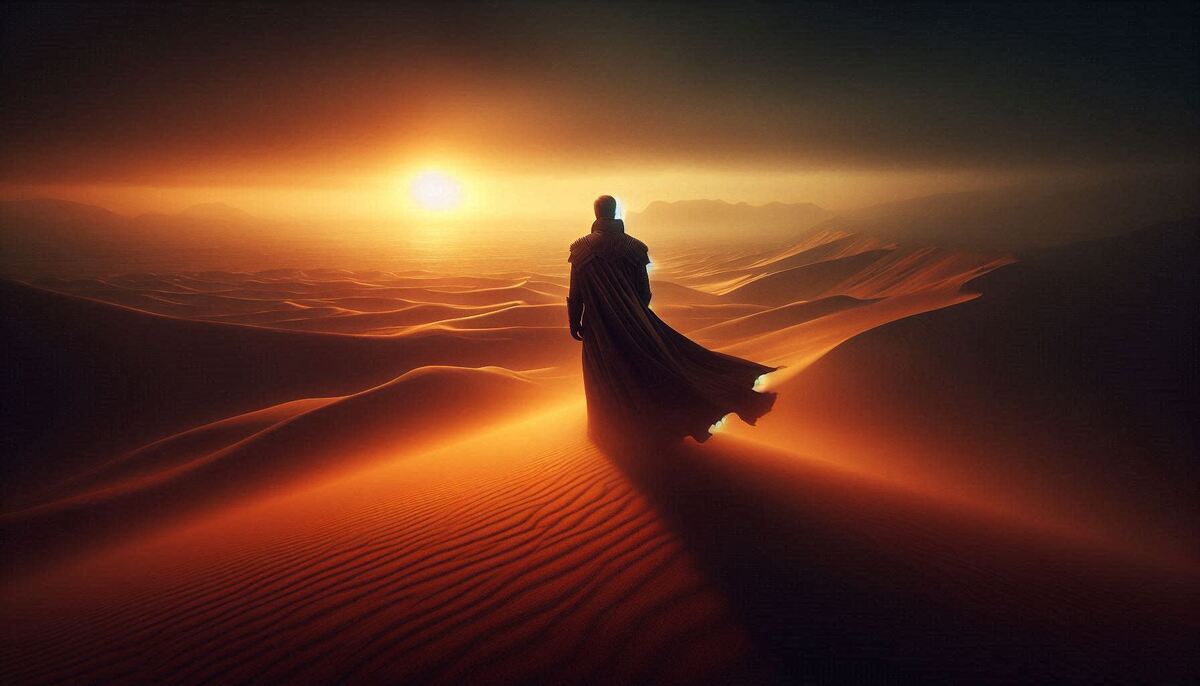
Paul Atreides doesn’t rise to victory. He descends into inevitability. The ending is not triumphant, not heroic, not even hopeful. It’s the slow, suffocating realization that Paul has finally become the thing he feared most: a messianic figure whose existence will reshape the galaxy in ways he can no longer control.
“Destiny isn’t a crown. It’s a burden—and Paul wears it knowing exactly how much blood it will cost.”
If you’re exploring the emotional weight of destiny, identity, and transformation in cinema, you may also connect with these guides:
- If EEAAO Shattered You, These Films Will Rebuild You
- Movies Like Oppenheimer
- Character Psychology
- Movies That Make You Feel Something
- Movies Like Arrival
- Emotional Reconstruction Guides
- Movies Like Her
Explore more in the Movie Explanations collection.
Ending Explained: What Actually Happens in the Final Act
Paul Drinks the Water of Life and Dies into the Myth
The turning point of the film is not the duel, not the throne, not the kneeling Fremen. It’s the moment Paul drinks the Water of Life—a substance that has killed every man who tried before him. On the surface, it’s a test. Inwardly, it’s a psychological death.
When Paul survives, he doesn’t just gain more power. He gains unbearable clarity. He sees:
- Every possible future branching out from his choices
- The holy war that will be waged in his name
- The oceans of blood that follow his rise
- The version of himself he fears most: not a savior, but a catalyst for catastrophe
And still, he steps forward. This is the moment Paul stops resisting the prophecy. He doesn’t embrace it with joy—he accepts it with grim inevitability. He becomes the Lisan al-Gaib, not because he believes in the myth, but because every future where he refuses is worse.
Paul Challenges the Emperor: Not for Glory, but for Control
Once Paul has the Fremen united behind him and the power of prescience fully awakened, he doesn’t storm the throne in a chaotic uprising. He does something far more calculated: he invokes the ancient right of kanly, demanding a formal challenge.
This is political psychology at its sharpest. By calling out Emperor Shaddam IV, Paul:
- Removes the Emperor’s ability to hide behind institutions
- Forces the conflict into a single, symbolic confrontation
- Turns a rebellion into a narrative of “rightful challenge.”
- Positions himself as the only viable path forward
Paul isn’t chasing the throne because he wants to rule. He’s seizing it because he knows someone will—and he’s the only one who has seen what happens if it isn’t him.
The Duel With Feyd-Rautha: Killing the Shadow Self
Feyd-Rautha is more than a villain. He’s Paul’s dark mirror: a young man bred for power, sharpened into a weapon, stripped of softness, empathy, or doubt.
When Paul fights Feyd, the scene works on two levels:
- On the surface: a ritual duel to determine political control
- Underneath: Paul confronting the version of himself he could have become
Feyd is what Paul might have been if he’d been raised without love, without moral conflict, without the weight of prescient guilt. Killing Feyd is not just eliminating an enemy—it’s symbolically killing the path of pure cruelty and ambition.
But here’s the tragedy: even after killing his shadow, Paul still steps into a future that looks terrifyingly close to what Feyd would have done with that power.
If you’re drawn to stories with this emotional tone, explore Movies That Make You Feel Something.

Chani Walks Away: When Love Can’t Survive Prophecy
The most devastating moment in the ending isn’t the duel, the coronation, or the kneeling Fremen. It’s Chani’s face as she realizes Paul has chosen something larger than their life together—and that there’s no way back.
Chani has always been the one person who sees Paul as a human being, not a symbol. She loves him as a man, not as a messiah. But when he leans fully into the prophecy, she understands:
- He didn’t choose her
- He didn’t choose a quiet life on Arrakis
- He chose the myth, the war, the throne, and the blood
Her walking away is not a dramatic betrayal. It’s a quiet act of self-preservation. She refuses to be absorbed into a story she never believed in.
The Fremen Kneel: The Birth of a Myth, the Death of a Man
When the Fremen kneel to Paul, the image is powerful, iconic, and deeply unsettling. This is the moment the galaxy gains a messiah—and Paul loses the last of his autonomy.
He knows what this gesture means. He’s seen the holy war. Furthermore, he’s seen the fanaticism. He’s seen the way his name will be used to justify atrocities.
And yet, he doesn’t stop it.
The ending lands with such emotional force because it’s not about whether Paul wins. It’s about what he has to become to “win” at all.
Emotional Arc Table: How the Ending Reshapes Paul
| Stage | Key Event | Emotional Meaning |
|---|---|---|
| Transformation | Paul drinks the Water of Life | He dies as a boy and returns as a myth, fully aware of the cost. |
| Confrontation | Challenge to the Emperor | He seizes control of the narrative and forces inevitability into a single moment. |
| Reflection | Duel with Feyd-Rautha | He kills his shadow self but cannot escape the shadow of his future. |
| Fracture | Chani walks away | He gains the universe and loses the one person who saw him as human. |
| Ascension | The Fremen kneel | He becomes the messiah they wanted, not the man he wanted to be. |
Backstory: Why These Characters Break the Way They Do
Paul Atreides: The Reluctant Messiah
Paul’s entire journey is built on contradiction. He is raised with compassion, trained as both a noble heir and a Bene Gesserit-adjacent weapon, haunted by visions of futures he cannot fully control, and burdened by the knowledge that his survival may doom millions.
From the beginning, Paul doesn’t want to be a messiah. He wants to be a son, a lover, and a leader who can protect his people without becoming a monster. But the more he sees of the future, the more he realizes that there is no version of his life where he stays small.
Chani: The Skeptic Who Refuses to Be Consumed by Myth
Chani is not a believer in the off-world prophecy. She’s a Fremen who understands how stories are used to control people, and she resents the way the Bene Gesserit have seeded myths into her culture.
Her love for Paul is grounded, physical, and present-tense. She doesn’t love the idea of him—she loves the boy who laughs with her in the desert, who fights beside her, who questions the same systems she does.
That’s why the ending hurts so much. When Paul steps into the role of Lisan al-Gaib, he’s no longer just her partner. He’s a symbol. A weapon. A story.
For a more profound look at this theme, read Movies Like Arrival.
Lady Jessica: The Architect of Inevitability
Jessica is one of the most quietly terrifying figures in the story—not because she’s cruel, but because she’s committed. As a Bene Gesserit, she understands the long game: bloodlines, prophecy, and religious engineering. As a mother, she loves Paul. Those two loyalties collide in Dune: Part Two.
When she becomes the Fremen Reverend Mother and amplifies the myth around Paul, she’s not just protecting him. She’s building the scaffolding that will trap him in the role of messiah.
Director’s Scope: Denis Villeneuve’s Vision of Destiny and Power
Denis Villeneuve doesn’t treat Dune as a straightforward sci-fi epic. He treats it as a psychological and political tragedy about what happens when a single person becomes the focal point of an entire civilization’s hopes, fears, and myths.
The ending of Dune: Part Two is framed not as a triumph, but as a coronation into inevitability. Villeneuve leans into:
- Intimate framing during massive events
- Silence and stillness in key emotional beats
- Religious imagery that feels both awe-inspiring and unsettling
- Prescient editing that blurs present and future
“This isn’t the rise of a hero. It’s the making of a myth—and the quiet erasure of the man underneath.”
Semantic Themes: What the Ending Is Really About
Prophecy as a Psychological Prison
The prophecy in Dune isn’t just a religious story. It’s a psychological trap. Once enough people believe Paul is the Lisan al-Gaib, his choices stop being personal and start being interpreted as divine.
Destiny vs. Autonomy
The ending asks a brutal question: if you can see the future and every path leads to suffering, is choosing the “least bad” option really free will—or just a more informed surrender?
Love vs. Leadership
Paul cannot be both Chani’s partner and the galaxy’s messiah. The ending makes that trade-off explicit. Leadership, in this story, is incompatible with intimacy.
Power as Burden, Not Reward
The throne is not framed as a prize. It’s framed as a weight. Paul takes it not with joy, but with the haunted look of someone who knows exactly what it will cost everyone else.
FAQs: Dune 2 Ending Explained
Why does Paul accept the throne if he knows it leads to war?
Because every future he sees where he doesn’t take power leads to even worse outcomes. Accepting the throne is his attempt to contain the damage, not avoid it.
Is Paul the villain now?
Not in the traditional sense—but he is on the path to becoming a figure whose actions will cause massive suffering.
Why does Chani leave instead of staying to influence Paul?
Because staying would mean accepting the myth she’s always rejected. Chani knows that once Paul becomes the messiah, her voice will be drowned out by prophecy, politics, and fanaticism.
What does the Water of Life actually change in Paul?
It removes his last illusions. After the Water of Life, Paul can no longer pretend he doesn’t know what his choices will lead to.
Why is the final image of the Fremen kneeling so unsettling?
Because it’s both a moment of unity and the birth of fanaticism. Paul understands the danger of that devotion, and that’s what makes the moment feel more like a warning than a victory.
Continue your cinematic psychology deep dive with these emotionally resonant analyses:
- EEAAO Emotional Reconstruction Guide
- Movies Like Oppenheimer
- Ending Explained Collection
- Character Psychology Hub
- Movies Like Past Lives
- Movies Like Eternal Sunshine
- Films That Hit Emotionally

Emotional Closing: The Cost of Becoming What the World Needs
Paul doesn’t end Dune: Part Two as a hero. He ends it as a myth—and myths are never allowed to be human. The power of this ending lies in its refusal to comfort you. It doesn’t say, “Don’t worry, he’ll figure it out.” It says, “He already has—and this is the best version of a terrible future he can find.”
That’s what makes it so haunting. Paul Atreides walks into his destiny not with arrogance, but with grief. He knows what he’s about to unleash. He knows what it will do to the galaxy. Likewise, he knows what
Frequently Asked Questions
Why does Paul accept the throne if he knows it leads to war?
Paul accepts the throne because every future he sees where he refuses leads to even greater destruction. Taking power is his attempt to contain the damage, not avoid it.
Is Paul the villain now?
Paul is not a traditional villain, but the ending positions him as a tragic anti-hero whose choices will cause massive suffering. He becomes a mythic figure rather than a moral one.
Why does Chani walk away at the end?
Chani leaves because Paul chooses prophecy over partnership. She refuses to be absorbed into a myth she never believed in, and walking away is her act of self-preservation.
What does the Water of Life actually change in Paul?
The Water of Life removes Paul's last illusions. After consuming it, he can no longer pretend he doesn't know what his choices will unleash. It solidifies his transformation into the Lisan al-Gaib.
Why is the final image of the Fremen kneeling so unsettling?
The kneeling Fremen symbolize both unity and fanaticism. Paul understands the danger of their devotion, which makes the moment feel more like a warning than a victory.
Grow with stories that change you!
If you’re exploring the backstories of movies, why not binge on these cinematic shorts! Plot twists that you never see coming, the “why” in what a story is teaching you, and the art of being seen—then join me on YouTube! I create thoughtful, cinematic lessons designed to help you see your life with more compassion, courage, and intention.
Subscribe to Back Story Movies on YouTube! →Did I forget to mention, get more creativity in your life and shop the merch at Creativity Is Expression! Visit now @