
Summary:
“Arrival” is a film that explores profound questions about time, memory, and human experience, prompting viewers to consider whether they would choose to live their lives if they knew the outcome. Films like “Interstellar,” “Contact,” and “Eternal Sunshine of the Spotless Mind” share this emotional depth, using science fiction to delve into themes of love, grief, and the human condition. These movies transform time into an emotional landscape, offering stories that resonate on a deeply personal level.
Three Films That Bend Time, Memory, and the Meaning of Being Human
Some films don’t just tell a story—they alter the way you experience your life. Arrival is one of those rare works of cinematic psychology. It doesn’t ask, “What if aliens landed?” It asks something far more intimate: “If you knew how your story ends, would you still choose to live it?”
The Feeling You’re Chasing After Arrival
There’s a moment in Arrival when Louise Banks stops resisting what she’s seeing. Time stops behaving. Memories arrive from a future she hasn’t lived yet. She isn’t being given a superpower—she's being given a burden: the burden of knowing and choosing anyway.
If you’re searching for movies like Arrival, you’re not looking for more aliens. You’re looking for films that:
- Turn time into an emotional landscape
- Use science or speculative ideas to explore grief, love, and meaning
- Make you feel like you’ve lived an entire lifetime in two hours
- Leave you quiet, unsettled, and strangely comforted
This guide focuses on three films that share Arrival’s emotional DNA—not just its genre: Interstellar, Contact, and Eternal Sunshine of the Spotless Mind.
Quick Guide: If You Loved This in Arrival, Watch This Next
| What You Loved in Arrival | Movie to Watch Next | Emotional Focus |
|---|---|---|
| Nonlinear time, parent–child bond, cosmic scale | Interstellar | Love as gravity, distance, and sacrifice |
| First contact, science vs. belief, grief as fuel | Contact | Connection, faith, and listening to the unknown |
| Knowing the pain and choosing love anyway | Eternal Sunshine of the Spotless Mind | Memory, regret, and emotional recursion |
1. Interstellar (2014)
If Arrival is about the courage to accept a future you can see, Interstellar is about the courage to leave everything you love behind to save it.
Why It Belongs Beside Arrival
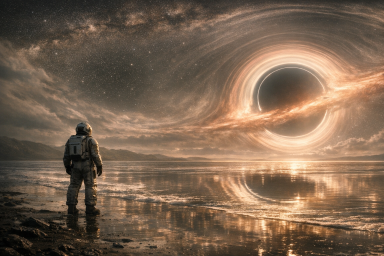
Both films use science as an emotional metaphor. In Arrival, language reshapes Louise’s perception of time. In Interstellar, relativity turns time into a brutal emotional tax.
| Theme | Arrival | Interstellar |
|---|---|---|
| Time | Nonlinear, experienced all at once | Relative, stretched, and compressed |
| Love, | A choice made with full knowledge of loss | A force that transcends dimensions |
| Communication | Language as a new way of seeing reality | Gravity as an emotional signal |
| Core Relationship | Mother and daughter | Father and daughter |
Narrative Breakdown: Time as Emotional Punishment
Cooper leaves Earth to find a new home for humanity, but the real story is the emotional gravity between him and his daughter, Murph. Every hour he spends near the black hole costs him years of her life. Time isn’t just a scientific concept—it's a weapon used against their relationship.
Louise, by contrast, experiences time as a circle. She isn’t losing time with her daughter; she’s seeing all of it at once—the joy and the grief braided together.
Both films ask the same question in different languages: If you knew the pain ahead, would you still choose the love that causes it?
Backstory of the Main Characters
Cooper is a former pilot turned farmer, living in a world that has shrunk. The sky is full of dust, not stars. His backstory is defined by loss—loss of purpose, loss of exploration, loss of the future he thought humanity deserved. His bond with Murph is the one thing that still feels infinite.
Director’s Vision: Nolan and Villeneuve in Conversation
Christopher Nolan and Denis Villeneuve are not making the same kind of sci‑fi, but they are asking similar questions. Nolan uses physics as his language; Villeneuve uses silence, framing, and linguistic philosophy. Both treat science fiction as a way to explore what it means to be human.
For more emotional architecture breakdowns, explore Character Psychology and Storytelling & Narrative Craft.
2. Contact (1997)
Before Arrival, Contact was the definitive “what if we’re not alone?” film that treated first contact as a question of faith, grief, and listening—not invasion.
Why It Belongs Beside Arrival
Ellie Arroway and Louise Banks are spiritual cousins. Both are brilliant women of science. Both lost a parent young. Their desire to comprehend something greater than themselves motivates them both. And both discover that the universe speaks in a language that is deeply, painfully personal.
Narrative Breakdown: Communication as Grief
Ellie spends her life listening to the sky. When a signal finally arrives, it’s not just a scientific breakthrough—it's a validation of everything she’s believed in since she was a child. The message leads to a machine, and the machine leads to an encounter that looks, sounds, and feels like her father.
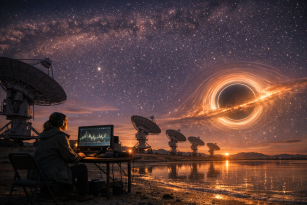
In both films, the universe doesn’t just answer our questions — it answers our grief.
Backstory of the Main Characters
Ellie’s backstory is defined by two things: her father and the silence that followed his death. Her obsession with radio signals is not just scientific curiosity—it's a refusal to accept that the universe is indifferent. She wants proof that someone, somewhere, is listening.
Director’s Vision: Zemeckis and Villeneuve on Belief
Robert Zemeckis and Denis Villeneuve both understand that science and belief are not opposites—they're parallel attempts to make meaning. In Contact, Ellie is forced to defend an experience she can’t prove. In Arrival, Louise is forced to live with knowledge she can’t fully explain.
For more emotionally resonant sci‑fi, explore Emotionally Intent Movies and Movie Explanations.
3. Eternal Sunshine of the Spotless Mind (2004)
On paper, Eternal Sunshine doesn’t look like it belongs in a list of movies like Arrival. There are no aliens, no spaceships, and no global crises. But emotionally, it might be the closest film to Arrival ever made.
Why It Belongs Beside Arrival
Both films are about the same terrifying, beautiful idea: If you knew how much it would hurt, would you still choose to love?
Narrative Breakdown: Memory as Emotional Architecture
Most of Eternal Sunshine takes place inside Joel’s mind as his memories of Clementine are systematically erased. At first, it feels like relief. Then, as he relives the good moments, he realizes what he’s losing. He tries to hide her in unrelated memories, to smuggle her past the system.
Joel is trying to escape the pain of love. Louise is choosing it with eyes wide open.
Backstory of the Main Characters
Joel is introverted, cautious, and emotionally guarded. Clementine is impulsive, chaotic, and vivid. Their relationship is messy, imperfect, and deeply human. The decision to erase her is an act of emotional self-defense—and, ultimately, an act of self‑betrayal.
Director’s Vision: Gondry and Villeneuve on Emotional Recursion
Michel Gondry and Denis Villeneuve both use structure as emotion. In Eternal Sunshine, the looping, collapsing memories mirror the way we revisit our own past, rewriting and re‑feeling it. In Arrival, the nonlinear timeline mirrors the way grief makes time feel unstable.
For more emotionally rich storytelling, explore Movies That Make You Feel Something and Original Stories & Emotional Worlds.
Director’s Vision: Why Arrival Hits So Hard
Denis Villeneuve builds films like emotional architecture. Every frame is a doorway. Every silence is a sentence. He doesn’t just show you a story—he lets you inhabit the emotional weather of his characters.
- Minimalism as amplifier: Sparse dialogue and quiet spaces invite you to feel, not just follow.
- Sound design as inner life: The score feels like Louise’s internal state made audible.
- Language as world‑building: The heptapods circular writing is a visual metaphor for nonlinear time.
- Time as character: Time isn’t a backdrop; it’s an active force shaping every choice.
For more behind‑the‑scenes craft, explore Behind the Scenes.
Character Backstory: Louise Banks as Emotional Anchor
Louise is not a chosen one. She’s not a soldier, not a politician, not a savior. She’s a linguist—someone whose entire life is built around the idea that understanding another being starts with listening.
Louise’s true “superpower” isn’t seeing the future. It’s accepting it.
Her backstory is framed through grief. We see her with her daughter. We see the hospital. Furthermore, we see the loss. At first, we read these as flashbacks. We only discover later that they are flash-forwards, glimpses of a future she hasn't yet experienced but will still choose.

Movies Like Arrival: Films That Bend Time, Memory, and Meaning
For more character‑driven analysis, explore Character Psychology.
FAQs: Movies Like Arrival
What makes a movie “like Arrival”?
It’s less about aliens and more about emotional architecture. Movies like Arrival tend to:
- Use sci‑fi or speculative ideas to explore grief, love, and meaning
- Play with time, memory, or perception in nonlinear ways
- Center on deeply human relationships rather than spectacle
- Leave you with questions that feel personal, not just intellectual
Is Arrival based on a book?
Yes—Ted Chiang’s novella Story of Your Life. For more emotionally resonant storytelling, explore Books That Make You Feel Something.
Where can I find more movies that feel like this?
- Movies Like
- Movies With Vibe
- Movies About Love, Loss & Relationships
- Streaming
External Citations
Grow through the stories that shape you!
If you’re exploring the backstories of movies, why not binge on these cinematic shorts! Plot twists that you never see coming, the “why” in what a story is teaching you, and the art of being seen—then join me on YouTube! I create thoughtful, cinematic lessons designed to help you see your life with more compassion, courage, and intention.
Subscribe to Back Story Movies on YouTube! →
Did I forget to mention, get more creativity in your life and shop the merch at Creativity Is Expression! Visit now @