
Summary:
Storytelling doesn’t make you creative because it gives you ideas; it makes you creative because it provides you with access to yourself. When you enter a narrative, your identity expands, your emotional architecture activates, and your imagination begins to reorganize your inner world. Creativity becomes a natural response to meaning.
The Moment That Changes Everything
A moment occurs when a narrative penetrates your consciousness and rearranges an element that you were previously unaware was amiss. This moment is subtle and nearly imperceptible. It doesn’t happen during the dramatic scenes, the explosions, the declarations, or the endings. It happens in the quiet frames. The ones most people skip past. The ones that feel like the director is whispering instead of speaking.
For me, it happened during a film I wasn’t even paying attention to.
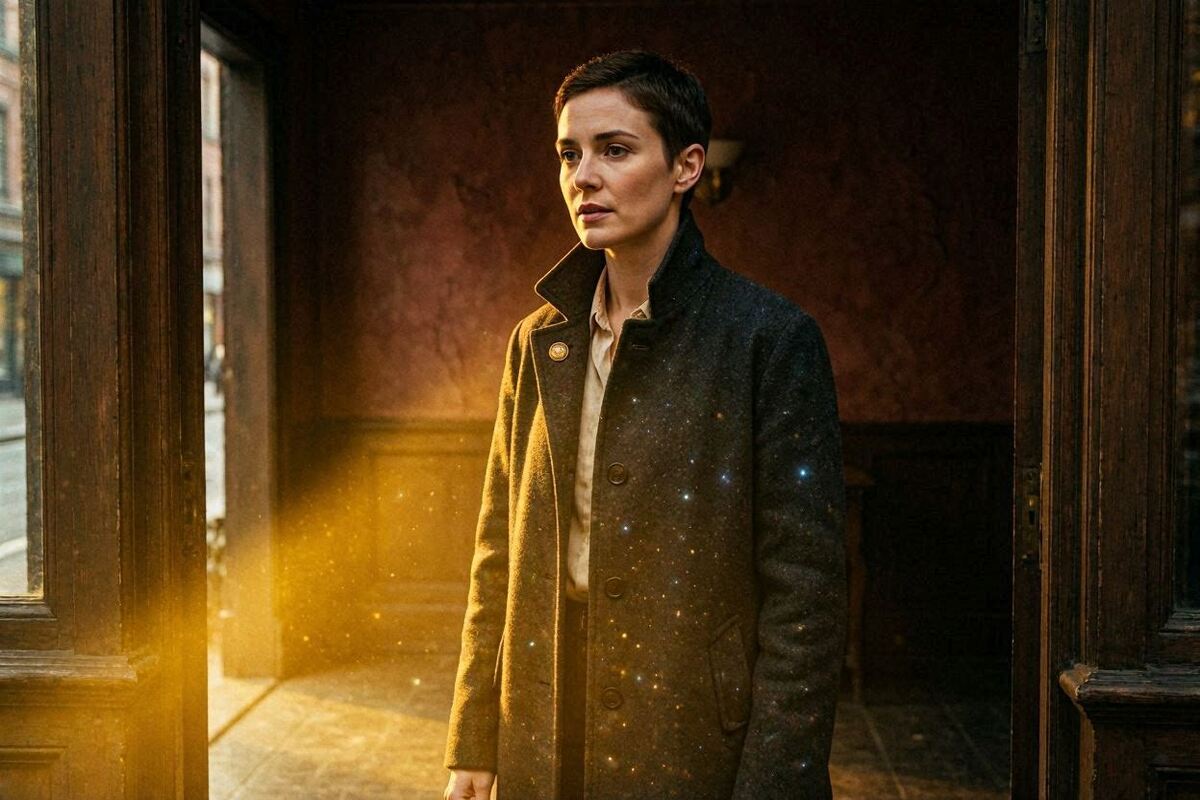
I had it on in the background while sorting through a week that felt like static. I wasn’t looking for inspiration. Furthermore, I wasn’t trying to be creative. I wasn’t trying to feel anything at all. I just needed noise. But then the protagonist—a character who had been running from everything, including herself—stopped. She didn’t say anything. She didn’t cry. Likewise, she didn’t break down. She just paused, looked at a doorway she wasn’t ready to walk through, and breathed.
That breath felt like mine.
It was the kind of breath you take when you’re standing at the edge of a version of yourself you’re not sure that you’re brave enough to become. And in that moment, something clicked:
Stories don’t inspire creativity because they give you ideas. Stories inspire creativity because they provide you with access to the parts of yourself you’ve been avoiding.
Creativity isn’t born from effort. It’s born from recognition. Recognition of your longing. Recognition of your fear. Acceptance of your incomplete self. Stories make you creative because they remind you that you are already in the middle of a narrative—and narratives demand expression.
Read more on storytelling and psychology here on Back Story Movies.
Explore More Cinematic Identity Work
The Identity Shift™
A cinematic guide to becoming the version of yourself your life keeps hinting toward.
Creative Sovereignty™
Reclaim the emotional authority that shapes your voice, your expression, and your creative truth.
The Purpose Blueprint™
A narrative‑driven framework for discovering the deeper story your life is trying to tell.
What Storytelling Actually Does to Your Mind
Storytelling doesn’t just entertain you. It reorganizes you. When you engage with a story—watching, reading, or telling—your brain begins doing three things automatically:
1. It builds emotional architecture.
Your mind starts connecting feelings to meaning, meaning to memory, and memory to possibility.
2. It activates narrative logic.
Suddenly, your thoughts have arcs, beats, tension, release, and direction.
3. It expands identity.
You temporarily become someone else—and that expansion gives your creativity more room to breathe.
This is why you often feel more creative after watching a film, reading a novel, or hearing someone tell a story that hits you in the right place.
Your brain isn’t reacting to the plot. It’s reacting to the permission.
Stories give you permission to imagine differently.
The Psychology Behind Storytelling and Creativity
Identity Expansion
Creativity is limited by identity. If you believe you are a certain kind of person, you will only generate ideas that fit inside that identity. Stories temporarily dissolve that boundary. You become the character. You feel their fear. Not only that, but you borrow their courage. You inhabit their possibility. And when you return to yourself, you bring pieces of them with you.
Emotional Resonance
Creativity is emotional before it is intellectual. Stories activate your emotional signature—the unique emotional tone your mind uses to interpret the world. When that signature lights up, creativity becomes embodied instead of forced.
Narrative Patterning
Your brain loves patterns. Stories give your mind a structure to build from:
- conflict → idea
- desire → direction
- tension → innovation
- revelation → transformation
Creativity becomes easier because your mind is no longer generating from chaos—it's generating from narrative.
Signs Storytelling Is Expanding Your Creativity
You’ll know storytelling is reshaping your creative capacity when:
- You start imagining alternate versions of yourself.
- Ordinary moments feel symbolic.
- You think in scenes instead of tasks.
- You feel emotionally pulled toward expression.
- You reframe challenges as plot points.
- You notice patterns in your life.
- You feel inspired after conversations, films, or books.
- You begin narrating your thoughts.
- You feel more curious about people.
- You sense a shift in your inner world—subtle but undeniable.
These aren’t random. They’re psychological markers of identity expansion.
Why Storytelling Changes Your Creative Capacity
Because stories bypass resistance.
You don’t argue with a story. You enter it.
Because stories activate imagination.
Your brain begins rehearsing possibility.
Because stories dissolve emotional blocks.
You feel things you didn’t know you needed to feel.
Because stories expand identity.
You become someone who can imagine more.
Because stories create coherence.
Your ideas stop being fragments and start becoming scenes.
Creativity isn’t about generating something new. It’s about accessing something true.
Stories are the access point.
How to Use Storytelling to Become More Creative
Step 1: Enter the story; don’t observe it.
Ask: What part of me is being activated right now?
Step 2: Notice your emotional signature.
What tone resonates with you? That tone is your creative frequency.
Step 3: Reframe your life cinematically.
Your challenges are plot points. Your desires are character motivation. Act III describes your future.
Step 4: Use micro‑stories.
Write tiny scenes from your life. Creativity expands through fragments.
Step 5: Shift your identity frequency.
Create from expansion, not contraction.
Step 6: Let stories rearrange you.
Don’t force creativity. Let narrative do the work.
Cinematic Parallels That Reveal Creative Truths
Arrival—The Language of Becoming
Creativity is translation—turning emotion into expression.
The Secret Life of Walter Mitty—The Leap
Creativity begins the moment you stop imagining your life and start living it.
Everything Everywhere All at Once—Infinite Selves
Creativity expands when identity expands.
Whiplash—The Cost of Mastery
Creativity is tension—the friction between who you are and who you’re becoming.
The Shape of Water—Unlikely Expression
Creativity is the courage to express what feels strange, tender, or forbidden.
Integration: Your Creative Storytelling Ecosystem Top‑Tier Identity Tools
Identity Frequency™ Mini‑Assessment
Decode the emotional‑energetic signal shaping your choices, creativity, and self‑perception.
7‑Day Identity Reset Challenge™
A guided cinematic reset that helps you shed outdated roles and step into your next identity chapter.
Identity Reinvention Wallpapers™
Daily visual anchors designed to shift your emotional architecture and reinforce your evolving identity.
Emotional Signature Journals™ Bundle
Decode your emotional patterns and learn the cinematic tone your creativity naturally operates from.
Cinematic Psychology Micro‑Guides™ Bundle
Bite‑sized identity tools that help you shift your narrative, emotional patterns, and self‑story.
Sovereign Emergence Codex™ (30‑Day System)
A daily anchoring system that stabilizes your identity frequency and strengthens emotional sovereignty.

In Closing: The Story You Haven’t Told Yet
There is a version of you who creates effortlessly—not because ideas come easily, but because meaning does. That version of you isn’t waiting for inspiration. They’re waiting for recognition. Recognition of the story you’re already living. Recognition of the identity you’re already becoming. Recognize the creativity that has been quietly building inside you, waiting for a story to reveal it. You don’t need more discipline. You don’t need more motivation. Furthermore, you don’t need more time.
You require a story.
A story that rearranges you. A story that expands you. A story that reminds you who you are when you’re not performing, pleasing, or pretending. Because creativity isn’t a rare gift. It’s a natural response to meaning. And the moment you begin living your life as a story, your ideas will finally have somewhere to go.
Your internal story shapes everything—your confidence, your choices, your relationships, and the future you believe is possible. The Narrative Identity Blueprintshows you how the stories you’ve been living were formed, why they feel so real, and how to rewrite the ones that no longer fit. If you’re ready to shift your identity, break old patterns, and create a life that aligns with whom you’re becoming, this guide gives you the tools to start your rewrite today.
Reliable Sources
- Importance of Creative Storytelling in Modern Advertising. Media Merchants↩
- The Power of Storytelling to Facilitate Human Connection and Learning. Boston University Impact↩
Explore More Cinematic Identity Work
The Identity Shift™
A cinematic guide to becoming the version of yourself your life keeps hinting toward.
Creative Sovereignty™
Reclaim the emotional authority that shapes your voice, your expression, and your creative truth.
The Purpose Blueprint™
A narrative‑driven framework for discovering the deeper story your life is trying to tell.
Grow through the stories that shape you!
If you’re exploring the backstories of movies, why not binge on these cinematic shorts! Plot twists that you never see coming, the “why” in what a story is teaching you, and the art of being seen—then join me on YouTube! I create thoughtful, cinematic lessons designed to help you see your life with more compassion, courage, and intention.
Subscribe to Back Story Movies on YouTube! →
Did I forget to mention, get more creativity in your life and shop the merch at Creativity Is Expression! Visit now @