

Summary:
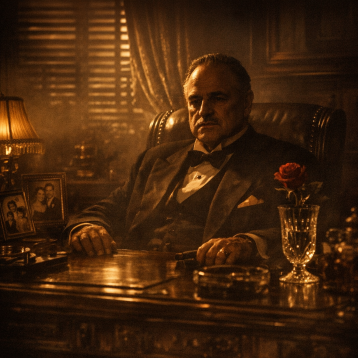
In “The Godfather,” wealth transcends mere currency, embodying power, identity, and legacy within the Corleone family. The film explores five wealth archetypes: the Don as legacy, the Heir as burden, the Enforcer as violence, the Outsider as assimilation, and the Politician as influence. Each archetype reveals the complex interplay between power and personal sacrifice, illustrating how wealth shapes destinies and corrodes souls. Through these characters, the narrative delves into the emotional architecture of wealth, portraying its impact on family and identity.
Power, Legacy, and the Price of Becoming a Man of Respect
Cinematic Cold Open
The camera glides through a darkened room. A man sits in shadow, his voice low, steady, almost tender as he speaks of America, justice, and the price of dignity. Behind him, a figure listens—not just a father, not just a patriarch, but the architect of an empire built on loyalty, fear, and the quiet machinery of wealth.
This is not a story about money.
It’s a story about what money means—protection, identity, inheritance, corruption, and destiny.
In The Godfather, wealth is never just currency. It is power, safety, family, violence, and mythology. It is the invisible force shaping every decision, every betrayal, every whispered promise of “I’ll make him an offer he can’t refuse.”
This article explores the wealth archetypes that define the Corleone world—the psychological, emotional, and narrative structures that turn a crime saga into a generational epic.
The Five Wealth Archetypes of The Godfather
These archetypes are not simply characters—they are economic identities, emotional blueprints, and narrative engines. They sit at the intersection of family, power, and survival, echoing the kind of deep character work you’ll find in broader character psychology and storytelling & narrative craft explorations.
- The Don—Wealth as Legacy
- The Heir—Wealth as Burden
- The Enforcer—Wealth as Violence
- The Outsider—Wealth as Assimilation
- The Politician—Wealth as Influence
Each archetype reveals a different truth about how power is built, protected, and ultimately lost—the same kind of emotional and structural analysis that powers movies like Breakdowns and movies that make you feel something.
Explore More from BackStoryMovies
The Don: Wealth as Legacy
Vito Corleone’s Backstory: The Making of a Myth
Vito Andolini arrives in America with nothing but trauma and silence. His wealth begins not with money but with absence—the absence of family, protection, and identity. He learns quickly that in America, survival requires alliances, favors, and strategic mercy. His rise mirrors the kind of behind‑the‑curtain transformation you’d expect in a detailed behind-the-scenes chronicle.
Vito’s wealth is built on:
- Reciprocity (“Someday, and that day may never come…”)
- Community protection
- Calculated generosity
- A reputation for fairness and fear
“A man who doesn’t spend time with his family can never be a real man.” — Vito Corleone
Vito’s empire is not just about profit; it’s about continuity. He wants his children to live in a world where they never feel the helplessness he knew as a boy. Wealth, for him, is a shield—a way to rewrite his origin story.
Narrative Function
The Don archetype anchors the story in tradition, ritual, and old‑world honor. He represents a world where wealth is slow, relational, and deeply personal. His presence gives the film its moral center—not because he is good, but because he is consistent, principled within his code.

The Heir: Wealth as Burden
Michael’s Backstory: The American Dream Turned Inside Out
Michael begins as the Corleone who believes in America—the decorated war hero, the college boy, the one who tells Kay:
“That’s my family, Kay. It’s not me.”
He is the son who tries to step outside the narrative, to live in a world of legitimacy and distance. But the tragedy of Michael is that the more he tries to escape the family’s wealth, the more it pulls him back. His transformation is not a fall—it is an inheritance, the kind of psychological pivot that sits at the heart of emotionally‑intent movies.
When Vito is nearly assassinated, Michael’s choice to protect his father becomes the hinge of the entire saga. The moment he volunteers to kill Sollozzo and McCluskey is the moment he steps into the archetype of the Heir—the man who will carry the empire forward, but at the cost of his soul.
Narrative Function
Michael’s arc reveals the psychological cost of wealth:
- Isolation—the more powerful he becomes, the fewer people he can trust.
- Paranoia—every relationship becomes a potential betrayal.
- Moral erosion—lines he once refused to cross become routine.
- The collapse of intimacy—his marriage, his family, and his inner life all fracture.
He becomes the wealth archetype defined by burden, not ambition. His story is less about wanting power and more about being unable to refuse it—a pattern that resonates with many tragic protagonists in world cinema.
The Enforcer: Wealth as Violence
Sonny’s Backstory: The Cost of Impulse
Sonny Corleone is the embodiment of raw, kinetic power—the man who believes wealth is protected through force. He grows up in a world where loyalty is currency and violence is negotiation. He is the Corleone who understands the streets, the rhythms of danger, and the language of intimidation.
But Sonny’s tragedy is that he lacks the one thing the Don values most: restraint. His temper, his impulsiveness, and his inability to think beyond the immediate insult or threat make him both effective and doomed.
Sonny’s wealth is built on:
- Immediate action
- Emotional intensity
- Territorial dominance
And it is lost for the same reasons. His death at the tollbooth is not just a plot twist; it is the narrative consequence of an archetype that cannot survive in a world that rewards long‑term strategy over short‑term fury.
Narrative Function
The Enforcer archetype shows the unsustainable side of power. Violence can build wealth, but it cannot preserve it. Sonny’s arc is a warning: if power is only ever expressed as force, it will eventually be met with a force greater than itself.
The Outsider: Wealth as Assimilation
Tom Hagen’s Backstory: The Orphan Who Became a Strategist
Tom Hagen begins as a street orphan, taken in by Sonny, legitimized by Vito, and educated into the family’s intellectual backbone. He is the archetype of assimilation—the man who earns his place through competence, not blood.
Tom’s wealth is:
- Intellectual—he understands contracts, negotiations, and optics.
- Diplomatic—he knows how to calm tempers and broker deals.
- Institutional—he can translate street power into boardroom leverage.
- Legal-adjacent—he operates at the edge of legitimacy.
He is the Corleone who understands how to turn criminal power into respectable influence, the kind of move that often appears in original stories & emotional worlds where outsiders become indispensable.
Narrative Function
Tom represents the bridge between the old world and the new—the shift from street power to institutional power. He is both inside and outside the family, trusted yet limited. His exclusion from certain decisions, especially as Michael consolidates power, underscores the limits of assimilation in a blood‑bound empire.
The Politician: Wealth as Influence
The Backstory of Institutional Power
The Godfather makes one thing clear:
“A lawyer with his briefcase can steal more than a hundred men with guns.”
Political wealth is the most dangerous kind because it is:
- Invisible—it operates behind closed doors.
- Sanctioned—it is protected by law and custom.
- Socially accepted—it looks respectable.
- Self-perpetuating—it reinforces its own power.
Senators, judges, and police captains—these are the men who sell legitimacy to the highest bidder. They are not merely side characters; they are the gatekeepers of what counts as “legal” and “illegal.” Their presence in the story mirrors the kind of systemic analysis you’d find in more in-depth movie explanations and movies based on real‑world power structures.
Narrative Function
The politician archetype exposes the hypocrisy of American power—the idea that corruption is acceptable as long as it wears a suit. The Corleones are criminals not because they are uniquely immoral, but because their methods are less disguised.
Table: The Wealth Archetypes at a Glance
| Archetype | Character | Wealth Source | Strength | Weakness | Narrative Purpose |
|---|---|---|---|---|---|
| The Don | Vito | Legacy, loyalty | Stability | Aging empire | Tradition |
| The Heir | Michael | Inheritance | Strategy | Isolation | Transformation |
| The Enforcer | Sonny | Violence | Passion | Impulse | Chaos |
| The Outsider | Tom | Assimilation | Diplomacy | Limited authority | Legitimacy |
| The Politician | Senators, Judges | Influence | Access | Corruption | Hypocrisy |
Keep Exploring the Emotional Architecture of Film
Director’s Vision: Coppola’s Wealth Mythology
Francis Ford Coppola doesn’t treat wealth as a backdrop—he treats it as a character. The mansions, the offices, the wedding, and the dimly lit study—all of these spaces are visual expressions of power, legacy, and control.
His vision frames wealth as:
- Inheritance (Michael)—the weight of what you did not choose.
- Responsibility (Vito)—the duty to protect those under your care.
- Temptation (Sonny)—the thrill of unchecked power.
- Assimilation (Tom)—the desire to belong to a world that may never fully accept you.
- Corruption (political institutions)—the rot beneath respectable surfaces.
The Godfather is not just a crime film—it is a meditation on what power does to the soul. It sits comfortably alongside other emotionally charged, structurally rich films you might find in movies about love, loss & relationships, and movies that make you feel something, even though its surface is violence and crime.
Narrative Breakdown: How Wealth Shapes the Story
Act I—Wealth as Protection
Vito protects the community. Michael protects his father. Sonny protects the family name. Wealth here is a shield—a way to keep danger at bay, to ensure that those who come to the Don on his daughter’s wedding day leave with their dignity restored.
This is the phase where the Corleone power structure still feels coherent, almost noble in its own twisted way. It’s the kind of framing that invites more in-depth movie explanations and thematic breakdowns.
Act II—Wealth as Identity
Michael becomes the man he swore he’d never be. Tom becomes the voice of reason. The family becomes an institution. Wealth is no longer just a tool; it becomes the lens through which each character sees themselves.
Michael’s decisions are no longer about survival alone—they are about what it means to be the head of the family. His identity fuses with the empire. The more he consolidates power, the more he loses access to vulnerability, love, and trust.
Act III—Wealth as Destiny
Michael consolidates power. Enemies fall. All debts are paid. The famous baptism sequence intercuts religious ritual with ruthless execution—a visual thesis on how wealth and power sanctify violence.
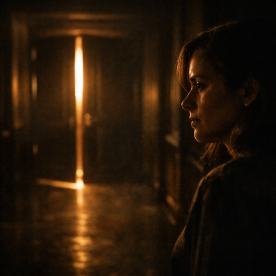
And yet, the final image is not triumph—it is Kay watching the door close, realizing the cost of Michael’s inheritance. The man she loved has become a myth, a title, a role. The Godfather. The door closing is not just physical; it is emotional and spiritual.
FAQs: Wealth Archetypes in The Godfather
What is a “wealth archetype” in The Godfather?
It’s a psychological and narrative pattern that defines how each character relates to power, money, and legacy. Instead of just asking, “Who has money?” we ask, “What does wealth mean to this person?”
Why is Vito Corleone considered the “Don” archetype?
Because his wealth is built on loyalty, reciprocity, and generational continuity—not greed. He sees wealth as a way to protect and stabilize his family and community, even as he uses violent means to do so.
Why does Michael’s wealth feel tragic?
Michael’s wealth feels tragic because he inherits power without inheriting the emotional grounding that made Vito beloved. His reign is colder, more paranoid, and more isolating. He wins the game and loses himself.
Is Tom Hagen truly an outsider?
Yes. Tom is respected, trusted, and essential, but never fully “family” in the blood sense. His outsider status shapes how he advises, how he is included, and where his influence stops.
How does Coppola portray political wealth?
Political wealth is portrayed as the most corrupt and socially accepted form of power—the one that hides behind legitimacy. The film suggests that the line between organized crime and organized politics is thinner than we’d like to believe.
Emotional Closing
In the end, The Godfather is not about crime. It is about the emotional architecture of wealth—the way power shapes men, families, and legacies.
Vito builds an empire to protect his children. Michael inherits an empire that destroys him. Sonny dies for the empire. Tom sustains the empire. Politicians exploit the empire.
Every archetype pays a price.
And that is the tragedy of wealth in The Godfather: the richer the family becomes, the poorer their souls grow.
If this kind of cinematic‑psychology breakdown resonates with you, you’ll find more worlds like this at BackStoryMovies — a space for films that don’t just entertain but rearrange how you feel, think, and remember.
External Citations
Grow through the stories that shape you!
If you’re exploring the backstories of movies, why not binge on these cinematic shorts! Plot twists that you never see coming, the “why” in what a story is teaching you, and the art of being seen—then join me on YouTube! I create thoughtful, cinematic lessons designed to help you see your life with more compassion, courage, and intention.
Subscribe to Back Story Movies on YouTube! →
Did I forget to mention, get more creativity in your life and shop the merch at Creativity Is Expression! Visit now @