
Summary:
“The Seven Husbands of Evelyn Hugo” explores themes of love, power, and reinvention through the life of a woman who refuses to be confined by societal expectations. Evelyn Hugo's story is not about her husbands but about her journey of survival and transformation in a world that demands conformity. Her character resonates due to her complexity and the emotional truths she embodies, highlighting the cost of ambition and the struggle between public image and private identity. The novel's emotional depth and cinematic narrative structure reveal the personal sacrifices behind Evelyn's legendary status.
A Cinematic‑Psychology Exploration of Love, Power, and Reinvention
There’s a moment—quiet, almost imperceptible—when a woman decides she will no longer live the life handed to her. She will build a new one. She will shape herself into someone the world cannot ignore. When I think about The Seven Husbands of Evelyn Hugo, that’s the moment I return to. Not the glamour. Not the scandal. She wasn't a legend because of the headlines. I return to the choice.
The choice to become someone else. The choice to survive. The choice to love in a world that punished her for it.This is not a story about husbands. It’s a story about a woman who refused to be small—and the emotional cost of that refusal.
Why Evelyn Hugo Still Haunts Me
Some characters stay with you because they’re likable. Evelyn stays with you because she’s true.
She is flawed, brilliant, calculating, tender, ruthless, and heartbreakingly human. She embodies a truth many women know intimately:
“Sometimes survival requires becoming someone the world will listen to.”
In this spoiler‑light exploration, I’m not here to recap the plot. I’m here to trace the emotional architecture: the longing, the ambition, the reinvention, the love that shapes her, and the cost of becoming a myth.
The Emotional Blueprint of Evelyn Hugo
Reinvention as Survival
Evelyn’s life is defined by a single emotional truth: she becomes who she needs to be to survive the moment she’s in. Not because she’s inherently manipulative, but because the world she enters leaves her no other choice.Hollywood in the 1950s is a machine built to consume women. Evelyn learns quickly that beauty is currency, ambition is dangerous, and love is something you protect by hiding it. Her reinvention isn’t vanity—it’s armor.
Learn how to understand and rewrite Your narrative in my latest article, The Narrative Identity Blueprint. Your internal story shapes everything—your confidence, your choices, your relationships, and the future you believe is possible. The Narrative Identity Blueprint shows you how the stories you’ve been living were formed, why they feel so real, and how to rewrite the ones that no longer fit. If you’re ready to shift your identity, break old patterns, and create a life that aligns with whom you’re becoming, this guide gives you the tools to start your rewrite today.

The Ache of Forbidden Love
Without spoiling the core of the story, I can say this: there is a love in this book that is so tender, so complicated, and so emotionally charged that it becomes the gravitational center of Evelyn’s life.
It’s the kind of love that shapes you. The kind that asks everything of you. The kind that forces you to choose between the life you want and the life you can survive. That love is the emotional spine of the novel—the love she protects, the love she pays for.
Ambition as a Double‑Edged Sword
Evelyn’s ambition isn’t greed; it’s hunger. It’s the desire to escape the life she was born into and claim the life she knows she deserves.
But ambition has a cost. And Evelyn pays it—in marriages, in secrets, in sacrifices, in the pieces of herself she gives away to keep the rest intact.
Narrative Breakdown
The Seven Husbands as Emotional Architecture
The husbands are not the story; they’re the scaffolding around the story. Each one represents something different:
- Opportunity
- Escape
- Protection
- Image
- Survival
- Companionship
- Reckoning
The real narrative is the woman who moves through them—and the love she carries quietly beneath the surface.
The Interview Structure
The novel’s framing device—Evelyn telling her life story to Monique—creates a cinematic rhythm:
- Present‑day clarity
- Past‑tense confession
- Emotional layering
- Slow‑burn revelation
It feels like watching a documentary unfold in real time, with Evelyn controlling the narrative the way she once controlled her image.
The Cost of Becoming a Legend
Evelyn’s life is glamorous, yes—but glamour is never the point. The point is what she loses along the way.
The point is what she hides. The point is what she protects. The point is the truth she finally decides to tell when she has nothing left to lose.
Backstory of the Main Characters
Evelyn Hugo
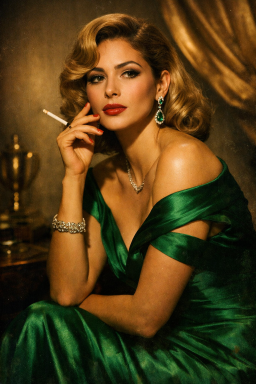
Born Evelyn Herrera, she grows up impoverished, longing for escape. Her beauty becomes her ticket out—but it also becomes the cage she must learn to navigate.
Her backstory is defined by survival, reinvention, longing, ambition, and the desire to be loved for whom she truly is. She is both the architect and the casualty of her legend.
Celia St. James
Celia is the emotional counterweight to Evelyn’s ambition. Where Evelyn is strategic, Celia is sincere. Where Evelyn hides, Celia demands truth. Celia declines to make the sacrifice that Evelyn does.
Their dynamic is the emotional heartbeat of the novel—tender, volatile, and transformative.
Harry Cameron
Harry is the rare kind of friend who becomes family. He is loyalty personified. He is one of the few people who see Evelyn clearly and love her without condition.
Their relationship is one of the most emotionally grounded parts of the book.
Monique Grant
Monique is the lens through which we understand Evelyn’s legacy. She is not just a journalist; she is the emotional inheritor of Evelyn’s truth.
Her arc is about identity, purpose, and the courage to claim her story—especially in the shadow of someone as mythic as Evelyn Hugo.
Author’s Vision: Taylor Jenkins Reid’s Emotional Architecture
Taylor Jenkins Reid writes with a filmmaker’s eye and a psychologist’s intuition. Her vision for this novel rests on three pillars:
The Myth of Hollywood
Reid exposes the machinery behind fame—the image‑making, the manipulation, and the cost of being adored. Hollywood is not just a setting; it’s a character, a system that shapes and distorts everyone inside it.
The Truth of Identity
The novel explores the tension between who we are and who the world demands we be. Evelyn’s public persona and private self are often at war, and that conflict drives much of the emotional tension.
The Complexity of Love
Reid writes love as something messy, inconvenient, transformative, and often painful. Love in this book is never simple—it’s entangled with power, fear, sacrifice, and time.
Evelyn Hugo’s Emotional Themes Table
| Theme | How It Appears in the Novel | Emotional Temperature |
|---|---|---|
| Reinvention | Evelyn’s transformation from Herrera to Hugo | Bold, cinematic |
| Forbidden Love | The relationship that quietly defines her life | Tender, aching |
| Ambition | Her rise to fame and the cost of it | Sharp, relentless |
| Identity | The tension between public image and private truth | Quiet, introspective |
| Survival | The choices she makes to protect herself | Heavy, complex |
| Legacy | The story she chooses to tell Monique | Reflective, haunting |
Quotes
These lines capture Evelyn’s emotional truth—the steel beneath the glamour:
“People think that because I’m beautiful, I’ve never known pain. They’re wrong.”
“You do what you have to do to survive. And then you live with it.”
“The world doesn’t give women power. We take it.”
More to discover
To deepen the semantic web of your site, you can link this article to related pieces using natural anchor text:
- movies about reinvention
- stories about forbidden love
- characters who rewrite their lives
- books that make you feel something
- Cinematic women who break the mold
Emotional Closing
When I think about Evelyn Hugo, I don’t think about the husbands. I don’t think about the scandals. I don’t even think about the fame.
Furthermore, I think about the woman who wanted to be loved and the world that punished her for it. Besides, I think about the choices she made and the ones she couldn’t.
I think about the cost of becoming someone extraordinary in a world that prefers women to stay small.
Evelyn Hugo is unforgettable because she is both the myth and the woman behind it—and in this story, she finally lets us see both.
I invite you to BackStoryMovies.
If you’re drawn to stories like this—messy, cinematic, emotionally charged—then you’re already part of the world I’m building. At BackStoryMovies, I explore films, books, and characters through emotion, psychology, and meaning. Not just what happens, but why it lingers.
If you love to learn about the dynamics behind character psychology, read more here, where I analyze character arcs, motivations, emotional journeys, trauma, relationships, archetypes, and psychological symbolism. Designed for readers seeking deeper understanding of character behavior, narratives and more.
Frequently Asked Questions
Is this article spoiler‑free?
This piece is spoiler‑light. I focus on emotional themes, character psychology, and narrative structure without revealing the major twists that define the reading experience.
Do I need to read the book before reading this article?
No. You can read this article before or after the book. If you haven’t read it yet, this will give you an emotional framework. If you have, it will help you process why Evelyn Hugo stays with you.
Is The Seven Husbands of Evelyn Hugo a romance?
It contains romance, but I wouldn’t call it just a romance. It’s a story about love, power, identity, survival, and the cost of reinvention. The romantic thread is central—but it’s woven into something much larger.
Why does Evelyn Hugo resonate with so many readers?
Because she is allowed to be complicated. She is neither saint nor villain. She is a woman who makes hard choices in a hard world, and the book never lets us forget the emotional cost of those choices.
Where can I find more content like this?
You can explore more cinematic psychology breakdowns, emotional analyses, and story deep dives at BackStoryMovies.
Grow through the stories that shape you!
If you’re exploring the backstories of movies, why not binge on these cinematic shorts! Plot twists that you never see coming, the “why” in what a story is teaching you, and the art of being seen—then join me on YouTube! I create thoughtful, cinematic lessons designed to help you see your life with more compassion, courage, and intention.
Subscribe to Back Story Movies on YouTube! →
Did I forget to mention, get more creativity in your life and shop the merch at Creativity Is Expression! Visit now @